Category: Canary Islands

  • Top Cycling Destinations for Spring and Fall

    1. Girona – Home of the Pro Peleton

    Maybe we’re biased but we think that Girona provides an amazing base for year-round riding. Early spring and Autumn are key times of year as Northern Europe is under a chill but Girona’s climate remains temperate with very little rain. September – November is the perfect time to extend late summer by taking a cycling trip to the Catalan city and explore the place that so many pros call home. No wonder, then, Girona is a perfect European autumn and spring cycling holiday. Also for gravel riders is an authentic paradise, as its surroundings are full of stunning gravel rides waiting to be discovered.

    The golden combination of city, coast and mountains in Girona means that you can explore a plethora of terrain in one single ride. In addition, unlike many tourist locations, it doesn’t completely shut up shop during winter as there are many locals and students living there. Take the perfect post-ride stroll through the old town to see the stunning Cathedral or visit one of the many excellent restaurants and cafes on offer. Access to Girona is also incredibly easy with the nearest airport a mere 12 km away and the next closest, in Barcelona, is an hour’s train ride away.

    Where to stay: in the old town, Hotel Carlemany, Hotel Nord 1901

    Top tour: try our Girona Classic Climbs tour for the perfect introduction to road cycling in Girona or get in touch for a Custom package.

    2. Mallorca – The Original Cycling Mecca

    The original cycling mecca, Mallorca has long seen sun-seeking cyclists making a pilgrimage to the island. Like Girona, it’s a fantastic destination to enjoy all year around. In line with its Catalan counterpart Mallorca boasts a combination between coast and mountains meaning that the landscape is varied. Few riders will find the Mallorcan roads too challenging, there is a combination of flat and mountainous terrain alike meaning that riders of all abilities can enjoy what the largest of the Balearic islands has to offer.

    One of the most popular rides on the island is to the Cap de Fortmentor lighthouse – the most northern point of the island, for nothing else if not a photo opportunity.  An ascent of the sinewy climb of Sa Colabra, by far the most famous climb on the island and one of the most well-known in the world is also essential. Off the bike there is plenty to see and do including visiting the capital, Palma.

    Learn more: Read our Guide to Cycling in Mallorca to plan your own trip.

    Where to stay: Sóller, Pollença

    Top Tour: Join our Mallorca tours for a true insight into island life.

    3. Andalucía – Stunning cycling, culture and history

    The Southern regions of Spain are a long-held favourite location of leisure cyclists and World-Tour teams alike. It’s no surprise that so many fly south for winter; Andalucía enjoys more than 320 days of sunshine a year and only 40 days of rain on average.

    The beautiful city of Granada is mostly known for the climb to Pico de Veleta, this is just one of the many other stunning roads within easy reach of the city. As with the rest of the South of Spain, the draw is not only the fantastic riding but also the laid-back lifestyle and delicious food and wine on offer, re-fuelling with some delicious tapas and a cerveza is a must.

    Where to stay: Ronda, Antequera, Granada, Málaga

    Top Tour: Travel back in time on this off-the-beaten track adventure & join our Classic Andalucia tour, take on the challange of the Badlands or enjoy amazing road riding from the city of Málaga.

    Malaga-Road-Cycling-Holiday-Self-Guided

    4. Southern Italy – Tuscany, Puglia & Sicily – Italian Classics

    If you’re a cyclist who loves breathtaking vistas, Italian food & wines and a mix of road and gravel riding then Southern Italy in Spring & autumn are destined to be your cycling paradise.

    The spring season in Italy kicks off with the Strade Bianche in March, the pro peleton flys across white gravel roads and through small Tuscan villages to the finish line in Siena. In May the Giro d’Italia takes a tour of the whole country – look out for when it visits Mount Etna in Sicily, a huge road climb for those who love a challenge.

    Where to stay: Chianti, Siena, Noto

    Join the party: Ride with us on our Tour of Tuscany & Tour of Sicily

    Tuscany landscape
    Let yourself be captivated by the bella Tuscany

    5. The Atlas Mountains, Morocco

    Fly into Marrakech to start your off the beaten track cycling adventure.

    Morocco Atlas Mountains Tour offers an authentic experience for guests open to discovering the unique blend of Arab, Berber & European cultures that shape the heart of Morocco. It’s best enjoyed in Spring & Autumn. High altitudes mean winter brings in snow that blocks the roads & in summer the temperatures soar.

    Riding in places that you never thought you could, with the humbling hospitality from your guides and tasting the delicious Moroccan food of slow-cooked tagines, fresh juices & bottomless pots of tea. Morocco is so much more that the hectic Medina in Marrakesh & so different from the stereotypes.

    Where to stay: Marrakesh, Telouet, Imlil.

    Top Tour: Join our Morocco Atlas Mountains Tour and get off the beaten tourist track into rural Morocco.

    6. Colombia

    The city of Medellín is known as the ‘City of Eternal Spring’ and boasts perfect conditions for cycling all year around. The high alititude of the Andes makes Colombia a popular destination for pro-riders. It’s warm & friendly population are welcoming and embrace cycling as a national sport.

    Where to stay: Medellín, Antoquia

    Top Tour: Join our Colombia Gravel Adventure for a taste of riding in the Andes & the coffee region.

    7. Gran Canaria

    Just off the coast of Africa the island of Gran Canaria as a lovely stable warm climate that’s great for road and gravel cycling alike.

    Where to Stay: Puerto Mogan, Agaete, Tejeda, anywhere along the south coast!

    Top Tour: Get inspired with our Tour of Gran Canaria.

    8. The Algarve, Portugal

    This region of sourthern Portugal is heaven in Spring. With great road and gravel routes and plently of options for accommodation the Algarve has all the makings of a great spring cycling destination. A gravel bike opens up spectacular routes that hug the dramatic coastline, a road bike takes you high into the mountains.

    Where to Stay: Sagres

    Top Tour: Get off road in the Algarve on our Algarve Gravel Tour!

    Inspiring Early Spring/Autumn Cycling Spots

    Inspired? Each of the our Early Spring/Autumn cycling spots above give you the ability to indulge in a cycling tour or training session with a warm and sunny climate to be enjoyable! For more information or to find out about how we can tailor a winter trip to your needs email us on tours@eatsleepcycle.com or contact us online!

    P.S. Enjoyed this blog? Why not sign up to receive notifications every time we post and get regular updates on our latest tours!
  • Avoid the crowds and book a Winter Cycling tour

    You’ve been to Mallorca and ridden with the swarms of cyclists in May and you’ve even got the sunburn to show for it.

    So what’s next? Girona would be a great shout. But when will you visit? In my recent blog about the best time of year to visit Girona weather wise, I highlighted that many months traditionally out of peak season, like November through March are fantastic times to ride in Girona. There are practically no tourists and the weather is normally dry and perfect for riding. You are also much likely to cross paths with the hundreds of professionals who train throughout the winter months in Girona and who in the peak months are away racing. 

    But it’s not just Girona that Winter riding appeals to. In Málaga and all of Andalucia, professional race teams flock in the Winter months for their early season race camps. Being the hilliest province in all of Spain and also having coastal riding, a Winter ride can see you pedalling down from snow peaked mountains to a beer at the beach, all in the same day. 

    Gran Canaria has for years been visited by tourists looking to escape the cold winters of northern Europe. We advise checking out the gravel and specifically the northern part of the island to escape the crowds and experience the rugged beauty of the island.

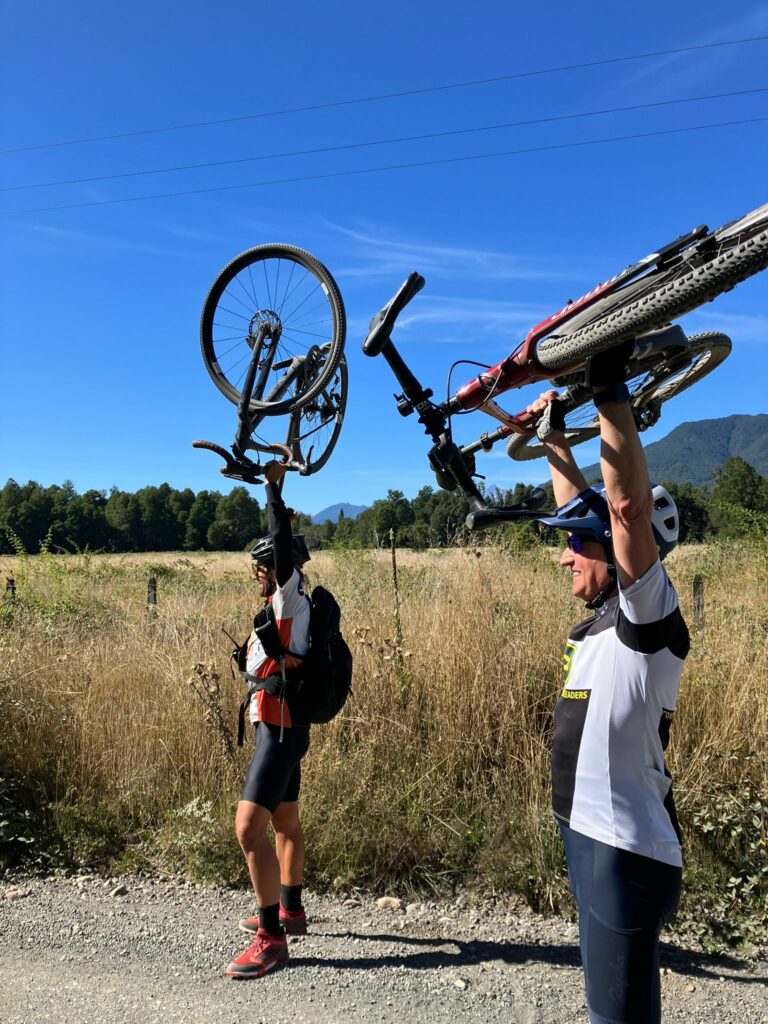
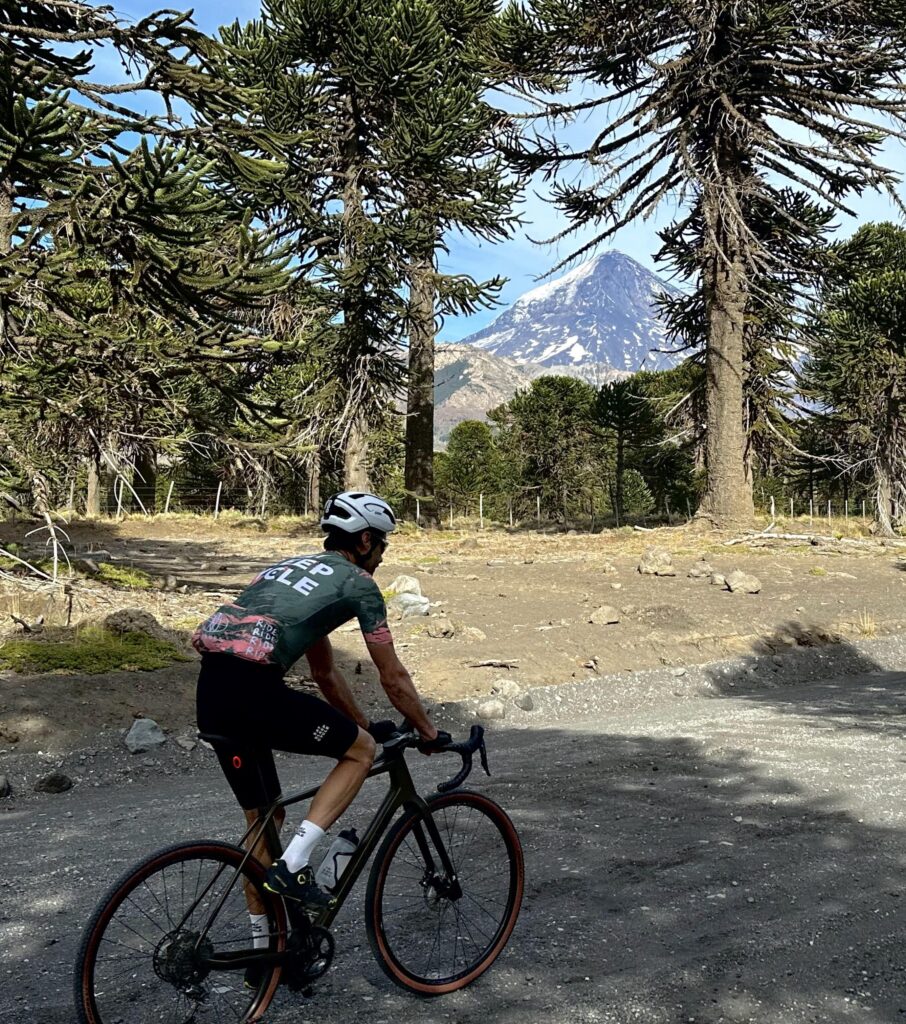
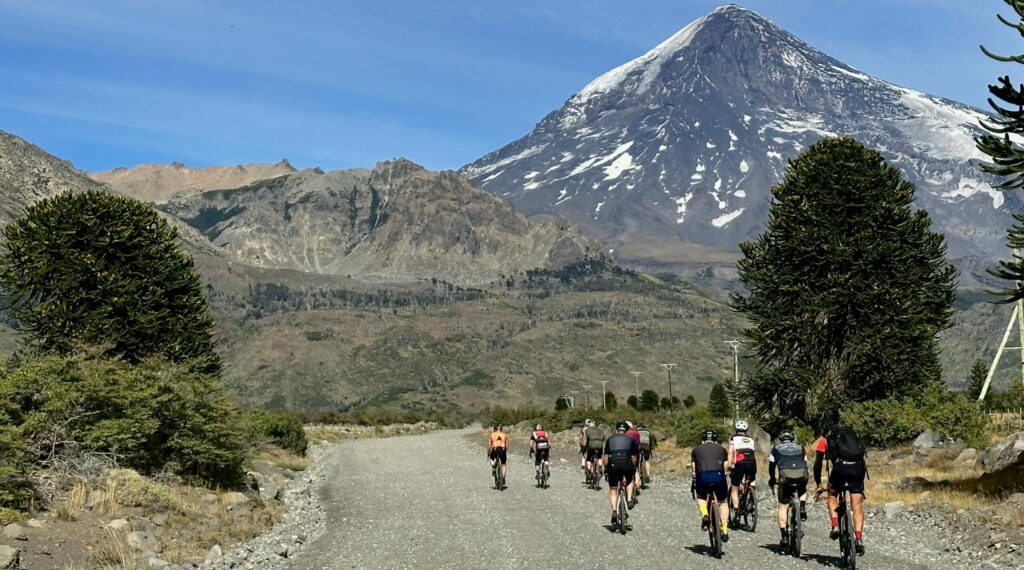
    There aren’t many places as remote as Patagonia. Enjoy nature, peace and quiet and the simple action of pedaling your bike through beautiful scenery. It also happens that whilst we are in Winter, the Summer season in Patagonia provides perfect riding conditions.

    At Eat Sleep Cycle we believe in sustainable tourism and as part of that effort we look to promote destinations for their appeal out of peak season. We believe it is better for everyone including your experience!

  • Gravel cycling on the Canary Islands: A new perspective

    The Canary Islands, located just off the coast of North Africa, have long been renowned for their spectacular landscapes, beautiful beaches and year-round mild climate. So inspiring is this natural wonderland that artists such as César Manrique have created artwork, sculptures and architecture incorporating its characteristic natural formations, which reflect the islands’ wild beauty. 

    Whilst the archipelago has always been a popular destination for beach-goers and hikers, a new trend is emerging across the islands: year-round gravel cycling. With their rugged terrain and vast network of gravel roads, the Canary Islands are the new favourite destination for gravel cyclists seeking a fresh perspective on European riding. Think lunar landscapes, ancient volcanoes, dune-filled deserts and immense climbs. What’s not to love?

    Gravel cycling on Gran Canaria

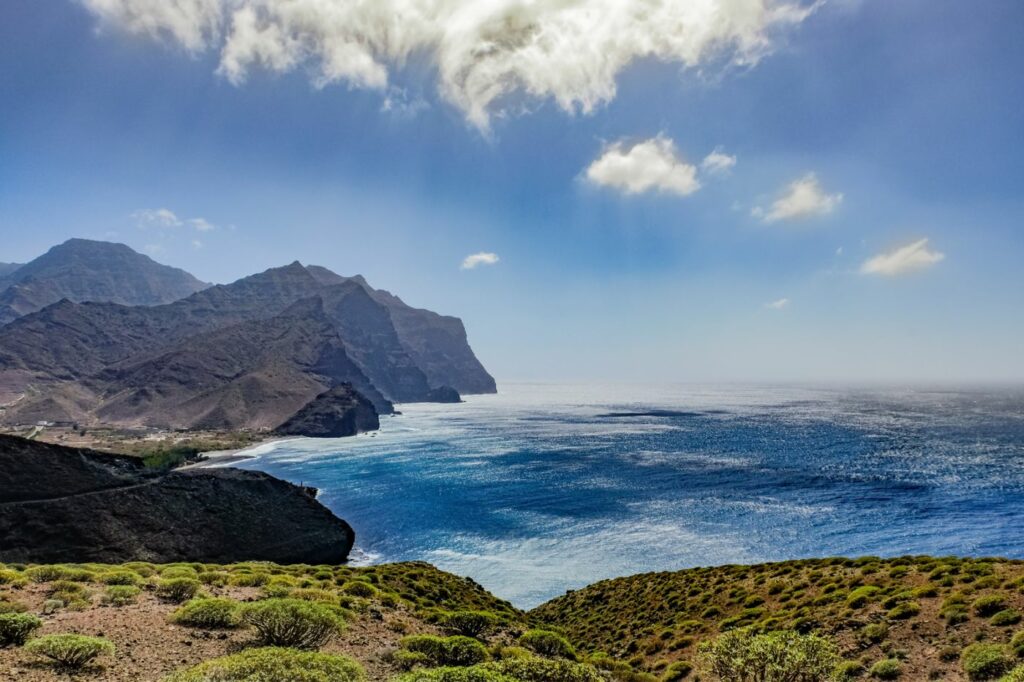
    Gravel cycling on Gran Canaria, the third-largest island in the archipelago, is a never-ending list of opportunities for gravellers looking for picturesque riding mixed with some real tests of strength. The island boasts an impressive variety of landscapes, from the majestic Maspalomas Dunas on the coast to the mighty Pico de las Nieves, the highest peak on the island with panoramic views of the neighbouring islands and the vast Atlantic Ocean.

    The well-maintained gravel roads criss-crossing the island offer the perfect routes to get up close and personal with other natural wonders, such as the Caldera de Bandama, an impressive crater located near Las Palmas; the Barranco de Guayadeque, a deep ravine renowned for its rugged cliffs, lush vegetation and ancient caves; or Roque Nublo, an iconic volcanic rock formation offering views over the surrounding countryside.

    How demanding is gravel cycling on Gran Canaria?

    Despite the more demanding routes on Gran Canaria, such as Pico de las Nieves, reaching almost 2,000 m above sea level, the Valley of the Tears (think steep gradients and challenging terrain) and Roque Nublo (around 1,800 m above sea level), the island offers a plethora of routes suitable for all levels, including the Tirajana Valley, taking you through rolling countryside and pine forests, or the Ayagaures Valley, with its charming villages and yet more beautiful countryside.

    Gran Canaria
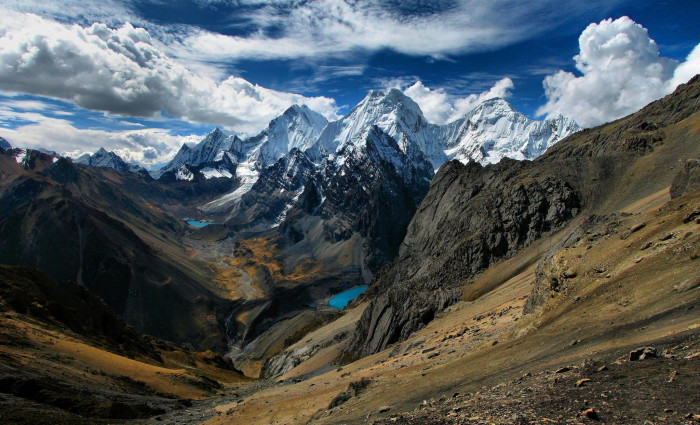
    Canary Islands landscape
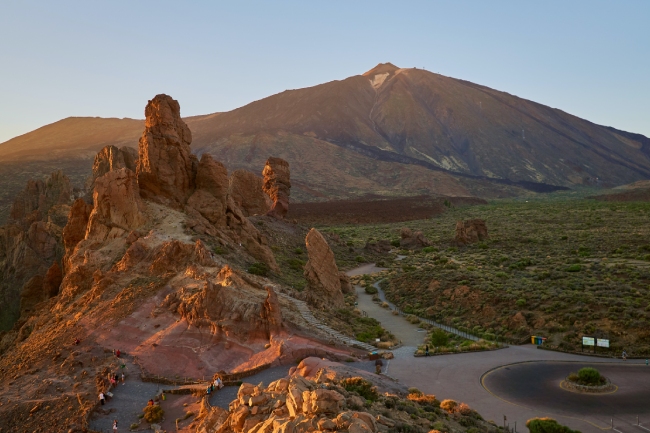
    Tenerife brown rocky mountain

    Gravel cycling on Tenerife

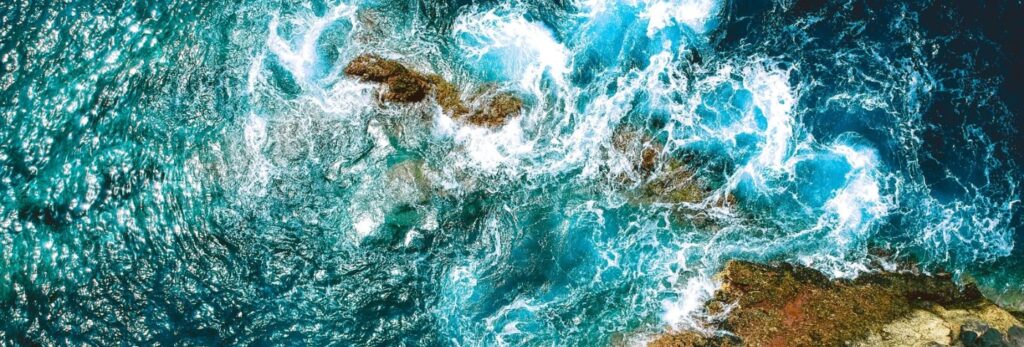
    Tenerife, the largest and most populated island in the Canary archipelago, is another gravel cycling paradise. The island’s volcanic terrain, dramatic landscapes and stunning coastline make it an ideal destination for gravellers looking for adventure, and who might even be tempted by some downtime on the beach. 

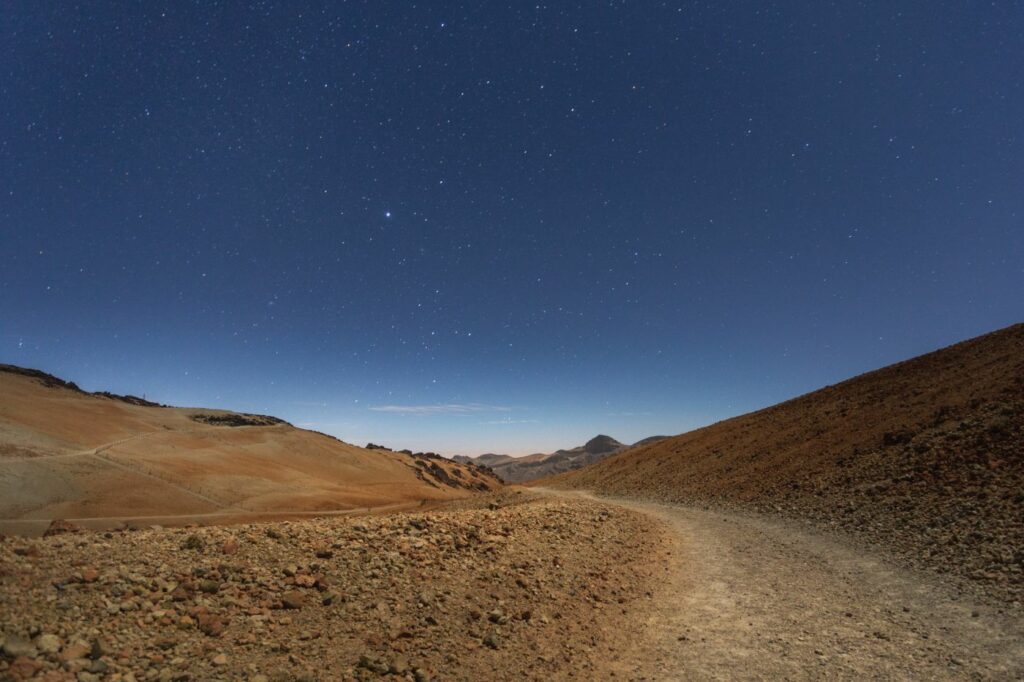
    Generally speaking, most routes will involve at least 1,000 m of elevation given the island’s undulating and mountainous terrain (it is a volcano, after all). The south is predominantly dry and rocky, whereas the north tends to be wilder and greener. The earth beneath your tyres will also range in colour and tones, from rich reds, oranges and browns, to intense grey and even black in some places, given the volcanic rock.

    Mount Teide by gravel bike

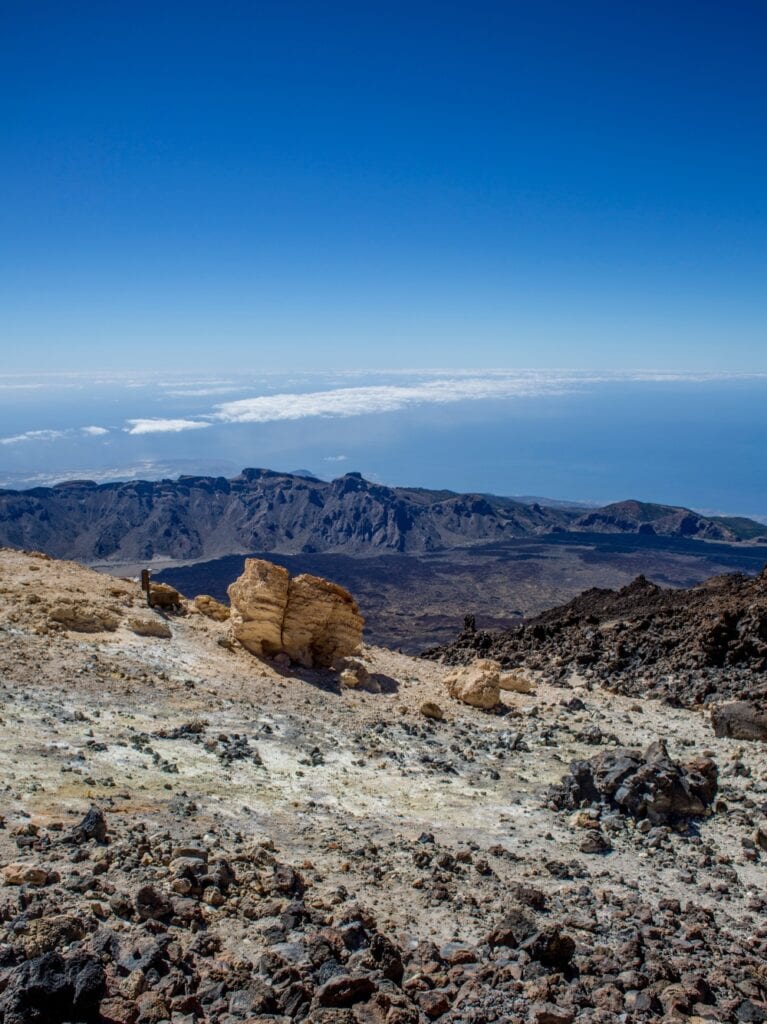
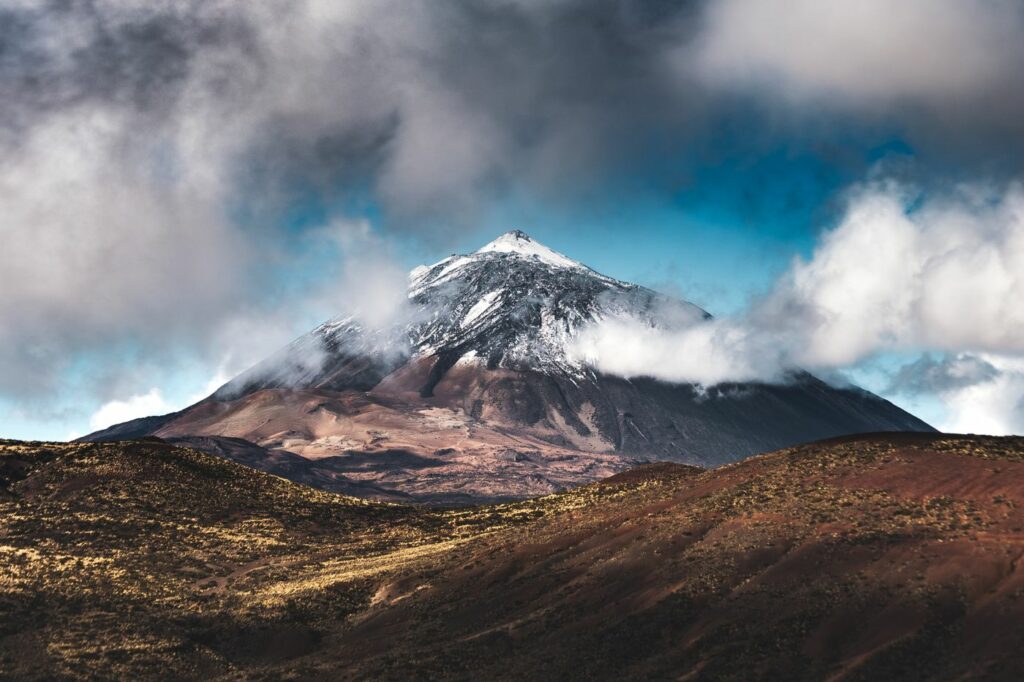
    We can’t talk about Tenerife without talking about Mount Teide, the highest peak in Spain. This iconic volcano, standing at an elevation of 3,718 metres, offers an epic climb for gravel riders seeking an unforgettable challenge. Ride between cacti and vineyards, through vast pine forests and up to the edge of the Teide National Park, a UNESCO World Heritage Site. 

    Mount Teide is not only a physical test of strength but also a mental and emotional challenge, which nonetheless showcases the raw beauty of the Canary Islands that rewards every cyclist to take on this unforgettable climb.

    Mount Teide
    Tenerife dirt road in the mountains
    Tenerife dirt road in the mountains

    GranGuanche: unsupported endurance cycling

    An ode to gravel cycling and bikepacking at its wildest and most challenging, the GranGuanche Audax endurance gravel cycling race is a 700 km, +16,000 m route across five of the Canary Islands, including Gran Canaria and Tenerife. Pushing the limits of their mental and physical strength, cyclists ride through lush rainforests, across dusty deserts and over black lave fields by day, and camp where they can by night, to make the ferry leaving for the next island before the time limit.

    Audax, which means “brave” in Latin, is what you have to be to take on this almighty yet magical challenge. “It doesn’t matter which bike you have, it doesn’t matter if you’re a man or a woman […] you can do it, if you want to do it, because a lot of it is just a mental thing”. Canary Island landscapes inspire awe; the reward that keeps riders coming back year after year and the reason cyclists are venturing to these stunning islands to discover their endless gravel tracks for the first time. 

    The best time of year to visit the Canary Islands

    The best time of year for gravel cycling on the Canary Islands depends on your preferences regarding weather and crowds. Spring and autumn are popular seasons for cycling adventures as the temperatures are pleasant (between 17 ºC and 25 ºC) and there are fewer tourists compared to the peak summer months. 

    However, the mild winter months can also be great for riding, especially for those seeking a break from cooler climates. Look out for the occasional shower and check the forecast before each ride in case there is a storm brewing on the horizon. Whenever you travel, keep in mind that the wind can pick up, so check the forecast before each ride and pack a windbreaker, gloves and sunglasses to protect your eyes on particularly dusty routes.

    Coast of Tenerife, aerial view

    The main take-aways: Gravel Cycling on the Canary Islands

    The Canary Islands have it all, climbs, coastline and climate… Gran Canaria and Tenerife’s unique terrain and warm temperatures make these islands a veritable playground for gravellers, MTB-ers and roadies alike. So, load the track and charge your phone, and we’ll see you in the Canaries!

    Take a look at our Canary Island Gravel tour for more inspiration. And if you’re inspired to ride, contact our travel experts for more information.

  • 10 Essential Tips for Cycling in Gran Canaria in Winter

    Gran Canaria is establishing itself as one of the go-to destinations for cyclists seeking sun in the cold winter months. The island is located off the west coast of Africa and is subject to warm weather, sunshine and very little rain all year around. We asked Eat Sleep Cycle founders Lee & Louise to compile a list of tips for cyclists after they visited the island last week.

    1. Winter Cycling Paradise in Gran Canaria

    Gran Canaria is one of the best destinations in the world to enjoy in January & February. Don’t bother packing leg warmers – our friend Normando, who is from the north of the island, doesn’t own a pair and rides every day. Make sure you cover your legs in sun-cream instead as UV is very high. Factor 50 is best, and you’ll still get tan lines!

    2. Pace Yourself

    Pace yourself & prepare yourself for some tough climbing, the island does not contain a single flat road. There are two particularly challenging climbs on the island – the legendary Valley of the Tears & the climb up to Pico de Nieves via the village of La Pasadilla. Do not start out too fast on Day 1 when your legs are fresh – the roads to not let up and you’ll be off the bike by Day 3 if you hit the climbs too fast.

    3. Tranquilo Traffic

    Traffic is generally very respectful of cyclists and it’s quiet on the mountain roads. The coast road should be avoided at busy times of the day but it does have beautiful sections which are well worth riding, particularly in the north and west of the island.

    4. Go Local

    Locals ride in the north, visitors ride in the south – both are amazing and it’s well worth exploring the north of the island if you can. The north of the island offers greener landscapes with plenty of Eucalyptus trees and a friendly cycling culture (there are so many cyclists in the south it’s more difficult to keep up the enthusiastic greetings!) 

    5. Be Prepared & Know Your Roads

    Do your homework – roads on Gran Canaria are in a constant state of flux with frequent closures & resurfacing. There are two key sections of the coast road which are falling away. One section has been closed for 3 years and the other has just been blocked off in the name of safety – ask around when you arrive on the island for the latest updates. Whilst roads generally have a great surface they deteriorate quickly so prepare yourself for some bumpy rides on roads which are due for resurfacing – some roads are fairly dangerous to descend but enjoyable to climb.

    6. Perfect Planning

    Plan to your ride up to Pico de Nieves on the clearest day of your trip so you can enjoy the otherworldly view of Mont Teide on Tenerife. Sometimes the wind blows a fine layer of dust over from Africa, blocking the view and making all the effort not so worthwhile – the dust is not likely to last more than a couple of days so it’s worth planning your ascent carefully 

    7. Ride Nutrition for Epic Days

    Food in supermarkets is relatively expensive but there are some great value bars & restaurants. In local bars off the tourist bus route coffee hovers around the €1 mark. If you’re bonked and in need of some serious sustenance order a ‘leche leche’ and you’ll fly up the next climb. A ‘leche leche’ is a cafe bonbon on steroids. A cafe bonbon is an espresso served with deliciously sweet condensed milk. Both drinks are €1 in the best places – make sure you carry cash, cards tend not to be welcome in these areas.

    It’s also well worth carrying a stash of food in your pockets and stopping at every opportunity for water. It’s easy to run out of both if you’re on a big day & some rides take you to some fairly remote places.

    8. Look Up! It’s Beautiful.

    If you’re expecting to ride on a brown volcanic island, think again. Gran Canaria is full of green, lots of cacti, Eucalyptus, banana plants and there are some incredible rock formations in varying colours. Make sure you look up from the the wheel in front of you and take time to appreciate the incredible landscape.

    9. Enjoy the Friendly, Welcoming Vibe

    The local language is Spanish but it’s very easy to get by with English as the island’s economy is centered around tourism. It’s hard to find a menu in a cafe which has not been translated into several languages.

    10. Think Pantani

    Legendary Italian climber Pantani trained in Gran Canaria & every ride contains 2,000 m of climbing unless you choose not to venture off the coast road. Just something to be aware of when planning your rides!

    Planning to Cycle in Gran Canaria?

    If you’re planning to cycle on Gran Canaria check out our blog outlining some of the best Gran Canaria Cycle Routes & the best places to stay. Or why not sign up to our ultimate Gran Canaria & Tenerife and save yourself the hassle!

  • Top Winter Cycling Destinations To Avoid The Cold!

    Winter is coming… but imagine you could avoid donning those woolly overshoes and rain jacket and chase the summer around the world, where would you go? Here are some of the top winter cycling destinations.

    Winter Cycling Destinations

    The following destinations are ready to be explored all throughout the winter months without a leg-warmer in sight! The go-to locations for a mid-winter getaway or epic training camp these are the fail-safe, tried and tested all-winter cycling destinations.

    Andalucia & the South of Spain – Sun & Smooth Tarmac

    The regions of southern Spain are a long-held favourite destinations for leisure cyclists and World-Tour teams alike. It’s no surprise that so many fly south for winter; Andalucía enjoys more than 320 days of sunshine a year and only 40 days of rain on average. Calpe and the surrounding area boasts a similarly temperate climate and is swarming with cyclists engaging in some winter training during the colder months.

    The Costa Tropical region is like most good training locations – the area is very hilly, several climbs over 2,000 m, good road surfaces and sparse traffic. The Calpe/Alicante area is known in summer as a haven for those seeking sun-soaked partying but in winter it attracts a very different kind of clientele who mix with the stalwart maogany ex-pats. Cyclists flock to the region in search of sun and smooth tarmac, which they receive in abundance. As with the rest of Spain, the draw is not only the fantastic riding but also the laid-back lifestyle and delicious food and drink on offer, re-fuelling with some delicious tapas and a cerveza is a must.

    Where to stay: Mojacar, Calpe, Almería, Almuñécar.

    Tour Inspiration: The Costa del Sol

    Calpe road cyclist
    A beautiful network of climbs, descents & changing landscapes

    Málaga – Coast and Mountains

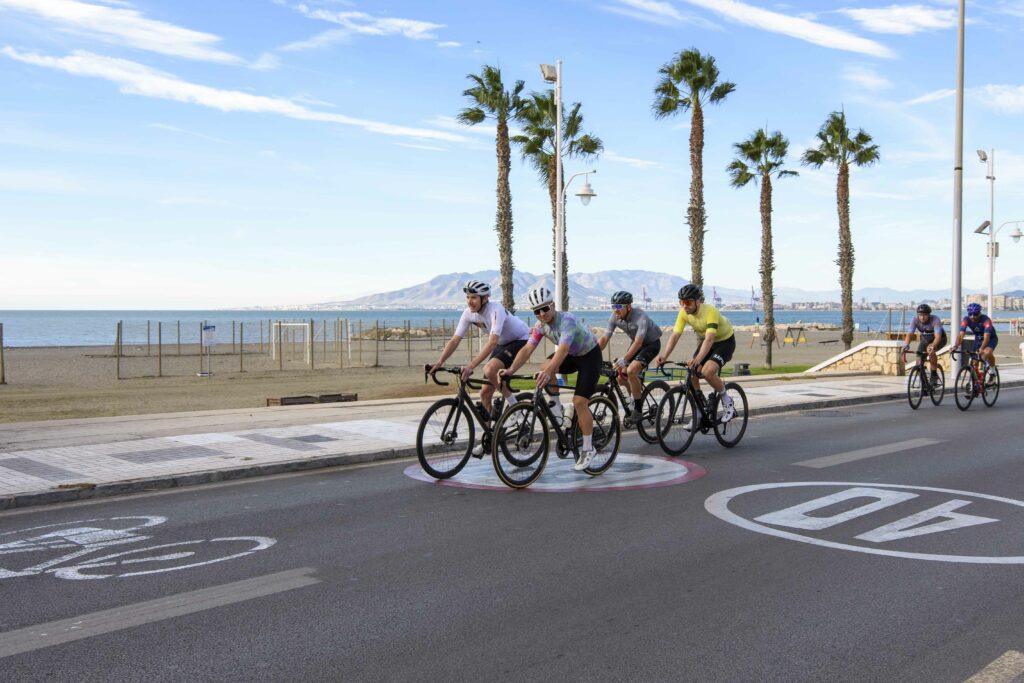
    Málaga seems like a paradise for cyclist with its smooth roads & the buzz of a vibrant beach-side city that never sleeps.

    One of our favorite rides out of Málaga is the Puerto Leon, a 16.1 Km 5.6 % AVG gradient road climb that starts right from the city. In no time you are away from the hustle and bustle and into the mountains, crossing paths only with farmers. But it is when you swing back towards the coast and you’re hit with that lovely sea breeze, that you realise just how special that mix of mountains and coast really is.

    Our Málaga Classic Climbs itinerary offers 6 unique rides that combine the highlight climbs in the area with the coast. There is no better feeling than riding back from the hills to the beach for that well deserved ice coffee, ice cream or chilled beer (or all three). Check here to know Why You Should Consider Cycling in Málaga this Winter

    Where to stay: Màlaga

    Tour Inspiration: New Year in Málaga

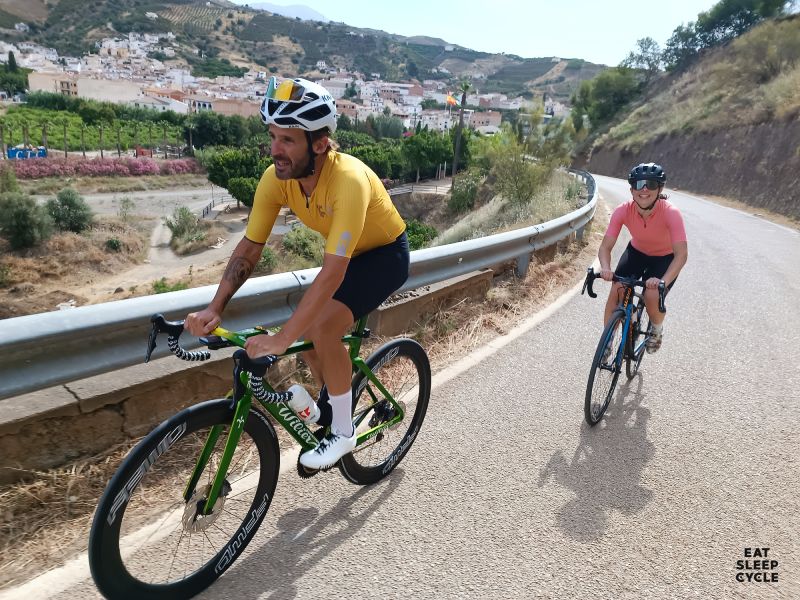
    Cycling around Málaga
    Enjoy smooth, quiet roads & a warm climate

    Patagonia – Discvoer Chile & Argentina

    If the summer in the southern hemisphere is calling you, look no further than the grandiose landscapes of Patagonia. This incredible region at the sourthernmost point of South America is a paradise for nature lovers and gravel bike riders. Ride across the Andes, camp out under the stars, enjoy long summer barbeques and the adventure of a lifetime.

    Where to Stay: Pucon, Chile or San Martin de los Andes, Argentina

    Tour Ispiration: Patagonia Gravel: The Great Divide

    Gran Canaria & Tenerife – Cycling Heaven

    More than just a beach holiday destination, a visit to Gran Canaria by bike will leave you wondering if the island was actually designed by cyclists. Year-round temperatures of between 22 and 25 degrees, a mere 148 mm of rainfall on average over 12 months, plenty of climbing and some of the smoothest tarmac you’ll ever ride on make it a cycling haven.

    The landscape of Gran Canaria is uniquely stunning and diverse ranging from sparse and volcanic to lively and green. The climbs here can be steeper than the neighbouring Canary Islands meaning the riding is somewhat more challenging and varied – perfect training terrain. Those who aren’t all about pushing their limits on a cycling getaway can take advantage of recovery time on the many beautiful beaches the island has to offer.

    Canary Islands are one of our top picks for legs-out cycling as the rest of Europe stays wrapped up. Join our our Gran Canaria & Tenerife Experience for a true insight into Island life or check out our top pick of Gran Canaria’s cycle routes to plan your own trip.

    Where to stay: Puerto Mogan, Cruz de Tejeda, Agaete.

    Tour inspiration: Canary Islands Gravel

    Tenerife landscape
    Ride In The Winter Sun

    Girona & the Costa Brava

    Exploring the beautiful roads of Girona over the winter months  The catalan city and its surroundings are a cycling paradise at any time of the year and winter brings bright blue skies and a quiet city. Gravel riding over the winter months is particularly popular with local riders-

    Where to stay: in the old town, Hotel Carlemany, Hotel Nord 1901

    Tour inspiration: Costa Brava Gravel

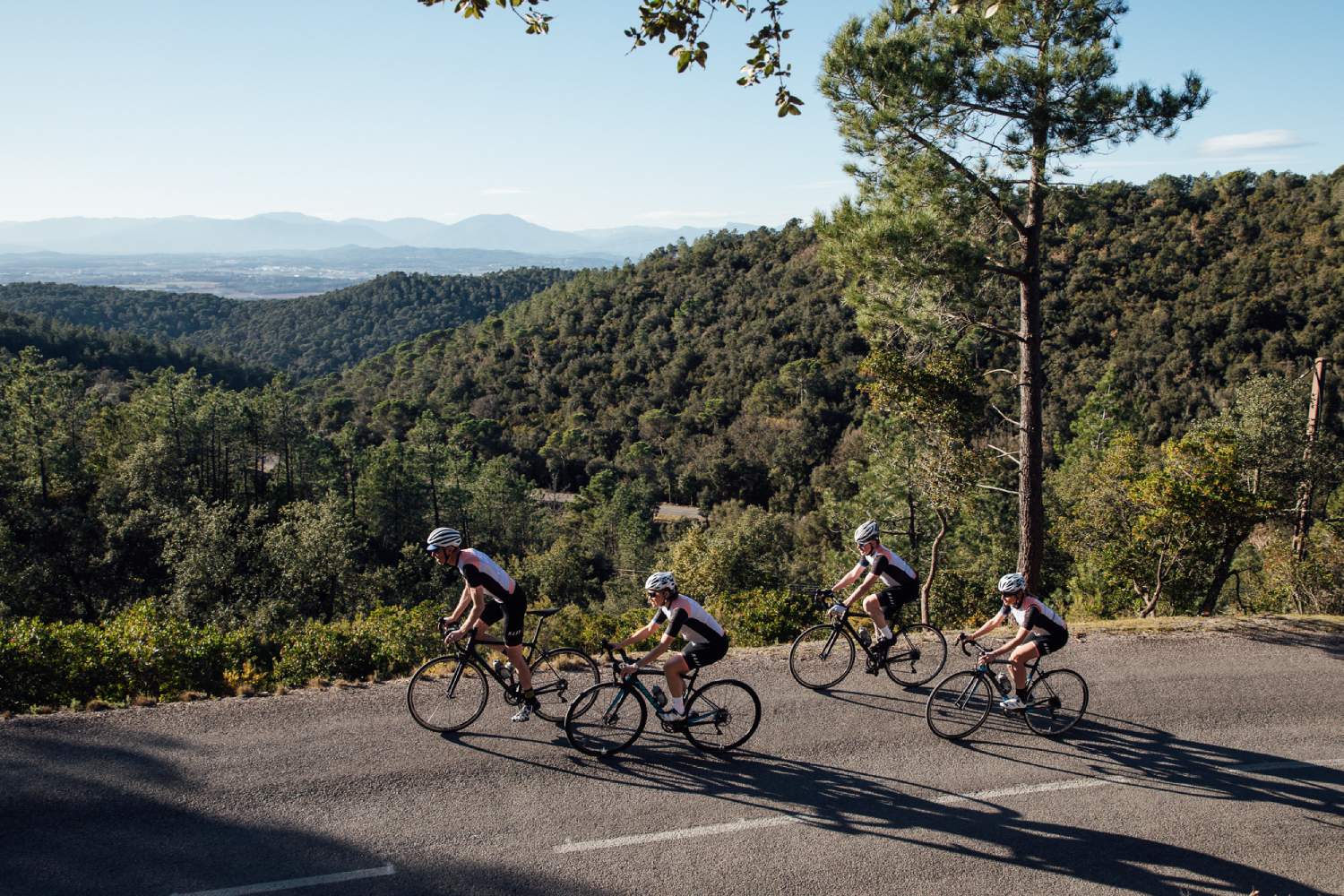
    Girona clyclists
    The unique region of Girona, a real paradise for cyclists

    Inspiring Winter Cycling Spots

    Inspired? Each of our winter cycling spots above give you the ability to indulge in a cycling tour or training session when it should be too cold to be enjoyable! Take a look at our winter camps to see how you can enjoy some cycling in the sun this winter. For more information or to find out about how we can tailor a winter trip to your needs email us on tours@eatsleepcycle.com or contact us online!

    P.S. Enjoyed this blog? Why not sign up to receive notifications every time we post and get regular updates on our latest tours!
  • Gran Canaria Cycle Routes – A Cyclist’s Paradise

    Gran Canaria is truly a cyclist’s paradise. The third-largest of the Canary Islands looks like it was designed by road cyclists for road cyclists with its smooth tarmac, quiet roads, minimal rainfall and temperatures in the mid twenties year-round. The island is only 100km West of Morrocco and on the same latitude as the Sahara, but while there are sandy beaches in the South it’s no desert, Gran Canaria’s landscape is extremely diverse, from volcanic and barren to green vegetation depending on where you are on the island. It may not be home to the biggest, hardest or most iconic climbs but Gran Canaria has a lot to offer and certainly isn’t lacking when it comes to riding uphill (a compact is essential).

    So why should your next European cycling holiday be in Gran Canaria? Take a look at our highlights and Gran Canaria cycle routes and see for yourself!

    The Valley of the Tears

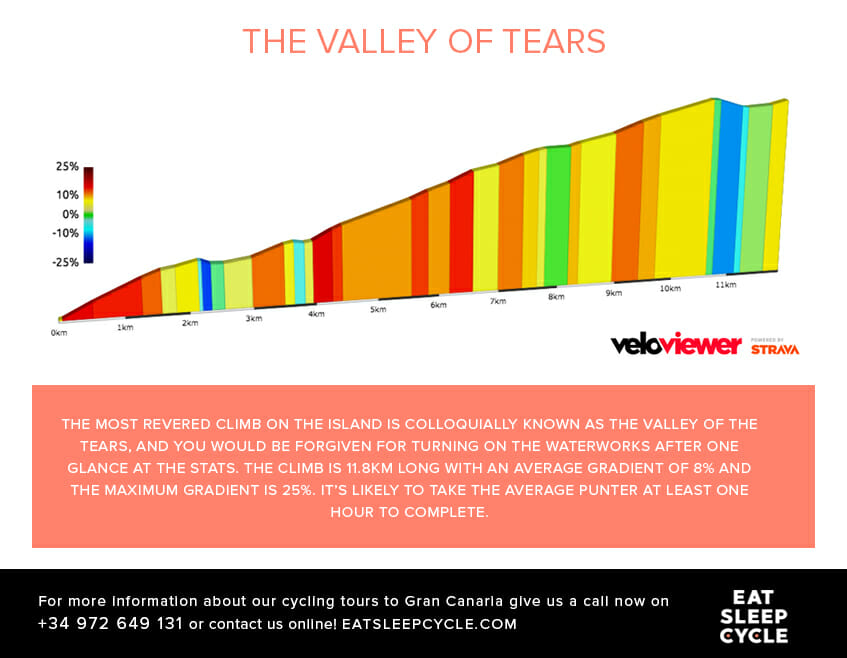
    The most revered climb on the island is colloquially known as The Valley of the Tears, and you would be forgiven for turning on the waterworks after one glance at the stats: The climb is 11.8km long with an average gradient of 8% (bear in mind that this includes sections of descent), the maximum gradient is 25% and it’s likely to take the average punter at least one hour to complete. VOTT starts tough, with 25% gradients; so don’t attack the bottom too hard – you will need that power later on!

    Gran Canaria Cycle Routes - The Valley of Tears

    Pico de Las Nieves

    The highest point on Gran Canaria and most commonly attacked from the town of Maspalomas on the GC60, the climb up to Pico de las Nieves is a long one: 40 km to be precise with an average gradient of 4.7%. The trick to getting through it is to break it up; the road lends itself to this as there are short descents interspersed throughout. With 11 km to go after joining the GC600 comes the hardest part of the climb, the gradients steepen drastically. At this point you will have the top and the Roque Nublo (rock in the clouds),an ancient sacred monument, in sight.

    There are several routes to the top of the island, each offering different views and a sizable challenge. The toughest ascent is via the village of La Pasadilla – it’s a tough climb and it’s rare you’ll have the company of another cyclist. Just what we like!

    Santa Lucia

    The climb up the GC65 through the village of Santa Lucia offers a steady ascent with great views and plenty of cafe stops. As all roads do in Gran Canaria the climb takes the rider to the centre of the island, via the village of San Bartolome (where riders on a shorter day can descend back to the coast) or continue on up to Ayacate where all cyclists congregate before attempting the final kms to the Pico de Las Nieves.

    Soria

    This is a beautiful climb connecting the coastal town of Arguineguin to the Tauro pass. With plenty of switchbacks the road begins with a smooth surface and gets a little rougher towards the top. A sharp left at the top takes the climber away from the village of Soria on a steep, broken & very beautiful road to the Tauro pass, where the cyclist can take a left and descend to Porto de Mogan or take a right and keep on climbing.

    Tauro Pass

    One of the prettiest climbs on the island this pass begins in Mogan. The views unfold as you climb the valley, with switchbacks galore and plenty of cyclists make for a friendly atmosphere of suffering as cyclists of all shapes and sizes & all types of bikes haul themselves up the road.

    Tenerife & Mount Teide

    For an ultimate day out consider taking the ferry to Tenerife & take on the tarmac to the summit of Mount Teide. At 3,718 m the volcano is the highest point in Spain & a mecca for pro & amateur cyclists from around the world. There are 5 routes up from sea-level, each one offering delightful 40 km routes through lunar landscapes & rock formations.

    Whilst some riders choose to base themselves entirely on Tenerife, Gran Canaria offers more variety & options, especially if you have the flexibility to explore the north of the island. Check out our Gran Canaria & Tenerife Experience for the ultimate Canary island exploration.

    Where to Stay

    Maspalomas

    The popular resort of Maspalomas has an eclectic feel, with golfers, an LGBT community, families, sun-worshipers & cyclists from all over the world all choosing Maspalomas as their base. In terms of cycling the resort offers the best location for riding unsupported with access to the widest variety of routes. There are good quality cyclist-friendly hotels offering spotless rooms and good customer service and is overall the best place to stay for a DIY cycling holiday.

    Porto de Mogán (above right)

    Porto de Mogan, known as the “little Venice of Gran Canaria”, is a fishing port home to many hotels and restaurants and of course, the beach! Take some well-deserved post-ride recovery time on the beach followed by dinner with a sea view. This is an idyllic spot and with only one road in and out makes for a tranquil spot to enjoy when not cycling. There are some great rides from Porto de Mogan but from a cyclist-perspective only 2 or 3 days worth of routes without taking a transfer or hiring a car to ride from a different spot.

    Agaete (above left)

    A lovely coast-side town in the northwest of the island, Agaete offers a peaceful place to stay away from the masses on the south. There is a volcanic beach and incredible saltwater rock pools which people bathe in all year around. The cycling from here is varied and there are lots of options. The north of the island typically experiences cooler weather than in the south with the chance of rain a little higher. But if you’re the type of cyclist looking for more of a tranquil retreat this is a great option for a base.

    Las Palmas

    The captial of the island is packed with history and culture and well worth visiting for a couple of days. There are some cycling routes in and out of the city but traffic is fairly heavy and so staying in Las Palmas if you’re purely looking for a cycling trip is not to be advised. Local cyclists tend to drive a few kms out of town to the coast and ride from there.

    Cruz de Tejeda (above centre)

    For a completely different experience stay for a night or two in the mountains in the centre of the island where there’s a Parador hotel. The hotel offers an amazing spa, infinity pool into the mountains an truly spectacular views. The variety of riding from this spot is second to none but pretty much every road starts downhill from the hotel which could make for a chilly start each morning. The temperatures are also cooler away from the beaches but could be well worth the sacrifice for the ultimate experience in relaxing places to stay.

    A Perfect Winter Cycling Destination

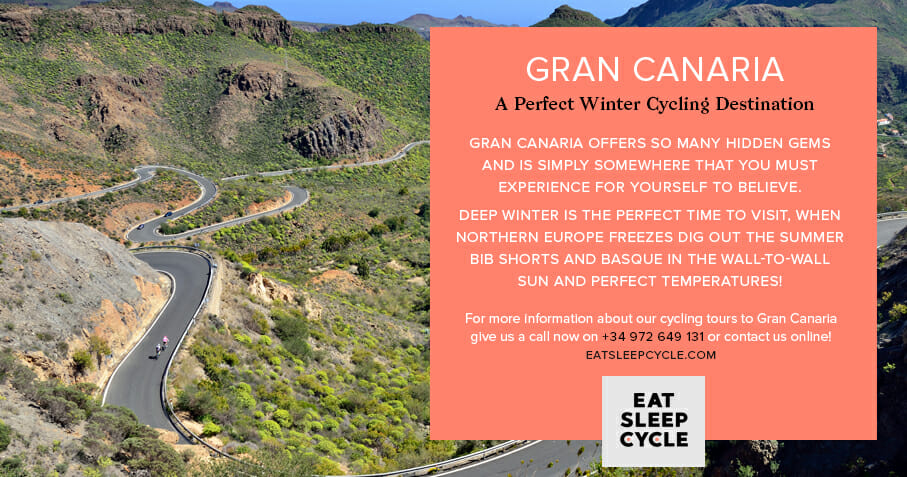
    Gran Canaria offers so many hidden gems and is simply somewhere that you must experience for yourself to believe. Deep winter is the perfect time to visit, when Northern Europe freezes dig out the summer bib shorts and basque in the wall-to-wall sun and perfect temperatures! Check out some top European winter cycling destinations here!

    Gran Canaria Cycle Routes - Winter Cycling Destination - Eat Sleep Cycle

    Gran Canaria Cycling Vacation

    If Gran Canaria sounds like your next European cycling vacation then take a look at our Gran Canaria Ride Camp tour. Give us a call on +34 972 649 131 or contact us online to find out more about a cycling tour to Gran Canaria!

    P.S. Enjoyed this blog? Why not sign up to receive notifications every time we post and get regular updates on our latest tours!