Category: Lifestyle

  • Off-season advice for cyclists

    In a normal year one would expect to be training from November to March and racing from March to late September; it’s a long gruelling season with early starts, late finishes, lots of travelling and thousands of kilometres in the saddle. Naturally this takes its toll on the body. After months of pushing physiological limits, riders often see a plateau or decline in form as the season reaches its close, illnesses and injuries become more frequent and the body is left feeling generally tired and empty. When this happens, listening to the body is absolutely essential; it’s time for “off season”.

    But, it’s not only the body that needs a rest at the end of a long year, importantly, riders must give themselves a break mentally. Cycling at a high standard demands unyielding determination, resilience and perseverance. Whether staring at power numbers for months on end in training, willing yourself to do one last hill rep, riding long hours in miserable winter conditions or overcoming setbacks in races, the mind will at times also be pushed close to its limits and will therefore need a rest at the end of the year.

    What should “off season” look like?

    I don’t think there’s a precise one fits all plan that can be prescribed, it really depends on an individual’s physiology and temperament, but, i’ll endeavour to outline below what I suggest to those whom I coach.

    First and foremost, three weeks off the bike, any bike…After a year of pushing both mind and body day in day out, an athlete should feel absolutely no guilt in giving themselves three weeks completely away from the bike. I encourage my clients to go and enjoy themselves in other ways; enjoy the food an athlete usually wants but avoids, meet with friends, have a few drinks, go on holiday if possible, go for some very steady jogs, go climbing, surfing or hiking etc. The only rule is, don’t ride a bike! After 3 weeks, if feeling energised and motivated, it’s time to crack on. If not, take some more time off until you are ready, but stay active in this period.
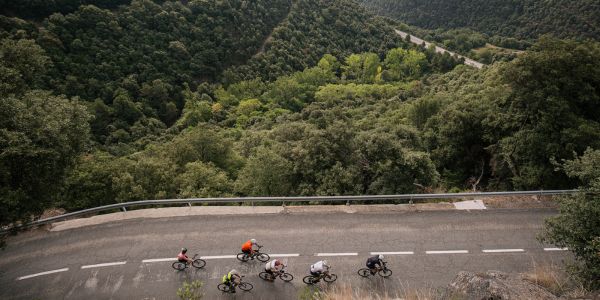
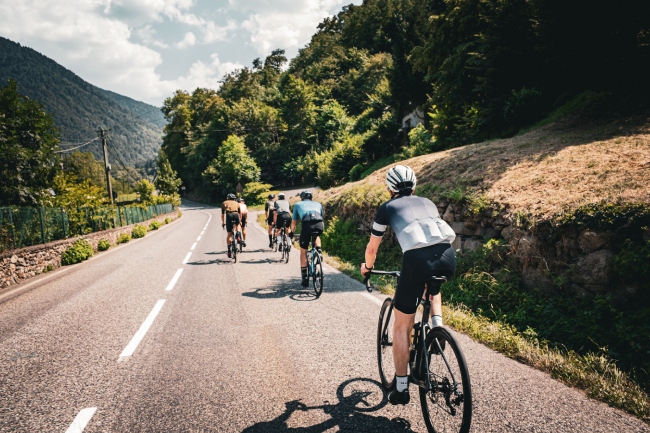
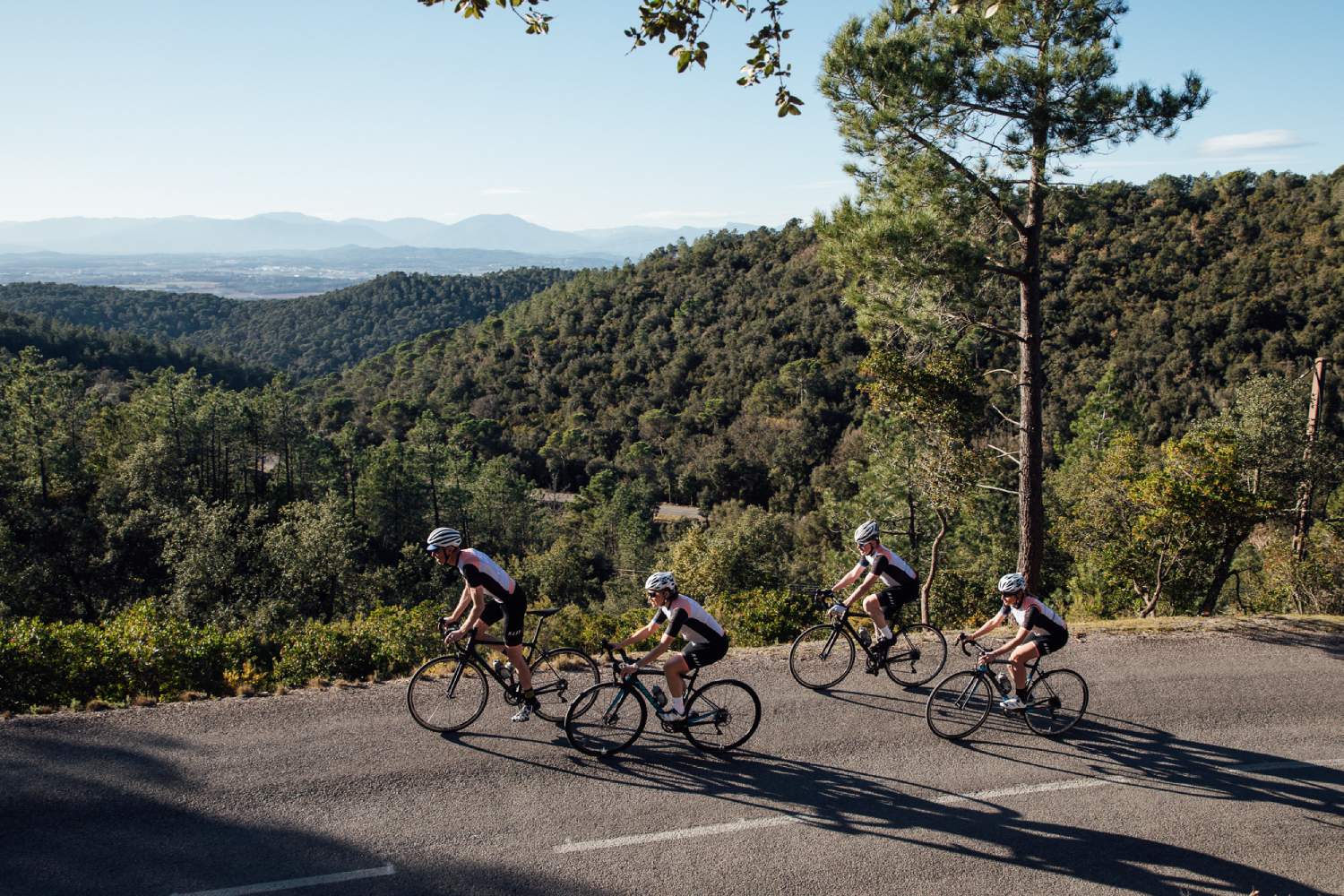
    Group of cyclists on road

    The new season

    The start of the new season should be gradual, a progressive reprogramming of mind and body. Don’t dive in with a huge endurance block or immediately start trying to lose weight, this will lead to burnout. Start with a week or two of 60-90 minute easy spins and a couple of rest days, mix it up with some MTB or gravel rides if this is an option. Ride on feel or heart rate as your FTP will of course have shifted. Eat well on these rides, enjoy some whole foods while you can  [peanut butter and jam wraps, homemade flapjacks and rice cakes are personal favourites] as there will be plenty of more intense sessions later in the year where this is not as easy to stomach. Include some short leg speed drills in these early rides but keep the power controlled. Importantly, don’t expect the body to absorb training load like it was during the season, take rest on demand, listen to your body and don’t be afraid to change the plan.

    After this phase, an athlete should be physically and mentally ready to start some more structured training. Again, this training is gradual and controlled, nudging CTL up throughout the winter while monitoring fatigue closely and getting plenty of rest.
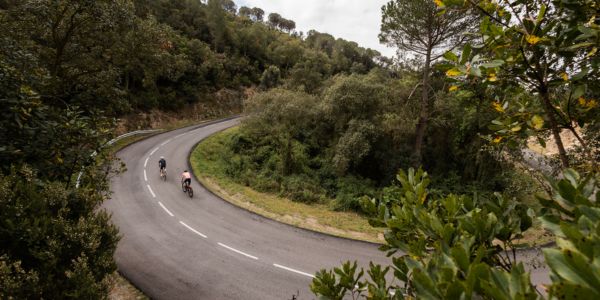
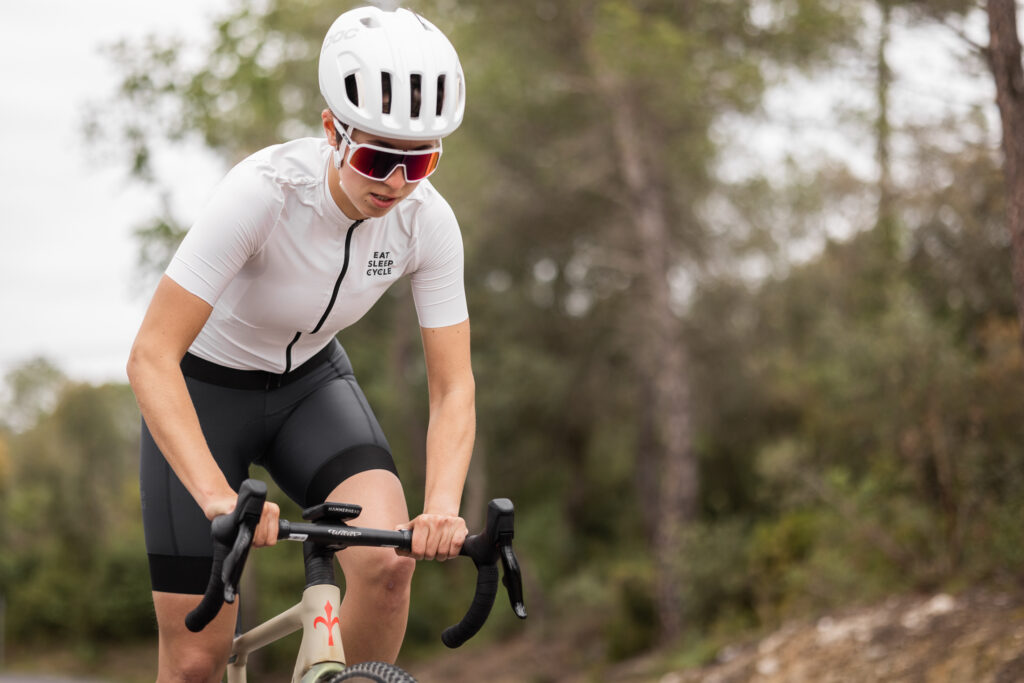
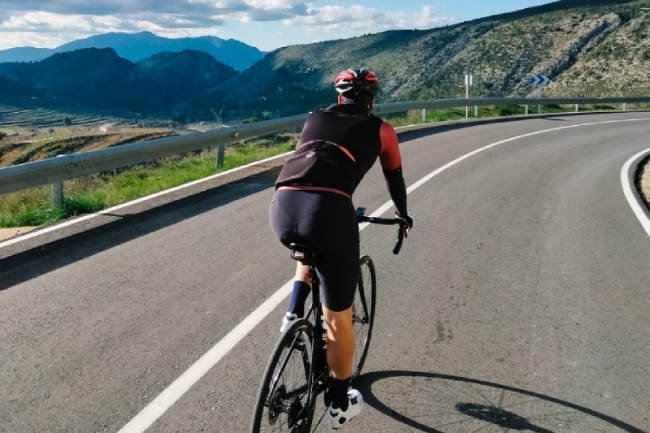
    Cyclists on road

    Eating in off season and early season

    A final note on eating in off season and early season; I felt this deserved its own paragraph given how many athletes seem to have a turbulent relationship with food.

    Cyclists women enjoying a meal

    If a rider has been at or close to race weight throughout the summer, it’s so important they forget about calories over off season. In order for the body to recover from a long season, particularly for chemical and hormonal levels to recalibrate, a calorie surplus is essential. Forget about the scales, the weight will come off again gradually throughout the year. For this time, enjoy eating, if hungry, listen to the body. Thinking you can get one up on the competition by restricting calories and training hard while you should be resting and eating well will only leave you feeling exhausted when race season finally comes around. 

    If you’d like to chat to any of our coaches, please feel free to book a Free consultation here.

  • Only 6 % of sport science research focuses on female athletes

    The team at SYNRGY have partnered with Training Peaks to provide a bespoke cycling coaching service that specifically focuses on optimising training around the nuances of female physiology. In our latest blog Synergy share their findings.

    Tracking Your Cycle:

    If you track your menstrual cycle using apps such as Wild AI, often clear windows of opportunity start to emerge.

    The Follicular phase is a low hormone phase during which the body is generally primed to take on stress and adapts well to hard training. This is a great time to do harder and/or high intensity workouts and heavy resistance training. Fuel wise,  the body is primed to access stored carbohydrates, which is exactly the fuel you need for high intensity sessions.

    Conversely, during the luteal (high hormone) phase, when oestrogen and progesterone start to rise, the female body becomes less resilient to training stress, the immune system is compromised and stored glycogen is less readily available. So, these few days are usually best spent at relatively low intensity (i.e. endurance riding). And during this phase the body is also in more of a “breakdown” state, so, it’s important to aim for 30 grams of leucine protein per meal and immediately post exercise.

    If you can generally structure your hard workouts to coincide with the days you feel invincible and your easy workouts when you are feeling a little low, you are one step closer to elevating your cycling performance to the next level! The key here is tracking, being methodical and remaining consistent. 

    Oral Contraceptives?

    Interestingly, we have also found that women on the pill have had great success when tracking their artificial cycles. In some ways it’s even more important to do so, given that fluctuations in energy levels and rate of perceived exertion are somewhat less predictable and comparable versus women who are naturally cycling. But the principle remains the same, try and seek out those days where you feel great, and use them to your advantage!

    Training Around the Menopause 

    What stage of life you are in also dramatically impacts the training plan you should be pursuing. For example, menopausal women experience a decrease in lean muscle mass, decrease in VO2max and reduction in bone density (a woman’s bone density can decline up to 20% in the years following menopause). Powers of recovery fade and it becomes difficult to maintain a low body fat %. 

    What’s more, menopausal women’s bodies become more resistant to training stimuli as hormone levels decline; i.e., they have to train at a higher intensity to get the same training stimuli vs younger women.  As a result, they need specialised training and nutrition guidance.

    In particular, and contrary to popular belief, older female athletes should spend significant chunks of training time doing short, very hard explosive drills. These high intensity sessions, such as maximum 10 second sprints, help stimulate growth hormone and combat muscle and bone density loss. 

    Likewise, a complimentary gym program should be structured around cycling sessions. Veteran female cyclists should be doing heavy, high impact weight exercises- these will again help slow muscle degradation and bolster bone density.

    With regards to nutrition, it’s important to have a higher intake of protein after exercise. Due to the fluctuation and decline of female sex hormones during the peri and post-menopausal years, protein can help the stimulation of muscle protein synthesis, a role which previously would have been played by oestrogen. It has also been noted that an increase in protein is essential for veteran female athletes to gain equivalent training adaptations to younger counterparts .  

    As a rough guideline, it is recommended that women aim for 1.7 – 2.4 grams of protein per kilogram of body weight per day. In menopause it is recommended that you aim for the higher end of that range (2.3 – 2.4 grams per kilogram per day) on heavy training days and towards the lower end on your easy days.

    We Are Here to Help!  

    SYNRGY have an experienced, all female, world tour pro coaching team provide bespoke training plans for whatever stage of life you are in.  Together with their partners at Training Peaks, they can ensure that you are fully supported, with daily contact, inspiration and motivation for making the most of your menstrual cycle in order to achieve peak performance.

    https://www.synrgycycling.com

    Ride with Like-Minded Women

    Our annual Girona Women’s Camp in open for reservations – we run the camp every May and it’s a great opportunity for a fun week working on fitness and bike skills in like-minded company.

  • Pilates And Mobility For Cyclists


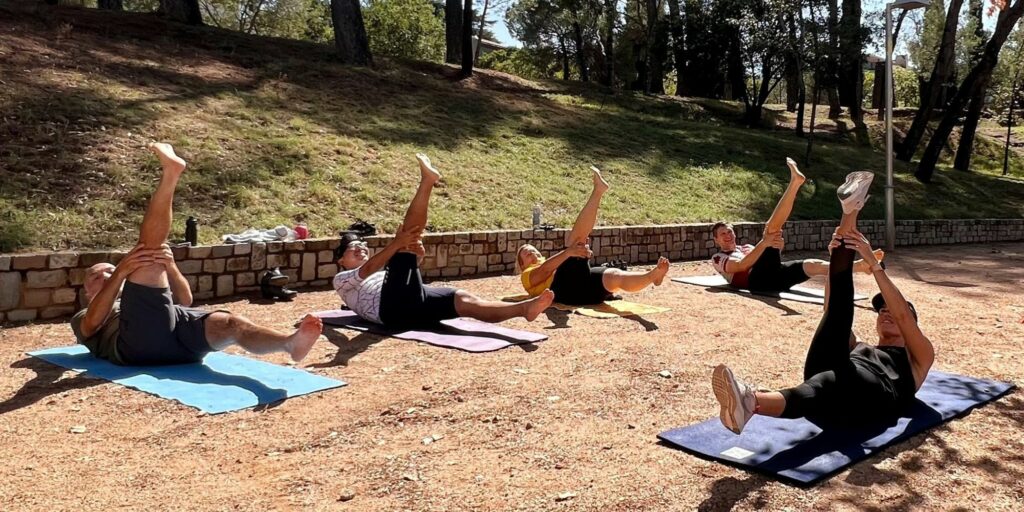
    Many cyclists focus solely on their sport-specific training, such as endurance or strength workouts, without paying attention to their conditioning and recovery needs. This can lead to imbalances in the body, increased risk of injury, and decreased performance. Pilates and mobility exercises, for example, can help to address these issues by improving flexibility, stability, and core strength. By incorporating these types of training into their routines, cyclists can enhance their overall physical function, reduce the risk of injury, and improve their athletic performance in the long run.

    But, what is Pilates and what is Mobility?


    Pilates is a form of low-impact exercise that emphasizes proper posture, controlled movements, and breath. It aims to strengthen the core muscles, improve flexibility, balance, and overall body awareness. Mobility, on the other hand, refers to the ability of a joint to move through its full range of motion without restriction or pain. It involves flexibility, stability, and strength training to improve movement efficiency and reduce the risk of injury.


    Together, Pilates and mobility exercises can help individuals achieve better physical function and overall well-being.

    How can Pilates and Mobility help you if you are a cyclists


    Regular Pilates and mobility practice can offer numerous benefits for cyclists, including:

    1. Improved flexibility: Pilates and mobility exercises can help to increase joint mobility, which can improve overall flexibility and range of motion. This can reduce the risk of injury and enhance athletic performance.
    2. Increased core strength: Pilates emphasizes core stability and strength, which is essential for maintaining proper posture and form during exercise. A strong core can also improve overall balance and stability.
    3. Reduced risk of injury: Pilates and mobility exercises can help to correct muscle imbalances and improve overall body alignment, which can reduce the risk of injury during training and competition.
    4. Enhanced recovery: Mobility exercises can help to increase blood flow and reduce muscle tension, which can aid in post workout recovery.
    5. Improved performance: Pilates and mobility practice can enhance athletic performance by improving flexibility, strength, and overall body control.
    6. Reduced stress and tension: Pilates and mobility practice can also help to reduce stress and tension, which can improve mental focus and overall well-being.

    How can we, at Eat Sleep Cycle help you feel better and perform better


    My name is Mun Bau and I am the responsible for teaching Pilates and Mobility to Eat Sleep Cycle staff and clients.


    I have been a qualified Pilates Instructor by Polestar Pilates Australia, since 2019. I am also a cyclist. So I totally get you.

    In my experience, incorporating Pilates and Mobility into a training regimen for cycling is be a great way to improve overall fitness and performance. I see it in daily in myself and in the feedback I get from my clients.


    Pilates and Mobility can be done as a standalone workout or as a complement to other forms of exercises and it can be done with minimal equipment, making it a convenient and accessible option for athletes on the go.


    One of the great things about Pilates is that it is highly customizable to the individual’s needs and abilities. When taught by a qualified professional, it can easily be adapted to suit different levels of fitness and can be modified for any injuries or limitations.


    As a Pilates instructor, I can also provide personalized guidance and feedback to help cyclists achieve their goals.


    It’s important to note that Pilates and Mobility should not be seen as a replacement for cycling training. Rather, it should be viewed as a complement to other forms of exercise.


    In conclusion, Pilates and Mobility can be a highly beneficial form of exercise for cyclists.

    Join us for a pilates taster session & brunch on Saturday 23rd September!

  • How to Train Like a Pro

    Below I have summarised some of the most impactful training tips from 10 years of
    coaching amateurs to pros. Read it carefully and implement as much as you can in
    your own training if you want to become a faster, more powerful cyclist. This stuff
    works!

    Carbs are King (or Queen).

    Do not under fuel sessions. It is the biggest mistake riders make when managing their
    own training & nutrition. Under fuelling on a regular basis can be extremely
    detrimental to physical and psychological health, not to mention catastrophic in
    terms of performance.

    Ignore the fad diet advice, the key is keeping yourself topped up with carbohydratescarbs
    are your rocket fuel and are needed on and off the bike for performance and
    supporting the body’s natural processes of recovery and adaptation.

    After big training days, ensure you do not go to bed hungry! Going to bed hungry is highly
    likely to result in poor sleep quality and therefore poor recovery (partly due to a
    spike in the stress hormone cortisol). Have a pre-bed snack- we recommend oats
    with yoghurt for slow release protein and carbohydrates to support bodily functions
    throughout the night.

    Training and eating is all about balance. You should absolutely allow yourself “treats”
    now and again. However timing these treats before big rides is worth considering, as
    this will help top up glycogen stores leaving you energised for your efforts and
    avoiding excess calorie surplus.

    Ride Slower to Go Faster.

    Another fundamental mistake cyclists make is going too hard on endurance rides.
    Doing so greatly increases fatigue while producing very little adaptive benefit. It’s an
    illogical trade-off!

    Keeping endurance rides controlled allows you to go longer without fatiguing,
    therefore banking more quality training time. It also means you can go harder in your
    hard sessions (sprints, vo2 max etc) because you are not carrying a load of
    unplanned fatigue in the legs. Therefore your overall progression will increase.

    Generally using rate of perceived exertion (riding on feel) as opposed to being a slave
    to the power numbers is also a good habit on endurance rides. Training zones are
    anchored to FTP which is a biochemical tipping point that is moving every day, so of
    course your zones are not going to be totally accurate. If you are in “zone 2” but
    your legs are burning and you are struggling to maintain the power, reduce your
    effort until you are comfortable. Doing so will produce the best endurance
    adaptations while limiting unnecessary fatigue.

    Avoid Too Much High Intensity Training.

    With the evolution of apps such as Zwift, short very hard sessions with large
    amounts of anaerobic work have become much more prevalent in the everyday cyclist’s
    training week. This is all well and good while it’s all well and good… but too much
    high intensity can be extremely detrimental.

    When it comes to high intensity workouts, more is not necessarily better. In fact,
    recent research has shown that too much high intensity can lead to “sudden and
    severe declines in the function of mitochondria, which are the energy powerhouses
    inside the cells, along with incipient signs of blood sugar dysfunction”.

    On a more tangible level, too much intensity in your plan can lead to overtraining
    and all that comes with it: loss of performance, loss of motivation, depression,
    irritability, insomnia and numerous other suboptimal impacts! I’ve been there
    personally, it’s a dark rut that can take a long time to come out of.

    So how much high intensity interval training should you be doing? If you’re a
    relatively new cyclist, you’ll want to stick to shorter intervals at lower intensities (no
    more than twice a week). As you become more experienced and resilient, you can
    increase the length and intensity of your intervals.

    For veteran athletes, high intensity intervals play a crucial role in countering the
    ageing process (loss of lean muscle mass and decrease in VO2 Max), but, recovery
    between sessions must be longer versus a cyclists in their late 20s, for example.
    Fundamentally, these intervals must be stacked upon a base of solid endurance. If you
    go straight into the season with block of VO2 efforts this is likely a one way ticket to
    burnout, and, if this fatigue is not shed with some prolonged rest, it can subtly follow
    you throughout the whole season resulting in a string of inconsistent performances.
    In short, high intensity absolutely has its place in almost every training plan. But,
    timing, experience, age and individual response are important considerations before
    launching into a hard block of training.

    Get a Good Coach and Avoid Generic Training Apps!

    A significant number of riders we coach come to us and say something along the
    lines of “I was using (insert generic training app here…) and it worked for a few
    months. Then I stopped improving/ plateaued / burnt out / got bored to tears / got
    slower etc…

    To maximise your potential, it’s imperative you follow a plan that’s specifically
    tailored to YOUR unique physiology, and a plan that also progressively simulates the
    demands of your target events. Following the same plan as Bob down the road will
    only get you so far. To reach your full potential you have to get highly specific with
    your training!

    Furthermore, an absolutely fundamental part of getting stronger month on month
    and year on year is making the correct training decisions most of the time.
    For example, if you have a slight head cold and your legs are feeling heavy, should you
    complete your sweet spot session? If your legs are burning and your heart rate
    won’t rise, should you still push on and finish the endurance workout? If you’ve had a
    stressful day at work, should you drag yourself onto the indoor trainer at 7pm to get
    the planned session done?

    These highly nuanced decisions, when taken collectively over a year, are absolutely
    crucial to get right. They can be difference between truly maximising your potential
    or burning out!

    The fact is, software can’t answer these for you. There are too many factors to
    consider. These are the all important decisions your coach should be helping you
    with. So if you are experiencing any of the above, bin your generic training app and
    get on the phone to an experienced coach.

    I hope some of this proves useful in your own cycling journeys. Happy pedalling!

  • Traka 2023 – Basso x Eat Sleep Cycle After Party!

    The party after the ride before. What better way to celebrate an epic weekend of riding with a terrace party in the rain! Some of the world’s best gravel riders (& winners of the Traka!) joined us mere mortals to enjoy an afternoon of epic tunes, beers & prosecco. This was Girona at it’s finest. See you next year?

  • How can cycling be made even greener?

    Cycling helps to reduce the impact on the environment

    In the UK alone, 1-6 metric tons of CO2 could be saved between 2020 and 2050 by embracing cycling as a part of the country’s new zero emission policy. In the Netherlands, one in four trips is made on a bike, while across Europe as a whole, 22 million cycling units were sold in 2020.

    With so much emphasis being placed on this healthy and sustainable form of travel, it might be tough to imagine how biking could be made any greener. In reality, there are always subtle changes to the way you operate which can make cycling even more environmentally friendly. 

    In this short guide, we’ll look over some of the most effective ways to reduce the impact you’re having on the environment while riding a bike. Whether you’re a casual cyclist, or get out and ride every day, make sure to keep these green cycling tips in mind. 

    Cycling
    Riding up to the mountains

    Clean your bike ethically

    Cleaning a bike might not be something you’ve given much thought to – but using water from a tap means you’re adding to the consumption of an ever-decreasing supply. Instead, consider leaving buckets outside to collect rainwater, then washing your frame down with this instead. If you want to take a more environmental approach to cleaning your gear, consider going detergent-free. 

    Take care of your bike

    Just as you would with a car, make sure your bike is kept in good condition during its lifespan. This will not only make your journey smoother, but also negate the need to regularly replace it as a result of wear and tear. In turn, this reduces any negative effects of bike manufacturing. Be sure to donate or recycle your old bike when it does finally reach the end of its journey. 

    Man cycling
    Keep your bike in good condition

    Don’t litter on your trails

    It might seem an obvious one, but it’s vital you always pick up after yourself whenever you head out on a biking adventure. While some things like plastics and bottles might be obvious, also be sure to minimise the impact things like chain oil and tyre rubber do on the local environment. This might only be possible when stationary, but it’s still something to keep in mind. 

    Pick your trails wisely

    Certain natural trails are more likely to receive long term damage if you tackle them in the winter – when it’s easier to tear up grass, and harder for it to grow back. In colder, wetter months, try to stick to man-made paths which you know are going to be robust enough to handle being travelled. If you do happen to stumble across a natural route which is in good condition, try to keep it quiet. The less people on it, the better. 

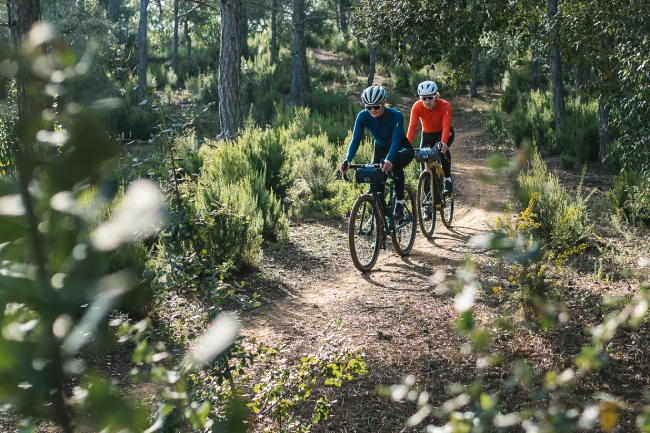
    Gravel bikers
    Try to stick to man-made paths

    Have these tips given you a better understanding of how to be as ethical as possible when cycling? Be sure to keep them close to your heart the next time you head out for a ride. 

  • Top Winter Cycling Destinations To Avoid The Cold!

    Winter is coming… but imagine you could avoid donning those woolly overshoes and rain jacket and chase the summer around the world, where would you go? Here are some of the top winter cycling destinations.

    Winter Cycling Destinations

    The following destinations are ready to be explored all throughout the winter months without a leg-warmer in sight! The go-to locations for a mid-winter getaway or epic training camp these are the fail-safe, tried and tested all-winter cycling destinations.

    Andalucia & the South of Spain – Sun & Smooth Tarmac

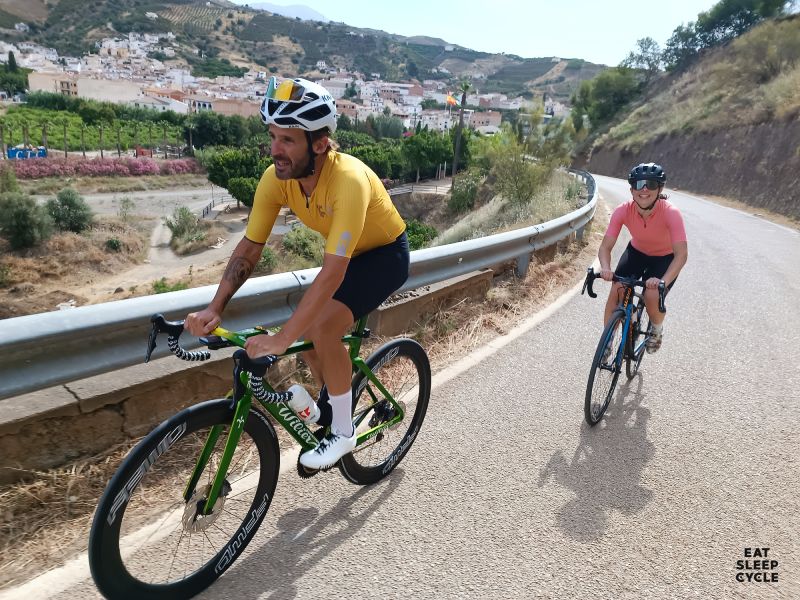
    The regions of southern Spain are a long-held favourite destinations for leisure cyclists and World-Tour teams alike. It’s no surprise that so many fly south for winter; Andalucía enjoys more than 320 days of sunshine a year and only 40 days of rain on average. Calpe and the surrounding area boasts a similarly temperate climate and is swarming with cyclists engaging in some winter training during the colder months.

    The Costa Tropical region is like most good training locations – the area is very hilly, several climbs over 2,000 m, good road surfaces and sparse traffic. The Calpe/Alicante area is known in summer as a haven for those seeking sun-soaked partying but in winter it attracts a very different kind of clientele who mix with the stalwart maogany ex-pats. Cyclists flock to the region in search of sun and smooth tarmac, which they receive in abundance. As with the rest of Spain, the draw is not only the fantastic riding but also the laid-back lifestyle and delicious food and drink on offer, re-fuelling with some delicious tapas and a cerveza is a must.

    Where to stay: Mojacar, Calpe, Almería, Almuñécar.

    Tour Inspiration: The Costa del Sol

    Calpe road cyclist
    A beautiful network of climbs, descents & changing landscapes

    Málaga – Coast and Mountains

    Málaga seems like a paradise for cyclist with its smooth roads & the buzz of a vibrant beach-side city that never sleeps.

    One of our favorite rides out of Málaga is the Puerto Leon, a 16.1 Km 5.6 % AVG gradient road climb that starts right from the city. In no time you are away from the hustle and bustle and into the mountains, crossing paths only with farmers. But it is when you swing back towards the coast and you’re hit with that lovely sea breeze, that you realise just how special that mix of mountains and coast really is.

    Our Málaga Classic Climbs itinerary offers 6 unique rides that combine the highlight climbs in the area with the coast. There is no better feeling than riding back from the hills to the beach for that well deserved ice coffee, ice cream or chilled beer (or all three). Check here to know Why You Should Consider Cycling in Málaga this Winter

    Where to stay: Màlaga

    Tour Inspiration: New Year in Málaga

    Cycling around Málaga
    Enjoy smooth, quiet roads & a warm climate

    Patagonia – Discvoer Chile & Argentina

    If the summer in the southern hemisphere is calling you, look no further than the grandiose landscapes of Patagonia. This incredible region at the sourthernmost point of South America is a paradise for nature lovers and gravel bike riders. Ride across the Andes, camp out under the stars, enjoy long summer barbeques and the adventure of a lifetime.

    Where to Stay: Pucon, Chile or San Martin de los Andes, Argentina

    Tour Ispiration: Patagonia Gravel: The Great Divide

    Gran Canaria & Tenerife – Cycling Heaven

    More than just a beach holiday destination, a visit to Gran Canaria by bike will leave you wondering if the island was actually designed by cyclists. Year-round temperatures of between 22 and 25 degrees, a mere 148 mm of rainfall on average over 12 months, plenty of climbing and some of the smoothest tarmac you’ll ever ride on make it a cycling haven.

    The landscape of Gran Canaria is uniquely stunning and diverse ranging from sparse and volcanic to lively and green. The climbs here can be steeper than the neighbouring Canary Islands meaning the riding is somewhat more challenging and varied – perfect training terrain. Those who aren’t all about pushing their limits on a cycling getaway can take advantage of recovery time on the many beautiful beaches the island has to offer.

    Canary Islands are one of our top picks for legs-out cycling as the rest of Europe stays wrapped up. Join our our Gran Canaria & Tenerife Experience for a true insight into Island life or check out our top pick of Gran Canaria’s cycle routes to plan your own trip.

    Where to stay: Puerto Mogan, Cruz de Tejeda, Agaete.

    Tour inspiration: Canary Islands Gravel

    Tenerife landscape
    Ride In The Winter Sun

    Girona & the Costa Brava

    Exploring the beautiful roads of Girona over the winter months  The catalan city and its surroundings are a cycling paradise at any time of the year and winter brings bright blue skies and a quiet city. Gravel riding over the winter months is particularly popular with local riders-

    Where to stay: in the old town, Hotel Carlemany, Hotel Nord 1901

    Tour inspiration: Costa Brava Gravel

    Girona clyclists
    The unique region of Girona, a real paradise for cyclists

    Inspiring Winter Cycling Spots

    Inspired? Each of our winter cycling spots above give you the ability to indulge in a cycling tour or training session when it should be too cold to be enjoyable! Take a look at our winter camps to see how you can enjoy some cycling in the sun this winter. For more information or to find out about how we can tailor a winter trip to your needs email us on tours@eatsleepcycle.com or contact us online!

    P.S. Enjoyed this blog? Why not sign up to receive notifications every time we post and get regular updates on our latest tours!

  • Top Christmas Gifts for Cyclists – The 2021 Edition

    It’s that time of year when it’s time to share our top picks for gifts for cyclists in your life this Christmas. From stocking fillers to lux new bike day’s, to bike hire & cycling tours, we have something for every cyclist who has managed to be good this year!

    Gifts for Cyclists

    We’ve broken down our gift guide into 5 handy sections depending on what your budget is this year – you can also contact us or visit us in our Girona store if you need some help navigating the huge amount of gift options out there.

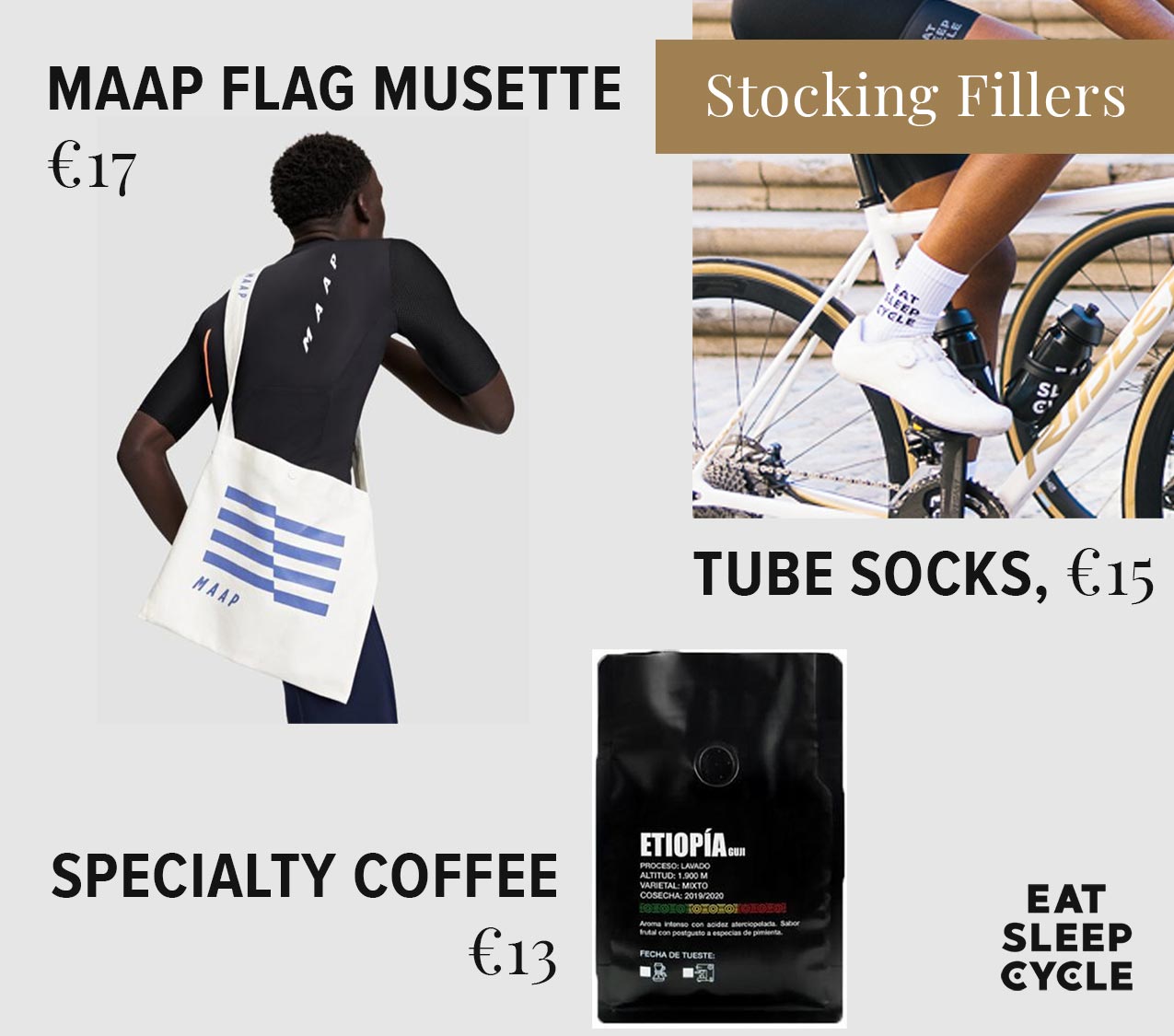
    Gifts Under €25, Stocking Fillers for Cyclists

    Eat Sleep Cycle Tube Socks, €15

    Easy to wear on & off the bike these classic crisp white tube socks are made near Barcelona. They come in packaging upcycled from bike boxes at the end of their life. Shop tube socks.

    Finger’s Crossed Eco Socks, €23,99

    For minimalist style & sustainability! Finger’s Crossed use nyon made from waste that’s been rescued from landfills & oceans around the world. It performs the same as brand new nylon & it can be recycled again & again. Shop Finger’s Crossed Eco Socks.

    Set of Eat Sleep Cycle Bidons, from €12

    Made from Sugar Cane in Spain our bidons are environmentally responsible & our new monchrome design is easy to match with any bike/kit combo. Shop Eat Sleep Cycle Bidons.

    MAAP Flag Musette, €17

    Made with soft canvas fabrications and an angled shoulder strap for maximum comfort, and a metal snap closure to keep your contents secure. Shop the Musette

    Specialty Coffee, coming soon online

    Treat the cyclist in your life to some delicious coffee beans! Our favourites are roasted by IaMay in Cartegena & served up in our Cafè. Available to buy from the Eat Sleep Cycle Café.

    Eat-Sleep-Cycle-Christmas-Gifts-For-Cyclists-2021-Stocking-FillersChristmas Treats for Cyclists, Gifts Under €75

    Here’s our top pick of mid-range gifts for cyclists.

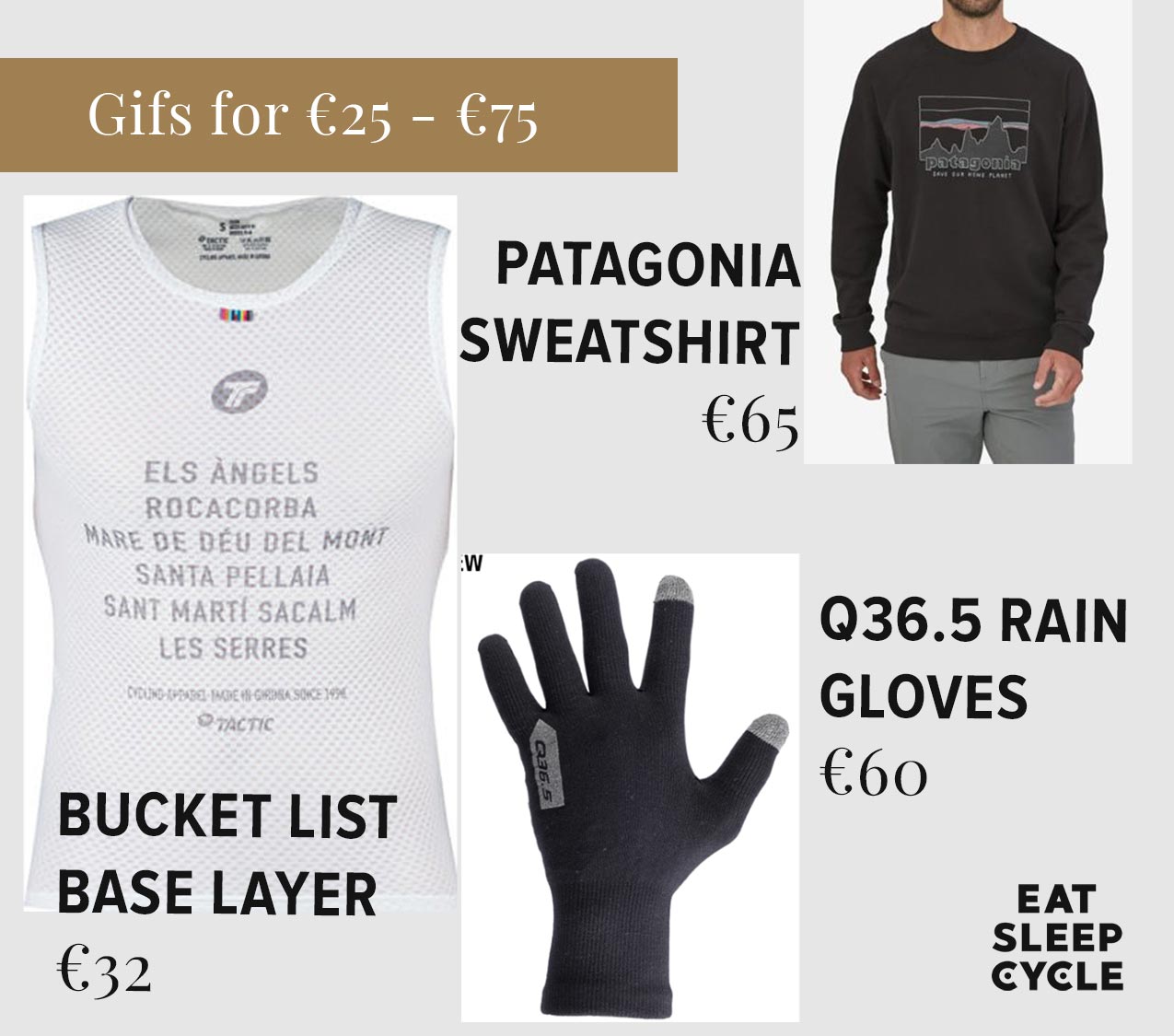
    Tactic Bucket List Base Layer, €32

    A classic base layer for cyclists who love to ride Girona. Shop the Base Layer.

    Tubolito S Tubo Road, €32,90

    A 23g super-compact lightweight inner tube boasting low rolling resistance & high puncture resistance. Shop Tubolito.

    MAAP Base Arm Warmer, €45

    Avialable in black or navy, perfect for riding in Autumn, Winter & Spring. Shop MAAP Arm Warmers.

    Eat Sleep Cycle Essentials Hoody, coming soon!

    Made by Coto Roig in Manresa with organic cotton & embroidered in Girona, perfect for chilling out after the ride.

    Q36.5 Anfibio Winter Rain Glove, €60

    The perfect glove to keep hands warm in all conditions. Shop Q36.5 Anfibio Gloves. 

    Patagonia 73 Skyline Organic Crew Sweatshirt, €65

    Soft organic cotton & a classic crew neck cut for every day comfort. Shop Patagonia Organic Crew Sweatshirt.

    Eat-Sleep-Cycle-Christmas-Gifts-For-Cyclists-2021-Gifts over €25Next Level Gifts For Cyclists, Gifts Under €150

    Special gifts for the special cyclist in your life!

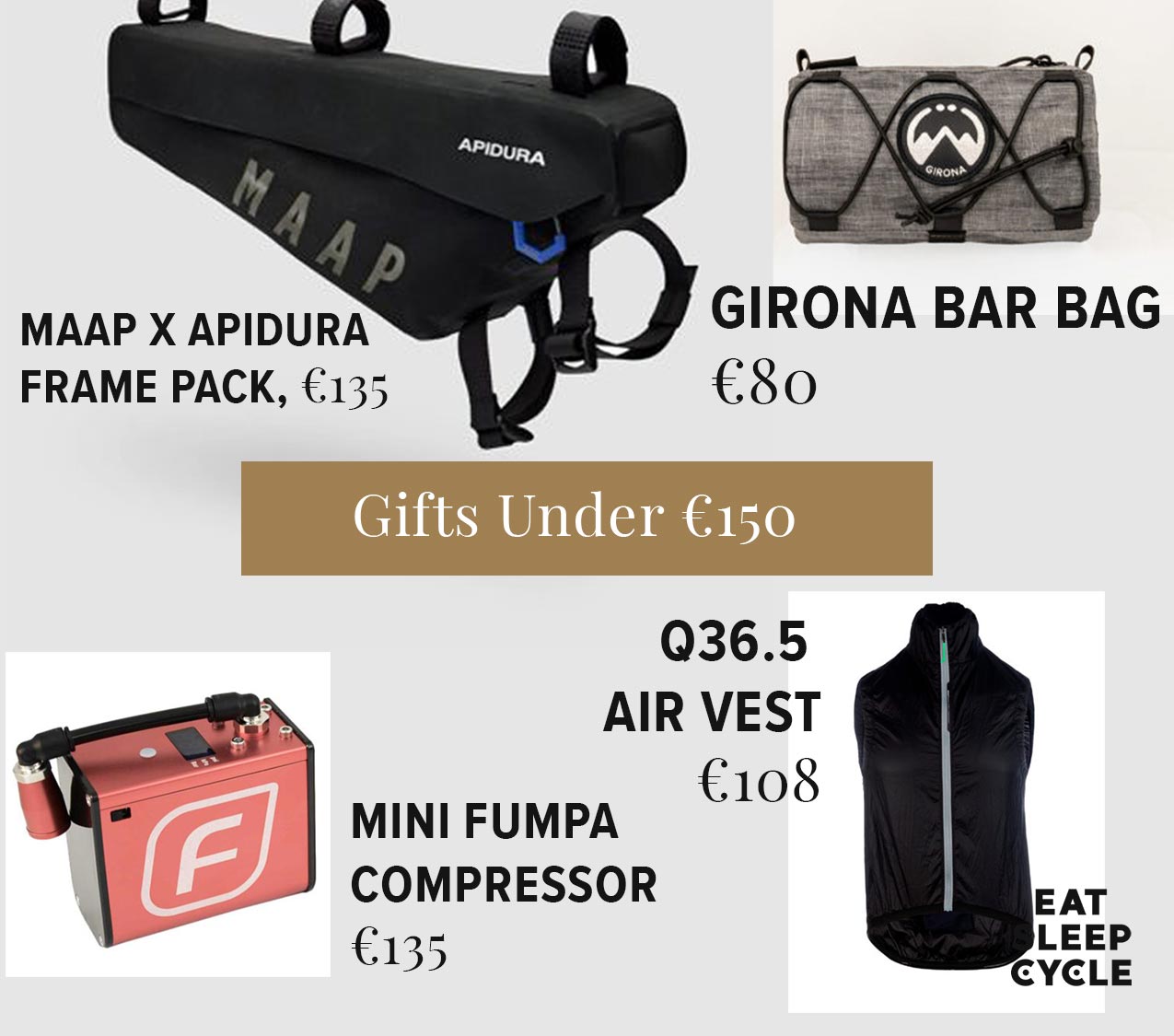
    Girona Handlebar Bag, €79,99

    A durable, waterproof bar bag made by hand in Barcelona. Perfect for cyclists seeking adventure. Shop Girona Bar Bag.

    True Believers Café Jersey, €80

    Inspired by the steps of Girona cathedral, our transition season short sleeve jersey is made from recycled fabrics in Girona. Choose Eat Sleep Cycle signature pink or gold. Shop Mens. Shop Womens.

    Set of Tyres, from €100

    All cyclists will appreciate a beautiful set of new rubber. Choose from Continental, WTB, Vittoria, René Herse, Pirelli & more. Ask us if you need advice on what to buy! Shop Tyres.

    Q36.5 Air Vest, €108

    Featherlight wind blocker for all year round riding. Shop the Air Vest. 

    Assos Bib Shorts, from €120

    The bib short is a staple item of clothing for any cyclist. Assos have a reputation for being the very best in the world at making bib shorts. Shop Mens Mille GT Bib Short. Shop Women’s UMA GT Half Short Evo

    Mini Fumpa Compressor Pump, €135

    Possible the best gift for a cyclist who already has everything! The mini Fumpa easily fits into a jersey pocket & is good for 5 re-inflations of road tyres between charges. Shop mini-compressor. pump.

    MAAP x Apidura Frame Pack, €135

    Constructed from an ultralight waterproof laminate with high-contrast reflect graphics for increased visibility and a protected electronics port to keep your tech secure. Shop the Frame Pack. 

    Eat-Sleep-Cycle-Christmas-Gifts-For-Cyclists-2021-€150Seriously Nice Christmas Treats for Cyclists, Gifts Under €500

    If the cyclist in your life has been extra-good this year why not treat them to something from our lux list? Remember, our team in on-hand to help you select the perfect gift for your cyclist. Browse our suggestions below or contact us for help!

    MAAP ALT_Road Jersey, €165

    One of the best techinical merino wool jersey’s on the market. The ALT Road Jersey’s all natural fibres are both renewable and environmentally sustainable without any trade-offs in terms of superior performance. Stretch woven ripstop side body and pocket panels provide extra durability and unmatched thermoregulation, for whatever lays ahead. Shop mens. Shop women’s. 

    Q36.5 Salopette Gregarius Cargo Adventure Bib Short, €179,99

    The all-rounder for every riding occasion, no matter what the distance or intensity, is designed for the most adventurous of cycling activities in all environments and climates. Shop Adventrue Bibs.

    Fi’zi:k Tempo Overcurve R4 Shoe, €200

    A lightweight road cycling shoe for all condition riding. Shop the Overcurve.

    Wahoo Elemnt Bolt, €299

    Simple, intuitive GPS navigation in small, sleek unit. Shop Wahoo Elemnt Bolt.

    Kona Hula Kid’s Bike, €499

    For the special little cyclist in your life! Shop Kona Hula.

    Ultimate Gifts for Cyclists, Christmas Gifts over €500

    Wahoo Kickr Core Smart Trainer, €799

    Realistic, accurate & quiet indoor training. Perfect for pairing with Zwift & other virtual reality training platforms. Shop the Kickr Core.

    Eat-Sleep-Cycle-Christmas-Gifts-For-Cyclists-2021-Brompton-Bike

    Brompton Bicycle

    The world’s best folding bike is perfect for commuting, getting around town, mini adventrues & big adventures! Shop Brompton Bikes

    Basso Venta Disc Road Bike (Shimano 105), €2,550

    Give the gift of cycling this Christmas! The Basso Venta is a sleek, carbon endurance road bike made in Italy & is the perfect choice for riders looking for a great value first bike. Shop the Basso Venta.

    Christmas Gifts for Cyclists

    We hope the above suggestions will help make the Christmas gift buying for the cyclist in your life a bit easier but if you’ve any suggestions that we should add to the list please comment below to let us know. And, if you’d like to find out more about any of our tours as gifts, give us a call now +34 972 649 131 on or contact us online!

    P.S. Enjoyed this blog? Why not sign up to receive notifications every time we post and get regular updates on our latest tours!

  • Eat Sleep Cycle Café: Food Philosophy

    With less than a week to go until the Eat Sleep Cycle Café opens we speak to Bram, the Eat Sleep Cycle Café chef, as he talks about the inspiration behind the menu of our new Girona cycling café. One of the most important factors for Lee and Louise when deciding to expand Eat Sleep Cycle, was to ensure they were able to give back to the community & support local producers. Read on to find out more from the chef  behind the newest Girona cycling café menu!

    Hello Bram, welcome to Eat Sleep Cycle! Could you tell us a little about yourself and how you came to be a chef?

    Hi, I’m Bram from the Netherlands, I grew up in a small fishing town Breskens. I started at the age of 14 working as a dishwasher for two hours at the weekend, that’s where Bart started to teach me kitchen life. My most valuable lesson I learnt in the kitchen is to first create a perfect dish, then once you have it, make it as easy as possible to make without losing the quality.

    I worked my way up in the kitchen scene & as young guy I would change job each year to gain as much experience as possible. Later, I started traveling in the winters and that’s where the biggest experience was, learning how other cultures cook and eat. It was and still is amazing.

    Eat-Sleep-Cycle-Hub-Girona-Cycling-Chef

    What is it like to create a menu from scratch for a new restaurant?

    Creating a menu is always a challenge, especially in a foreign country away from what you know. You have to do your homework to understand the food culture, and then the menu needs to be diverse enough. I’m not afraid to say I’m stubborn, I don’t like to copy, I always want to end up with my own twist on a dish.

    Finding new ingredients is the other nice part of it, it’s a journey that never ends. Finding ingredients with a story is specially awesome. A cheese that is coming from a small local farm, made from 12 cows who all have a name, creating a dish with that, is gold.

    eat-sleep-cycle-cafe-philosophy-cycling-girona-cafe

    What has inspired the Eat Sleep Cycle Café menu?

    Trying to work as much as possible with local and seasonal ingredients is the inspiration for the menu.

    What style of food can we expect to see for the newest Girona cycling cafe?

    The food of the café will change with the seasons. But you can also expect local ingredients with a international twist. I worked in Sri Lanka, Vietnam and Philippines, and from every place your learn something. It would be nice to infuse some of those flavours in a gentle way with local products from Cataluya.

    eat-sleep-cycle-cafe-food-philosophy-girona

    Do you have any favourite suppliers or ingredients that you are working with?

    My favourite ingredients are always changing. I do like to work with seafood as well meat, but now a days vegan, healthy and sustainable is the hype, so I’m more focused on developing myself in those areas. I’m a massive fan of the “Yakiniku” Kamado BBQ, it’s extremely diverse. Smoking, roasting, slow cooking, pizza, cakes, it is endless! Using this in combination with veggies, creating something out of the box, that’s what I mostly like.

    What’s your biggest motivation as a chef?

    My biggest motivation is creating dishes and giving costumers the ‘wow’ effect. There is always something to improve, and that never stops.

    Stay up to date on the café!

    All of us at Eat Sleep Cycle are excited for the newest venture into a Girona cycling café, and we’re all so grateful for your support! Follow us on instagram, and check out our café web page to stay up to date.

    P.S. Enjoyed this blog? Why not sign up to receive notifications every time we post and get regular updates on our latest tours!

  • Dirt Jumping in Girona

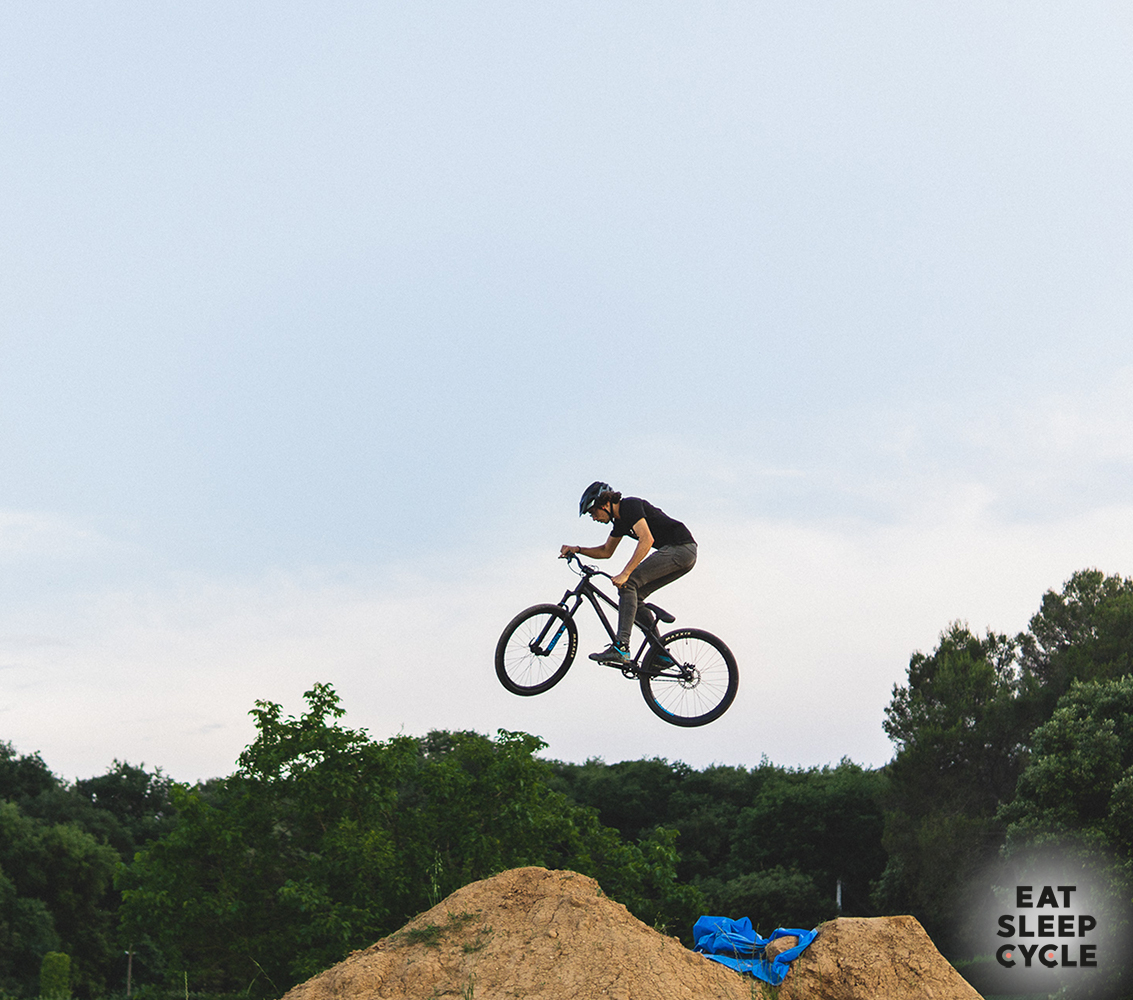
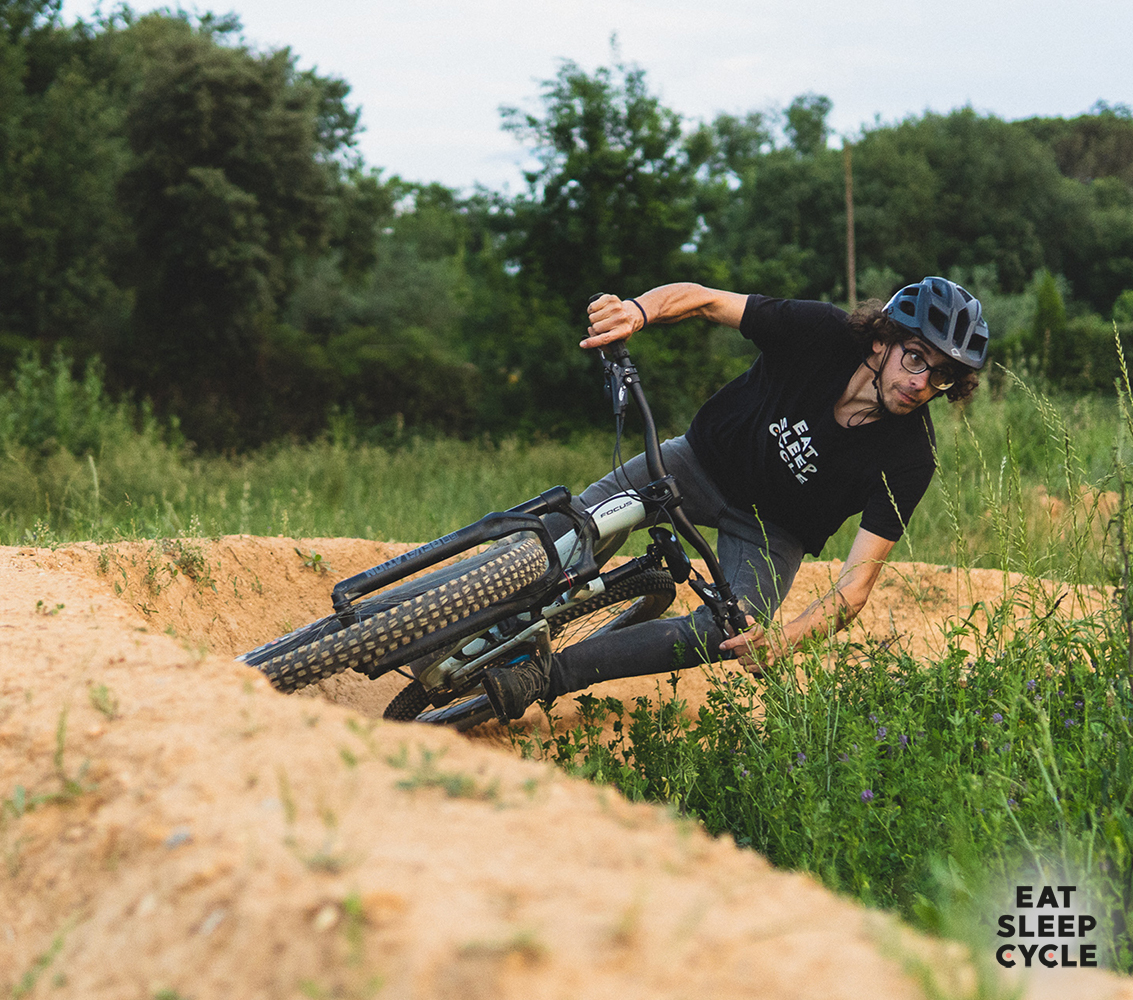
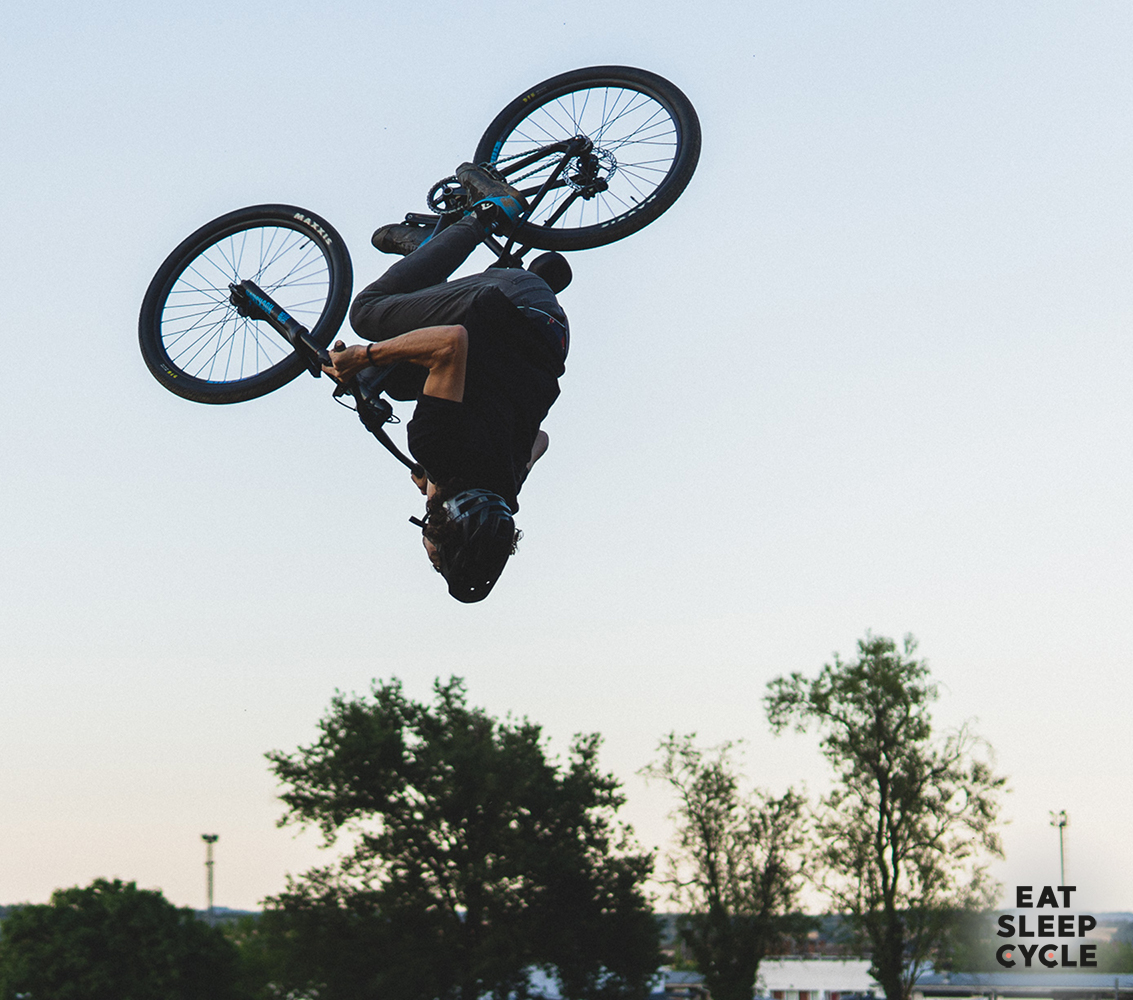
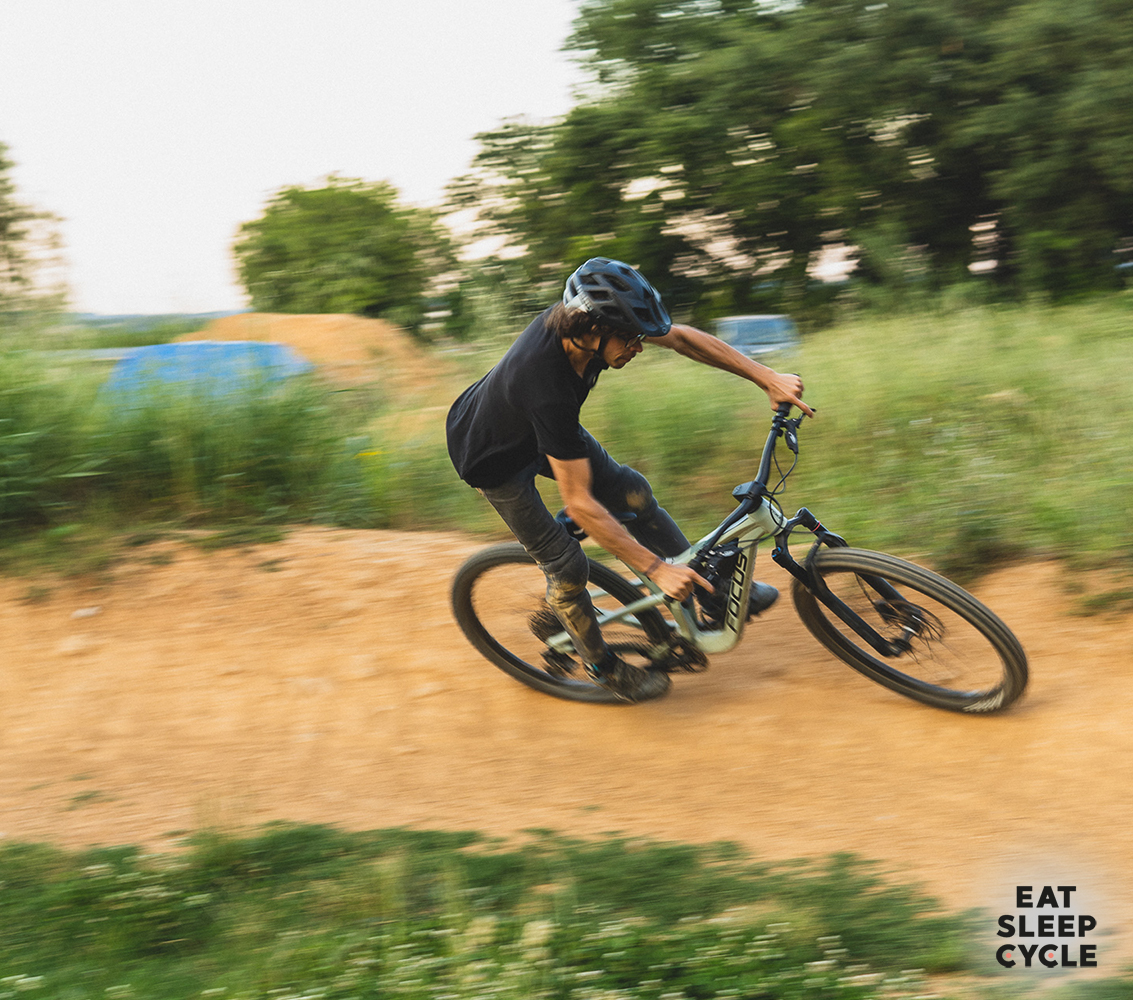
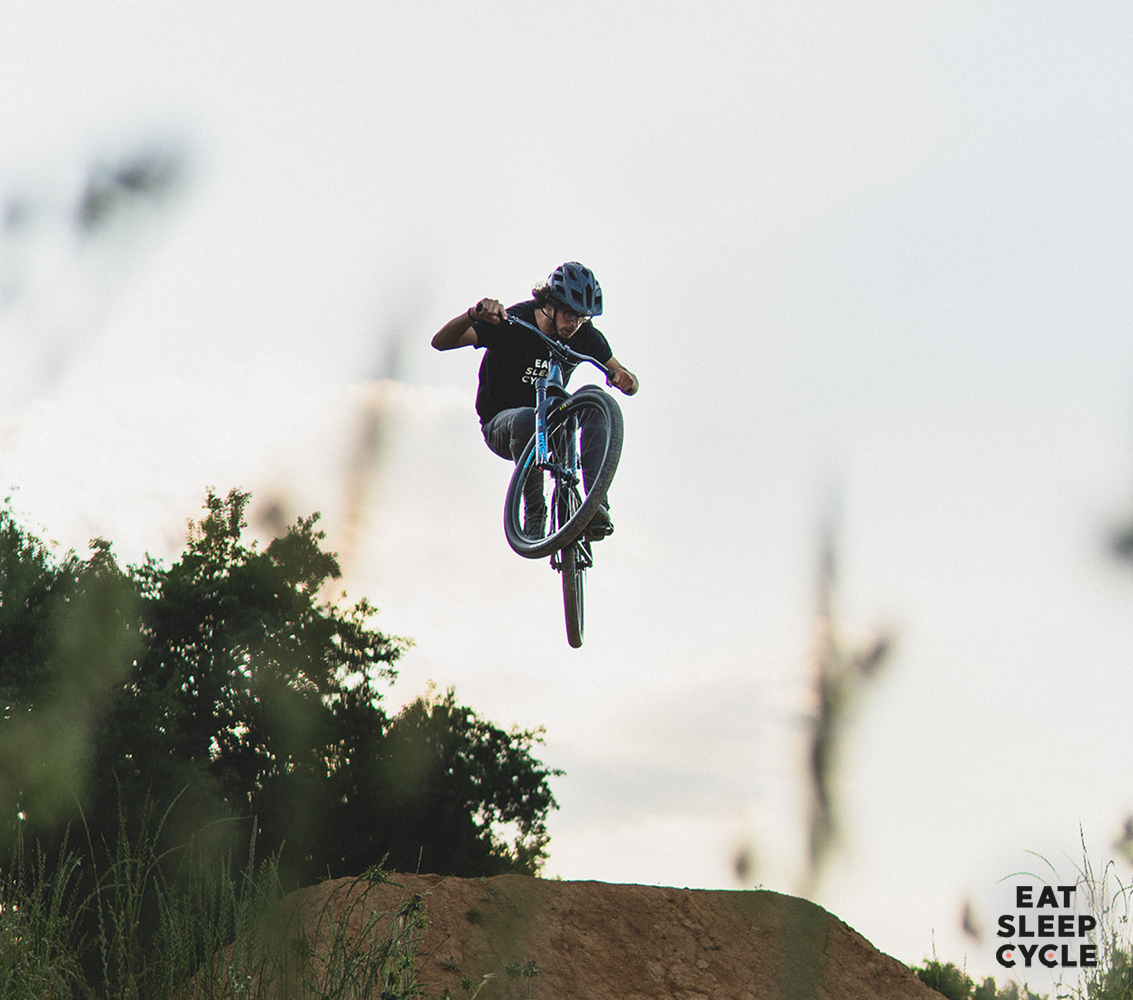
    Our very own Joan and Daan head out after work to go dirt jumping in Banyoles. I caught up with Joan to find out what it is about dirt jumping that he loves so much, and check out these awesome shots of the guys in action! Photos by Daan van Meeuwen.

    Eat-Sleep-Cycle-Dirt-Jumping

    How long have you been dirt jumping?

    I’ve been dirt jumping for a long while, ever since I was around 13.

    Eat-Sleep-Cycle-Dirt-Jumping

    What is it about dirt jumping that drew you to the sport?

    For me it’s easy to push myself while dirt jumping. I’m always trying to be better and better. Every time I jump I’m aiming to push myself to go bigger and do more and more tricks, until one day I am doing the things I’ve been dreaming about doing for years, like backflips, supermans, tail whips and more!

    Eat-Sleep-Cycle-Dirt-Jumping

    Do you have a favourite place to go dirt jumping?

    Yes, I built some jumps with my friends in the middle of the forest. Going there and spending hours jumping with friends in our little dreamland is my favourite place.

    Eat-Sleep-Cycle-Dirt-Jumping-Girona

    Is there anything else you’d like to add about dirt jumping?

    If you’re curious to try jumping for the first time, just do it, the best thing is to start. I can’t think of a better feeling than jumping, being in the air, just you and your bike.

    Eat-Sleep-Cycle-Dirt-Jumping-Girona

    Shop our range of mountain bike here.

    P.S. Enjoyed this blog? Why not sign up to receive notifications every time we post and get regular updates on our latest tours!