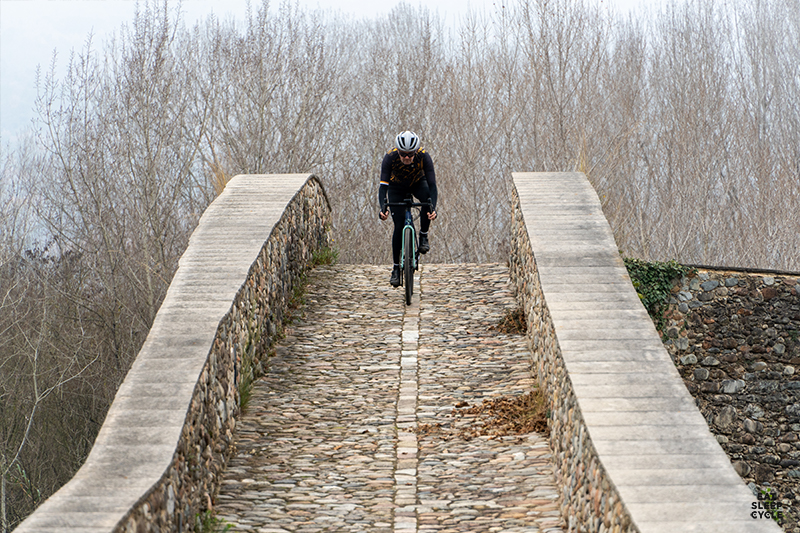
Category: Gravel

  • A Guide to Gravel Routes in Málaga

    The city, and by extension, the region of Málaga, is a veritable smorgasbord of sweet and spicy gravel routes that will take you from the pine-clad paths of Los Montes de Málaga to the dramatic views of the El Chorro gorge.

    Leave whatever preconceptions you had of Málaga and the Costa del Sol to one side, because after seeing these breathtaking climbs, eyewatering gradients and stunning coastal spins, you’ll be rearing to join us and try these epic gravel adventures for yourself.

    Gravel Cycling Routes in Málaga

    Guadalhorce river, the airport and the Sierra de Mijas

    Some of the easiest routes to access from the city centre are those that start from the Guadalhorce Park. The Park is located at the mouth of the Guadalhorce River, just to the west of Misericordia Beach. It’s hard to miss given that at any time of day, cyclists and walkers can be seen crossing from the tarmac onto the dirt track that runs parallel to the river.

    From here there are two options: to continue straight along the right-hand side of the riverbank, or cross the wooden bridge and continue along the left-hand side of the riverbank. Either route will take you right under the flight path of landing planes, and to the boundaries of the airport, which can make for pretty unique photos.

    Crossing to the left-hand side of the river will allow you to access the villages of Alhaurín de la Torre, El Romeral and Cártama. From Pinos de Alhaurín, there are several roads and tracks that lead up into the Sierra de Mijas, with some impressive climbs such as the Puerto de la Graja. This lush green route is signposted for cyclists and walkers, with a natural spring and look out points. This loop, starting from Málaga, is around 67 km in length with 1,100 m of elevation.

    Once in the Sierra, a beautiful network of tracks and paths zig-zag through the dense forest made up of oaks, wild olive trees and palmettos, such as the ones leading up to the Cañana del Lobo lookout point, a large paved and partially-shaded rest area with uninterrupted 360º views, crowned by a sculpture of a howling wolf.
    Los Montes de Málaga

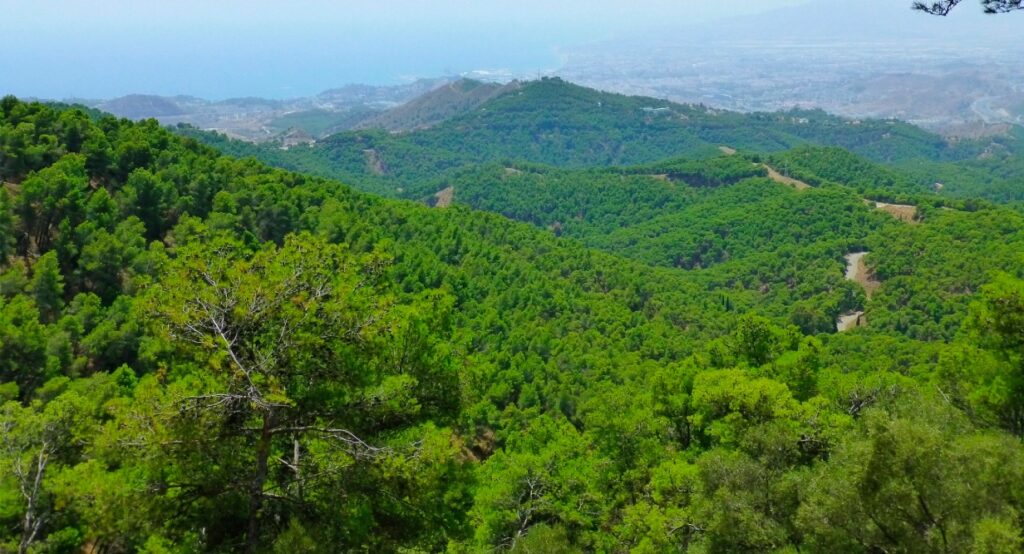
    Los Montes de Málaga Natural Park is a pine-forest playground offering the perfect terrain for gravel adventures. Easily accessible through the neighbourhood of El Limonar to the east of the city, after battling a couple of steep climbs on the road, this swiftly turns into a dirt track and you can proceed to get your wheels dirty to your heart’s content.

    We recommend having the route planned out before you go, as a wrong turn in these mountains could get you quite lost… GPS signal isn’t always reliable once you are deep into this labyrinth of pathways, so make sure you stick to the pre-planned route unless you’re riding with someone who knows these hills well.

    Routes through the Montes de Málaga can vary from 30 km to 60 km and more, with plenty of varied elevation and descents to sink your proverbial gravel teeth into. The views from this Natural Park are stunning, stretching both back over the city and out to the Mediterranean Sea, and deeper into the Andalucian hills if you face inland.
    La Ermita de Los Verdiales

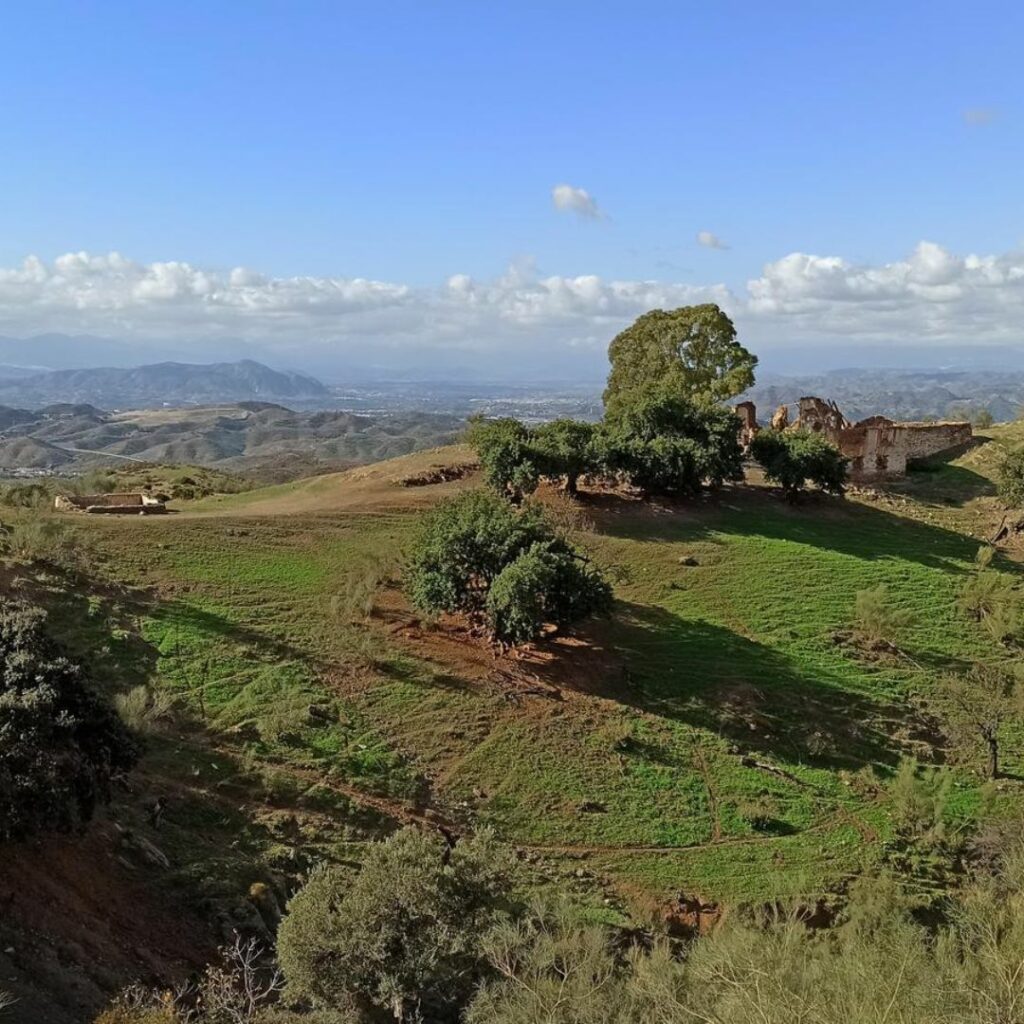
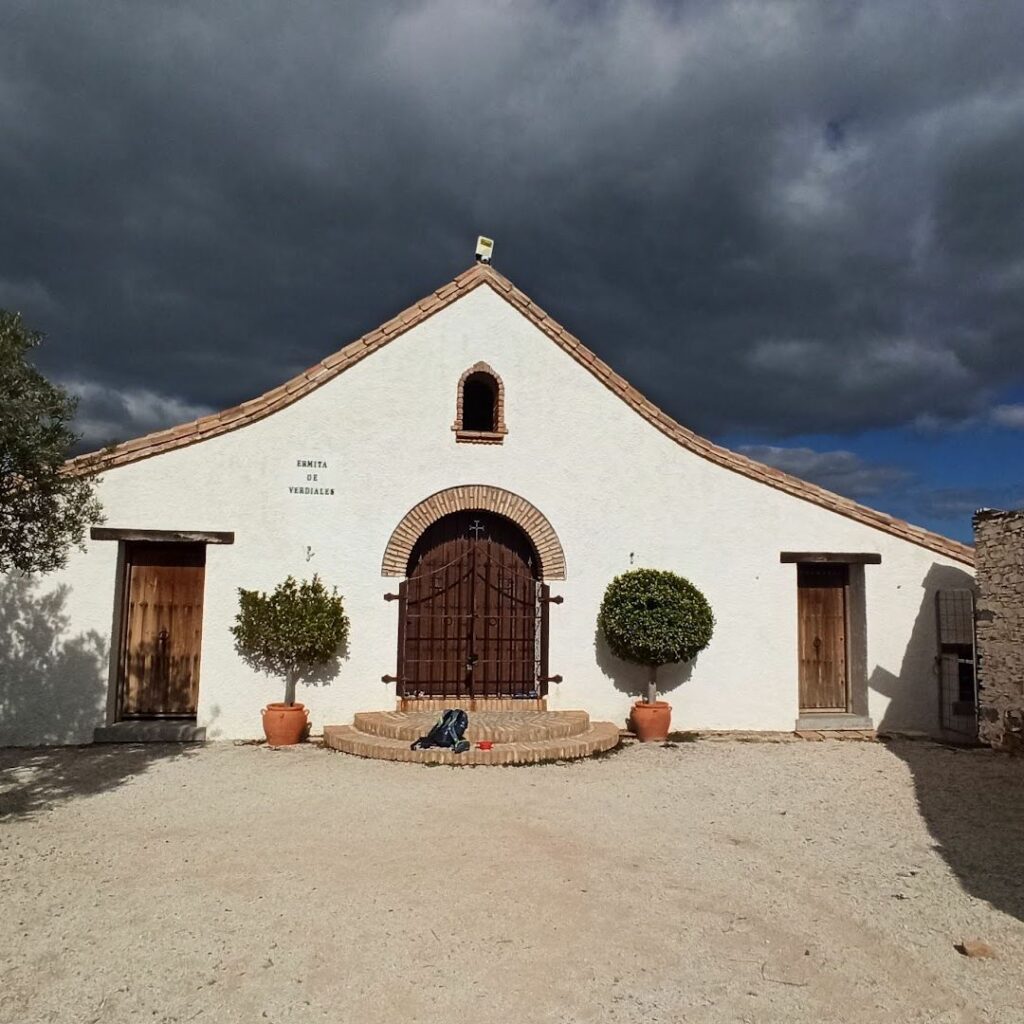
    La Ermita de Los Verdiales is a small abandoned chapel located right on the dividing line between the Campanillas River and the Guadalmedina River; right on the border of the judicial districts of Verdiales and Roalabota. It is an architectural checkpoint for local cyclists that is believed date back to around the beginning of the eighteenth century.

    The route from the centre of town crosses west out of Málaga and through el Puerto de la Torre. It is an almost 50-50 mix of road and gravel track, which gains elevation fast thanks to some steep ramps that eventually offer some pretty spectacular views across inland Málaga. This route averages out at around 38 km with around 650 m of elevation – short but sharp!

    There is not a whole lot of shade on the route, so earlier rides are better if you want to avoid the midday heat. Unfortunately, there is also no water fountain once you reach the Ermita, so if it’s a warm day, take a couple of bottles of water along just in case.
    El Chorro by gravel

    To the northwest of Malaga sits the El Chorro gorge, which shares its name with a nearby village in the municipality of Álora, near the Guadalhorce Valley. That being said, it’s still within the region of Málaga and is close enough to reach by bike.

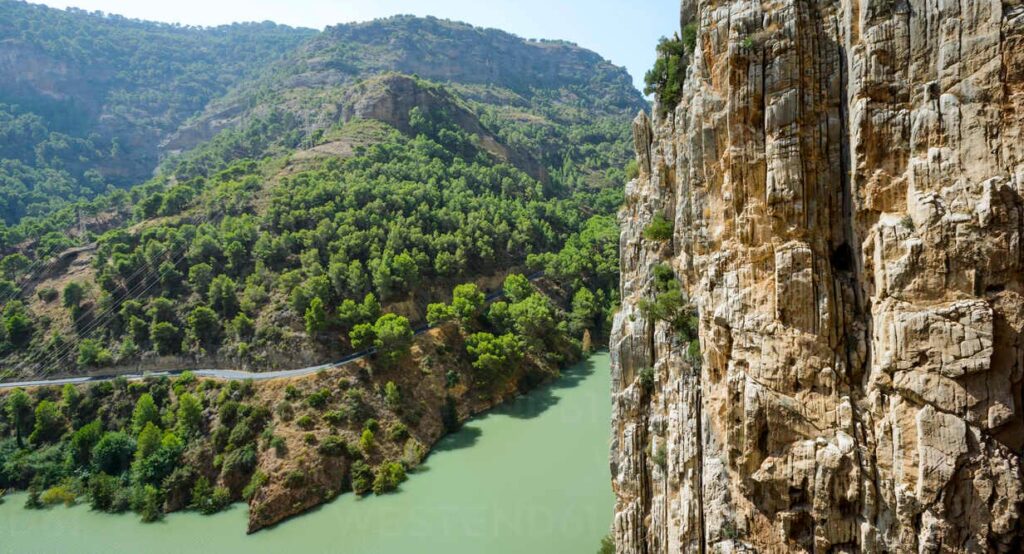
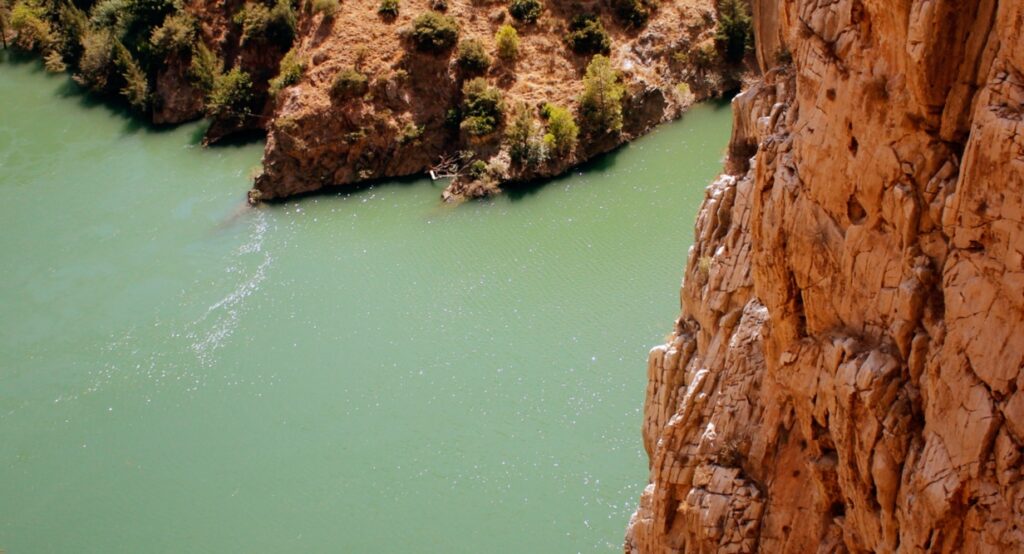
    El Chorro is heaven for all kinds of “outdoors-y” adventurers. While it’s best known for rock climbing and hiking (home to the Caminito del Rey, a breath-taking natural ravine carved out by the turquoise waters of the Guadalhorce River. See our Cyclist’s Guide to Málaga for more information!), this area also offers plenty of gravel and mountain bike trails through the plunging gorge and dramatic canyon.

    By car, El Chorro is about 60 km from Málaga, but cycling there adds a few extra kilometres into the mix, with the outbound route stretching for around 75 km. The ride starts at the Guadalhorce Park and essentially follows the Guadalhorce River up to the El Chorro gorge, passing through Cártama, Pizarra, Álora and Valle de Abdalajís. The return journey can always be shortened by hopping on a train back to Málaga in Álora, which will bring you and your bike right into the city centre.

    Take a look at a road route we did in spring 2023 to feast your eyes on this breathtaking landscape!
    The Eat Sleep Cycle Cycling Hub, Málaga

    Málaga is also the home of our Malaga Cycling Hub. This city is a gateway to Andalucia, Portugal and beyond and our benchmark for culture, food, good vibes and amazing riding. For us, Málaga is the place to be, it’s a buzzing city that’s full of life and we’re proud to be part of Málaga’s journey as an up-and-coming cycling destination.

    Come and see us, grab a coffee and let’s talk cycling!

    Book Your Place on a Málaga Cycling Tour

    If this has got you inspired to travel to Málaga, then why not view our cycling tours in Málaga and check out the trips and packages we have available. If you’re planning to travel here and don’t want to worry about bringing a bike, get in touch with our Málaga Hub and talk to us about our Málaga Bike Hire service to rent top-quality, fully-serviced road, gravel and mountain bikes.

    If you’ve any questions about your possible cycling tour in Málaga give us a call now on +34 951 01 48 08 or contact us online for more info!

    P.S. Enjoyed this blog? Why not sign up to receive our newsletter for content all about bikes and the adventures they take us on!

  • Best Girona Gravel Cycling Routes

    Winds Girona Gravel Challenge

    From the Mediterranean to the Pyrenees, seemingly endless gravel and dirt roads weave through this amazing diverse landscape. No wonder Girona is home to many of the sports gravel kings and queens. Here is a set of tougher gravel loops out of Girona that will satisfy the stronger riders looking for some spice. Ride them fast or make them all day lunch stop rides; either way you will have a great day out on the bike and come back with ‘gram worthy photos to tease your friends.


    Santa Susanna de Caulès Loop
    Perhaps the easiest of the four is a 71 kilometre route that goes south through the lovely rolling gravel of La Selva before it climbs into the mountains between Girona and the coast. After views of the coast and an old church perched high in the hills, the route descends for kilometre after kilometre on excellent wide gravel. The lunch opportunity is in a beautiful spa that bottles its own sparkling water. After lunch, it’s only 20 easy kilometres back to Girona so no need to hold back on the food.

    Read More


    Els Metges Loop
    One of the marvels of Catalunya is the old inaccessible farms and estates that have been converted to family run restaurants serving the amazing local fare. One of the best, just east of Girona is Els Metges hidden on the steep gravel roads of the Gavarres mountains. This 69.5 kilometre route manages to sneak up to Els Metges on scenic lesser used paths that avoid the really steep roads. The hardest climbing is all done before lunch so why not indulge in a true Catalan country meal. A long, fast descent followed by mostly easy riding remain.

    Read More


    Taverna del Subirà Loop
    West of Girona, the horizon is dominated by the Guilleries mountains covered in a mix of giant deciduous and evergreen trees. Hidden under the canopy are myriad gravel roads climbing and descending on routes who’s significance is long forgotten apart from one incredible destination: Taverna del Subirà. This old estate traces its origins back 1,000 years and it has been in the family currently operating the restaurant for 300 years. Its a tough 15 kilometre climb to lunch but that’s all the day’s climbing in the bag so there’s time to relax and enjoy this gem of a restaurant. A long and exhilarating descent awaits followed by mostly easy tracks back to Girona. Its a big 91 kilometre day out on the bike with 1,500 meters of climbing.

    Read More


    Mieres Loop
    North of Girona the most recognised landmark is Rocacorba. Though it is possible to ride off-road up this beast, a better option is to ride around it on a gravel bike. This is the roughest of the four rides and has the hardest climbs, but arguably, delivers the most rewards. A good portion of the route is in the mountain county of Garrotxa where things get rockier and steeper with less people and services. The tougher, wilder climbs and descents will put a smile on the face of the experienced gravel aficionados. Coming in at 80 kilometres and 1,600 metres of climbing, this ride is harder than the numbers suggest. Just past the half way point comes the popular roadside Can Met restaurant but be warned, steep climbs and many kilometres remain before the day is done.

    Read More

    ·

    Santa Susanna de Caulès Loop


    Lofty views of the coast, a bike friendly spa rest stop and an endless scenic gravel descent make this one of the nicest Girona gravel loops. Starting with the lovely rolling gravel of the La Selva region just south of Girona, this route then tackles the coastal Transversal Mountain Range offering elevated peak-a-boo views the Mediterranean. A little past the route’s high point, the improbably located 14th century church, Santa Susanna de Caulès, suddenly appears and is very much worth a photo stop. After an exhilarating descent on lovely wide gravel roads comes some rolling gravel before a snack break at the elegant Balneari de Prats spa with its shaded, private terrace. Home is just few more kilometres away on scenic La Selva gravel.


    Pay attention to navigation cues on your head unit for the entire ride as this route has many twists and turns. The ride starts with a section of the much loved Carrilet, a converted rail line that connects Olot in the Pyrenean foothills with the Mediterranean. After 10 kilometers the route joins the lovely gravel roads of La Selva and winds through forests and fields for a further 18 kms until the crux of the ride at kilometer 28. Here the road suddenly becomes steep and in the middle of this brutal climb there is an awkward left hand turn up an even steeper ramp. Dramatic as this sounds, the difficulties are only 1/2 kilometer long and with determination, can be ridden. Past this climb, the pastoral setting of a few minutes ago has now surrendered to remote and mountainous tracks that are thankfully easily ridden.


    At kilometer 31 the route follows a busy road for 1.5 kilometers before veering right on 1.5 kilometer steep gravel climb. Near the crest of this climb and beyond come the views of the Mediterranean seemingly far below. Somehow the route then gifts a 7 kilometre descent that feels unearned, but who’s going to argue! The lovely church of Santa Susanna de Caulès is just one kilometre into the descent and has an equally lovely house beside it. While enjoying this highlight please be respectful of the home owners peace and quiet and stay close to the church.

    The Balneari de Prats spa in Caldes de la Malavella, is 7 kilometres beyond the bottom of the descent. A humble white gate on the right side of the town square marks the spa entrance. Bikes are welcome as long as they are walked through gate into the terrace and then parked up against the hotel building away from the other guests. Enjoy a lovely sandwich and Prats own bottled sparkling water. From Caldes it’s just a little over 20 kilometres back to Girona on pastoral, rolling terrain.


    The Balneari de Prats coffee shop should be open every day during normal riding hours.


    Distance: 71 kilometers
    Elevation Gain: 750 meters
    Crux: The last 300 meters of the climb that starts at km 28; steep but rideable with the body
    positioned forward and low on the bike.
    Technical Level: Intermediate
    Fitness Level: Intermediate to Advanced
    Typical Rolling Time: 3:15 – 3:45 hours; 2:45 at race pace
    Stops: Balneari de Prats in Caldes de la Malavella at kilometre 49. Carry lots of water and snacks.

    DOWNLOAD TRACK

    ·

    Els Metges for Lunch


    The gravel in Catalunya is already pretty special but if you can combine a rip in the dirt with a fabulous lunch in an old stone farmhouse lost in the hills, you’ll have a day for the ages. Els Metges Restaurant is in an old church and farmhouse with a view over Empordá. It can only be accessed by a long gravel climb through the Gavarres protected forest. This is a meaty ride that is harder than the distance would suggest but well worth the effort. The ride is very rewarding with the varied terrain, long gravel climbs, a true Catalan style country meal and parts which feel quite remote.


    Pay attention to navigation cues on your head unit for the entire ride as this route has many twists and turns. The ride starts with a section of the much loved Carrilet, a converted rail line that connects Olot in the Pyrenean foothills with the Mediterranean. Roll easily for the first 13 kms then start climbing after a left hand turn across a wide road. The route is mostly climbing for 15 kms with the last 5km being the hardest. From the top, descend for 1km to Els Metges which is at km 28.5.


    The descent after lunch is steep and a bit rough in places so stay sharp and don’t miss the right hand turn at km 31.5. Hopefully there is something left in the legs after the descent as the the next 6 kms are rolling and mostly uphill. Be alert as these gravel roads are well used by farmers. Be sure to stop at blind intersections. Should an energy boost be needed, there is a cafe at the top of Madremanya (km 41). The cafe is in a modern building and can be seen on the left across a parking area and field. From here, the route is mostly downhill or flat and is a mix of gravel and lanes until Girona.


    Els Metges is open between 9:00 and 17.00 on Fridays to Mondays all year round unless they are on holidays.


    Distance: 69.5 kms
    Elevation Gain: 800m
    Crux: The gravel road descent from Els Metges is steep and rough in places.
    Technical Level: Intermediate
    Fitness Level: Intermediate to Advanced.
    Typical Rolling Time: 3.5 – 4 hours; 3 hours at race pace.
    Stops: Els Metges km 28.5, Madremanya km 41. Carry lots of water and snacks.

    DOWNLOAD TRACK

    ·

    Taverna del Subirà for Lunch


    An exceptional route and not to be tackled lightly. It climbs high into the Guilleries Massif which is a mountain range spur pushing south from the Pyrenees. After ascending through an expansive forest of huge trees, enjoy amazing views of the big country to the west . Taverna del Subirà is a hidden gem. It is one of the oldest and largest Masias in Catalunya. The family that own and run the restaurant can trace their ownership back 300 years and parts of the building are 1,000 years old. They serve a full traditional Catalan style lunch but they will also make lighter sandwiches. The road back to Girona from the Taverna is mostly downhill so it is realistic to consider indulging in a complete meal at this truly unique landmark.


    This ride is best done in dry conditions as the long descent can be rutted and loose in the wet. The feature climb is 15 kilometres long, 12 of those on gravel, so be prepared for a big day out on the bike.


    Pay attention to navigation cues on your head unit for the entire ride as this route has many twist and turns. The rides starts by stitching together hidden lanes and paths across the developed southern end of Girona. After 10 kilometres the route is predominantly gravel. Santa Coloma de Farmers comes up after another 22 kilometres of rolling, scenic gravel roads and is the last town before the long climb. The climb starts on a lovely paved lane which turns to gravel after about 3 kilometres. Where the gravel starts is a quaint country cafe which may be open.


    The climb is on a wide, well maintained gravel roads with comfortable, steady gradients. Rewards await at the top with views and a downhill to the lunch stop. The driveway to the Taverna appears on right a couple of kilometres into the downhill.


    Descending from the Taverna is enjoyable but long; rest the hands and body periodically and exercise caution. The last 10 kilometres of the descent are on smooth pavement following the Ter River through a shaded canyon. The last leg of the route continues down the Ter on a mix of gravel roads and paths all the way to Girona.


    Taverna del Subirà is open all year during the day from Friday to Sunday.


    Distance: 91 kilometers
    Elevation Gain: 1,500 meters
    Crux: 12 kilometer continuous gravel climb
    Technical Level: Intermediate to Advanced
    Fitness Level: Advanced
    Typical Rolling Time: 4.5-5.5 hours; 3:45 hours at race pace
    Stops: Santa Coloma de Farners kilometer 32, Taverna del Subira kilometer 53, Anglès kilometer 67. Bring water and snacks.

    DOWNLOAD TRACK

    ·

    Mieres Loop


    A local classic gravel loop for the experienced rider with great views, tough climbs, remoteness and a fun 20 kilometre roller coaster back to Girona. Start early and prepare to be out longer than expected; really tough climbs and gravel tracks that are easy enough but also rough enough to slow the wheels. The route goes up the west side of Rocacorba then returns on the famous mountain’s east side. Sounds straightforward but it is anything but. Take in the twisty route through the beautiful val de Llémana, marvel at the Dame de Garrotxa monument high above Mieres and after the one building village of Biert, enjoy the thrilling 20 kilometres back to Girona. Mieres has a restaurant that is open all week apart from Monday and is a good place for a sandwich though it is very busy on the weekends. The descent to Biert is moderately technical in places. Its length and difficult gradients makes this route one for the fit and experienced gravel rider.


    Pay attention to navigation cues on your head unit for the entire ride as this route has many twists and turns. After rolling through Girona’s old town and crossing a couple of bridges join the gravel track beside the Ter river and then into the Fontajau park. Trust the gps tracks and cross the Fontajau field. The route takes you underneath a busy road and saves waiting for a long traffic light. At kilometre 12 the route crosses a farmer’s field on a rough bit of single track before a fun crossing of the Llémana river and joining the main road to Llorà. After Llorà the route is primarily gravel all the way up the valley. Watch for the font by the church of Sant Esteve at Kilometre 27.5. This is the only font on the entire route and the only other source of water will be the Can Met restaurant in Mieres if it is open. There are no fonts in Mieres.


    The first long climb starts on asphalt at kilometre 31 which then becomes gravel at kilometre 33. The easy gradients of this climb morphs into several very steep concrete ramps before topping out a little after kilometre 38. Enjoy the magnificent views of the valley and Rocacorba. As the descent begins, just before kilometre 40 there is a lay-by to the left with amazing views down to Mieres. The Dame de Garrotxa, an unexpected sculpture, shares the outlook as does an archeological site of an early Iberic settlement. Garrotxa is the county that this viewpoint overlooks.


    Be cautious on this descent as it has some sharp paved switchbacks covered in loose gravel that act like ball bearings.


    Can Met is on the right as you enter the main road in Mieres at kilometre 46.5. There is still a lot of climbing left so if the restaurant is open, stock up on food and water. Climb the concrete lane to the village of Falgons before descending on asphalt to the last main steep climb of the day. The descent to Biert has some technical sections but is mostly on easy gradients.


    Distance: 80 kilometres
    Elevation Gain: 1,600 meters
    Crux: The steep concrete sections near the top of the first big climb
    Technical Level: Advanced
    Fitness Level: Advanced
    Typical Rolling Time: 4:30-5:15 hours; 4 hours at race pace
    Stops: Font at Sant Esteve Church kilometre 27.5, Can Met at kilometre 46.5. Carry lots of snacks and water.

    DOWNLOAD TRACK

  • Guide to Gravel Cycling in Uganda

    Understanding Gravel Cycling

    Before embarking on a gravel cycling adventure in Uganda, it’s important to familiarize yourself with the basics. Gravel cycling, also known as gravel grinding or adventure cycling, involves riding on unpaved roads, typically made of gravel, dirt, or crushed stone. Unlike traditional road cycling, gravel cycling provides a sense of exploration and freedom, taking riders off the beaten path and into the heart of nature.

    Gravel cycling is not just a physical activity; it’s an experience that allows riders to connect with their surroundings in a unique way. As you pedal through the rugged terrain, you’ll witness breathtaking landscapes, encounter wildlife, and immerse yourself in the sights and sounds of nature. The tranquility of gravel cycling can be a welcome escape from the hustle and bustle of everyday life.

    One of the key elements in gravel cycling is the equipment. The right gear can make all the difference in terms of comfort and performance. It’s essential to have a reliable gravel bike with wider tires, sturdy frame, and suitable gearing. The wider tires provide better traction on loose surfaces, while the sturdy frame ensures stability on rough terrain. Additionally, investing in appropriate safety gear, such as helmets and knee pads, is crucial to protect yourself in case of any unforeseen accidents.

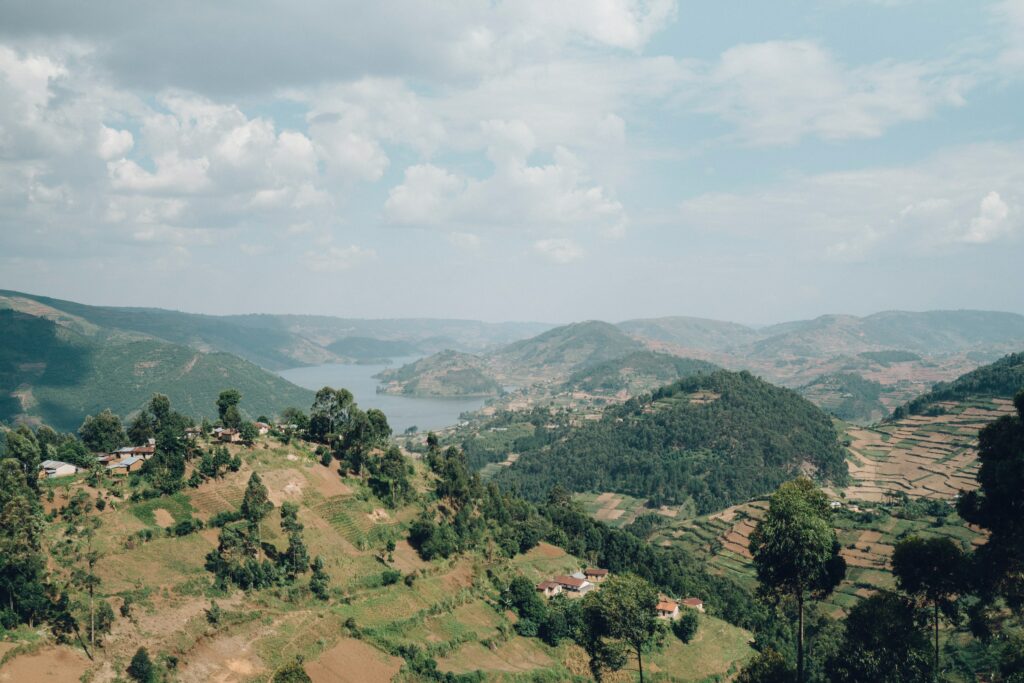
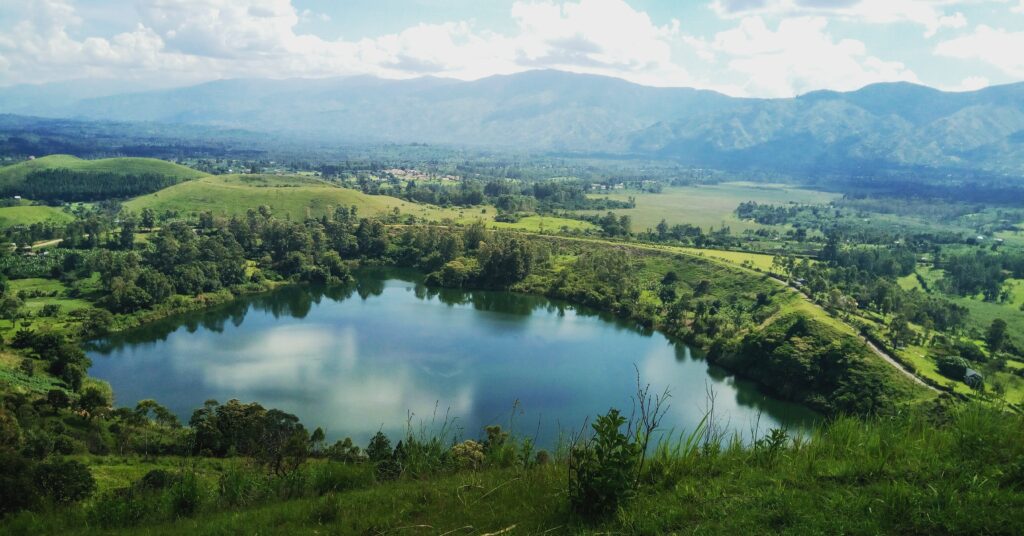
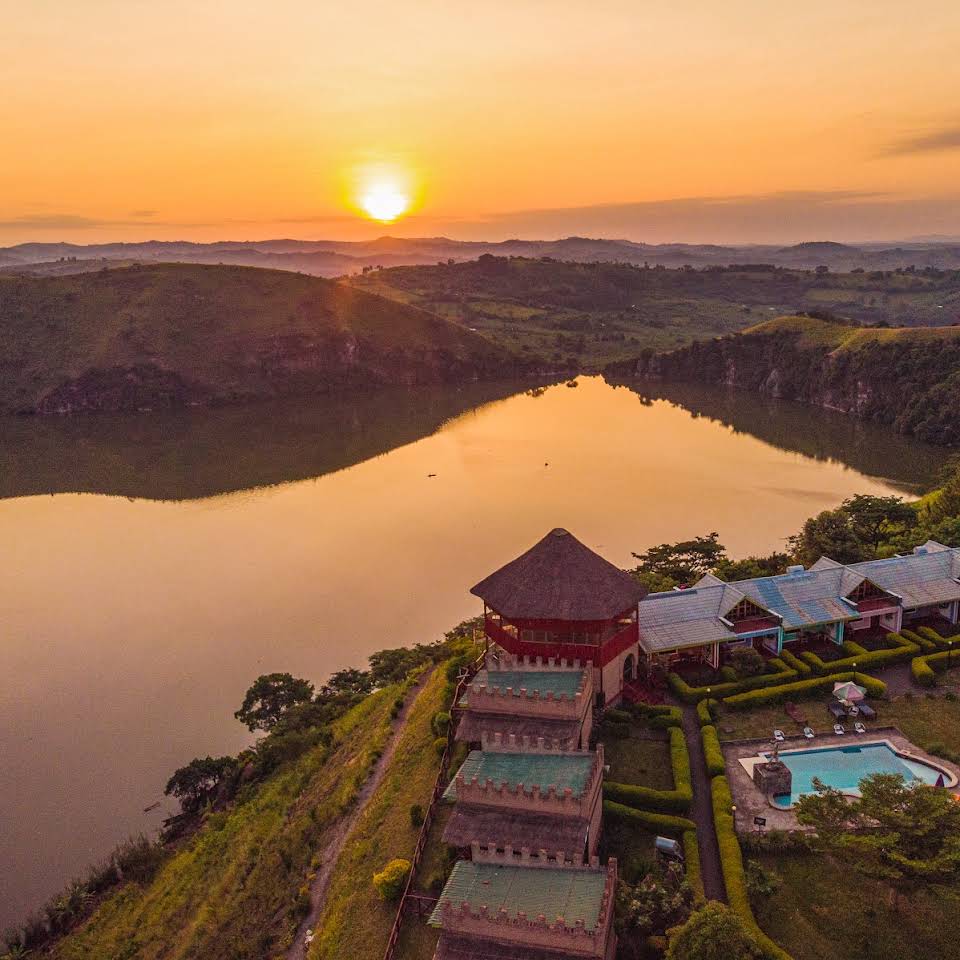
    uganda-africa-gravel-bike-tour-lake-bunyoni

    The Landscape of Uganda

    Uganda boasts a diverse landscape that is perfect for gravel cycling enthusiasts. From rolling savannahs to lush rainforests and majestic mountains, Uganda offers a wide range of terrain to explore. To fully appreciate the beauty of this country, let’s take a closer look at its geographical overview, understand the climate and weather conditions, and delve into the unique features that make Uganda a gravel cyclist’s paradise.

    Geographical Overview of Uganda

    Located in East Africa, Uganda lies on the equator, sharing borders with Kenya, Tanzania, Rwanda, South Sudan, and the Democratic Republic of the Congo. This strategic location not only makes it easily accessible but also contributes to its rich and diverse landscape. The country is known for its stunning natural features, including the iconic Rwenzori Mountains, Lake Victoria, and the source of the River Nile.

    The Rwenzori Mountains, also known as the “Mountains of the Moon,” are a UNESCO World Heritage Site and offer a challenging yet rewarding experience for gravel cyclists. With their snow-capped peaks, glacial valleys, and unique flora and fauna, these mountains provide a breathtaking backdrop for any cycling adventure.

    Lake Victoria, the largest lake in Africa and the second-largest freshwater lake in the world, is another prominent feature of Uganda’s geography. Its vast expanse of shimmering blue waters offers a tranquil setting for cyclists to enjoy as they pedal along its shores. The lake is also home to a variety of bird species, making it a paradise for birdwatchers.

    Furthermore, Uganda is proud to be the source of the mighty River Nile. Gravel cyclists can explore the areas surrounding the river and witness its powerful flow as it begins its journey towards Egypt. The Nile offers a unique opportunity for cyclists to connect with nature and experience the historical significance of this iconic river.

    With such diverse geography, gravel cyclists can choose from a variety of routes that cater to their preferences and skill levels. Whether it’s a challenging climb up the Rwenzori Mountains, a leisurely ride along the shores of Lake Victoria, or a journey tracing the path of the River Nile, Uganda has something to offer every gravel cycling enthusiast.

    Climate and Weather Conditions

    Uganda enjoys a relatively stable climate throughout the year, thanks to its location near the equator. The country experiences two seasons: a dry season and a wet season. The dry season, which runs from December to February and from June to August, offers ideal conditions for gravel cycling. During this time, the weather is generally warm and sunny, with clear skies and minimal rainfall. The dry season provides cyclists with the perfect opportunity to explore Uganda’s diverse landscapes without the hassle of navigating through muddy paths or dealing with heavy rain showers.

    On the other hand, the wet season, from March to May and from September to November, brings rain showers that can make cycling more challenging. While some gravel cyclists may prefer the added excitement and thrill of riding in the rain, it’s important to be prepared for the wet conditions. Planning your trip accordingly and packing appropriate gear, such as waterproof clothing and mudguards, will ensure a comfortable and enjoyable ride even during the wet season.

    It’s worth noting that the wet season also brings its own unique charm to Uganda’s landscape. The rain showers rejuvenate the lush rainforests and transform the savannahs into a vibrant sea of green. The air is filled with the sweet scent of blooming flowers, and the sound of birds chirping becomes a symphony of nature. Gravel cyclists who embrace the wet season can witness the country’s natural beauty in its most vibrant and lively state.

    In conclusion, Uganda’s diverse landscape, ranging from rolling savannahs to lush rainforests and majestic mountains, offers gravel cyclists an unparalleled experience. With its geographical features, such as the Rwenzori Mountains, Lake Victoria, and the source of the River Nile, cyclists can embark on thrilling adventures and immerse themselves in the natural wonders of this East African gem. Whether it’s the dry season or the wet season, Uganda’s climate and weather conditions provide unique opportunities for gravel cycling enthusiasts to explore and appreciate the beauty of this remarkable country.

    Preparing for Your Gravel Cycling Trip in Uganda

    Exploring Uganda by gravel cycling requires careful preparation to ensure a safe and hassle-free trip. Beyond packing your bike and gear, there are a few key considerations to keep in mind, including health and safety and necessary travel documents.

    Health and Safety Considerations

    Prior to embarking on your gravel cycling adventure in Uganda, it’s essential to take necessary health precautions. Consult with your healthcare provider to ensure you are up to date with vaccinations and obtain any required medications, such as antimalarials. It’s also important to be mindful of your personal safety while cycling in Uganda. Be aware of your surroundings, adhere to local road rules, and consider cycling with a group or a knowledgeable local guide – the Eat Sleep Cycle Uganda Gravel Tour offers just such an experience!

    Necessary Travel Documents

    Before traveling to Uganda, it’s important to have the correct travel documents in order. Ensure that your passport is valid for at least six months beyond your intended departure date. Additionally, obtain a tourist visa for entry into Uganda. You can obtain a visa upon arrival at the airport or through an online application process prior to your trip. It’s always beneficial to research the latest travel requirements and information to avoid any issues upon arrival.

    uganda-gravel-bike-tour-crater-lake

    Top Gravel Cycling Routes in Uganda

    Now that you have a good understanding of gravel cycling in Uganda and have made the necessary preparations, it’s time to explore the top routes the country has to offer. Whether you are seeking a thrilling off-road adventure or a scenic ride through the countryside, Uganda has something for everyone.

    Route 1: Kampala to Jinja

    This route takes you on a thrilling gravel cycling journey from the bustling capital city, Kampala, to the charming town of Jinja, also known as the “adventure capital of East Africa.” Along the way, you’ll pass through scenic landscapes, including tea and sugarcane plantations, and get a taste of the local culture and hospitality as you interact with the friendly Ugandan people.

    Route 2: Fort Portal to Queen Elizabeth National Park

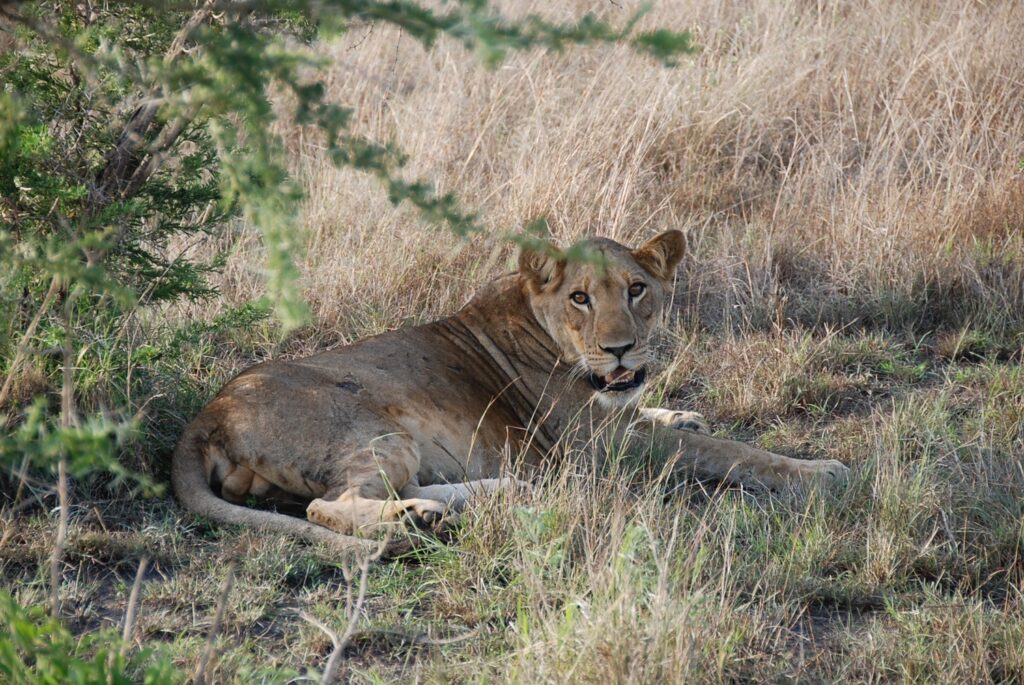
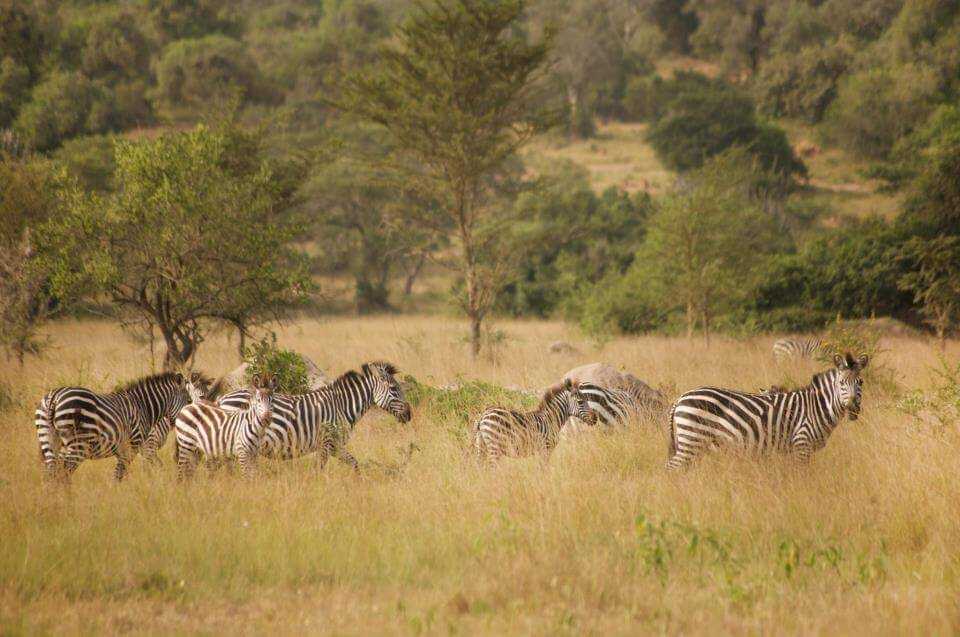
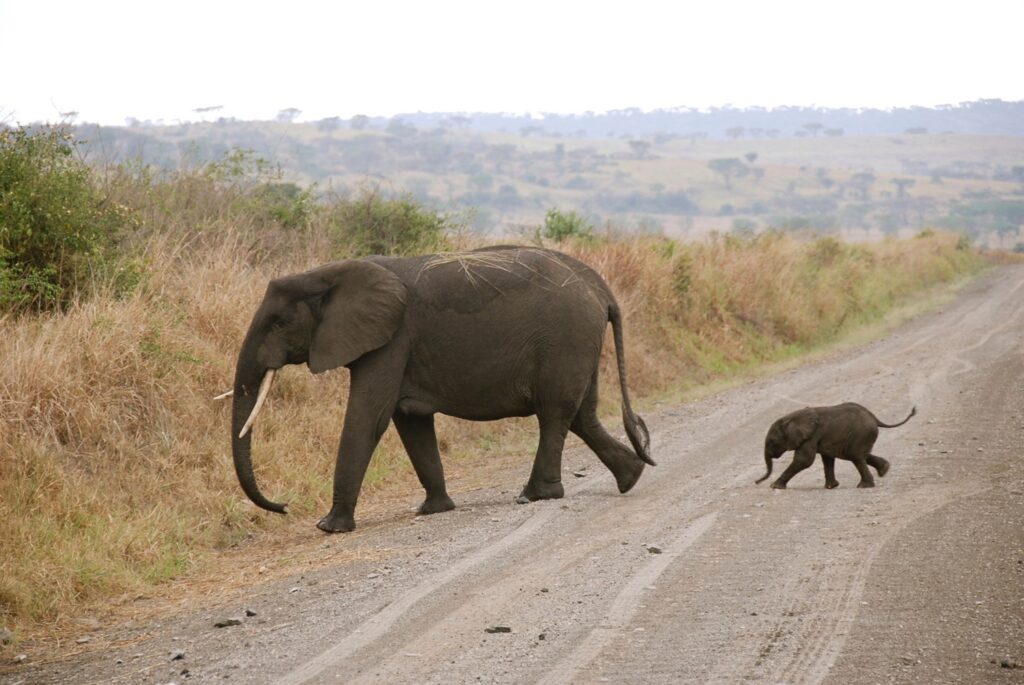
    For those seeking a more wildlife-focused adventure, this route offers an unforgettable gravel cycling experience. Starting from Fort Portal, known for its stunning crater lakes, you’ll ride through lush green countryside and arrive at Queen Elizabeth National Park. Here, you’ll have the opportunity to spot iconic African wildlife, such as elephants, lions, and buffalos, as you explore the park’s gravel trails.

    Route 3: Ultimate Uganda Gravel Tour

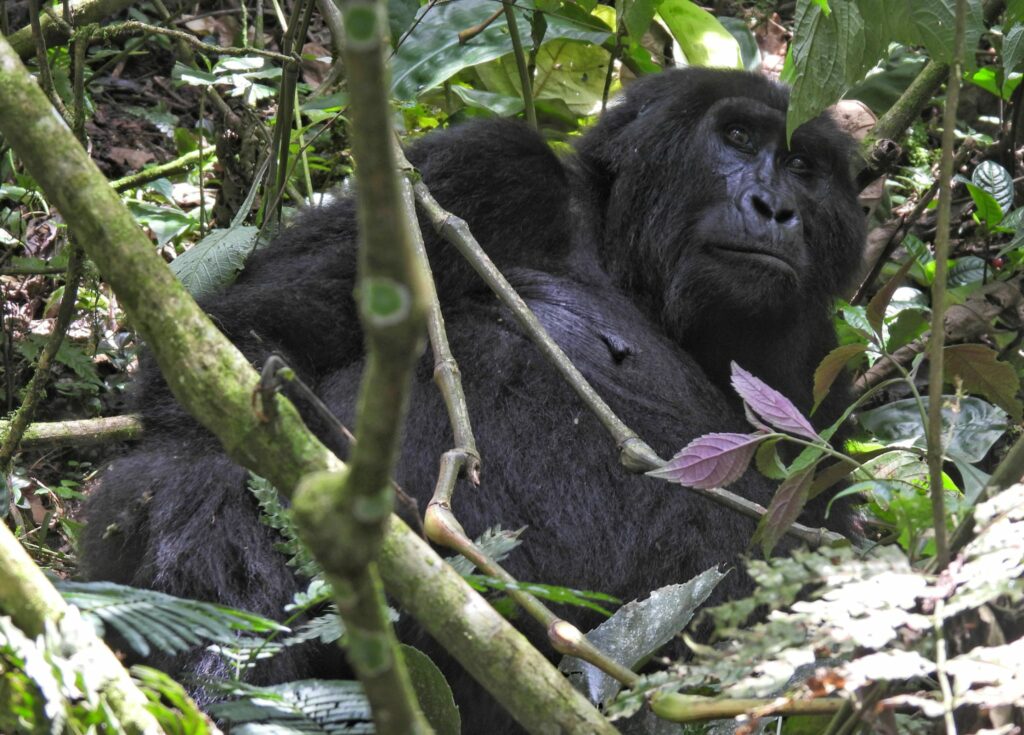
    To experience the range of terrain and landscapes, immerse yourself in nature and enjoy local culture and hospitality consider joining the Eat Sleep Cycle Uganda Gravel Adventure. The adventure starts and finishes in Entebbe and the riding takes us from Fort Portal, through the Rwenzori mountains and to the Queen Elizabeth National Park. We take a boat down the Kazinga Channel and continue the adventure bike bike further south to Buhoma and home of the mountain gorillas in the Bwindi Impenetrable Rainforest. A short shuttle east takes us to the finish of the adventure for a safari ride in Lake Mburo National Park.

    Tips for Gravel Cycling in Uganda

    As you embark on your gravel cycling adventure in Uganda, keep these tips in mind to enhance your experience and make the most of your trip.

    Dealing with Altitude and Terrain

    Uganda’s diverse landscapes can present unique challenges in terms of altitude and terrain. Take the time to acclimatize to the altitude if you’re cycling in mountainous areas. Additionally, be prepared for different types of terrain, including steep ascents and descents, loose gravel, and muddy sections. Proper training and conditioning will help ensure that you can navigate these challenges with ease.

    Interacting with Local Communities

    One of the highlights of gravel cycling in Uganda is the opportunity to interact with local communities and experience their culture firsthand. Embrace these opportunities and engage with the locals, who are known for their warmth and hospitality. Learning a few basic greetings and phrases in the local language can go a long way in establishing positive connections and creating memorable experiences.

    Exploring Uganda by gravel cycling offers a unique and immersive way to discover the country’s stunning landscapes, diverse terrain, and vibrant culture. By understanding the basics of gravel cycling, making the necessary preparations, and choosing the right routes, you can embark on a memorable adventure that will leave a lasting impression. So pack your bike, grab your gear, and get ready to experience Uganda like never before!

    Want to learn more about gravel cycling in Uganda?

    We’d love to hear from you! Check out our Uganda Gravel Adventure and Contact Us!

  • A Guide to riding the Great Divide: Patagonia, Chile & Los Andes

    The Great Divide, also known as the Continental Divide of the Americas, is a majestic and predominantly mountainous range that, in its totality, stretches from the Bering Strait between the USA and Russian, to the Strait of Magellan on the southernmost tip of Chile.

    It follows the line of high peaks along the Rocky Mountains and the Andes and encompasses a variety of landscapes and terrains that offer endless possibilities for gravel adventures, but none more so than those lying between Chile and Argentina.

    Gravel cycling in Chile, Los Andes and Patagonia

    The opportunities for gravel cycling in Chile, Los Andes and Patagonia are limitless. Starting in Chile, these boundless and unparalleled landscapes captivate visitors year after year. The country may only be 350 km wide (at its widest point, east to west), but what it lacks in breadth it makes up for in natural wonders, from the dry deserts in the north, to dense forests in the south, crystalline rivers and lakes and the towering Los Andes mountain range.

    Gravel cycling in Los Andes

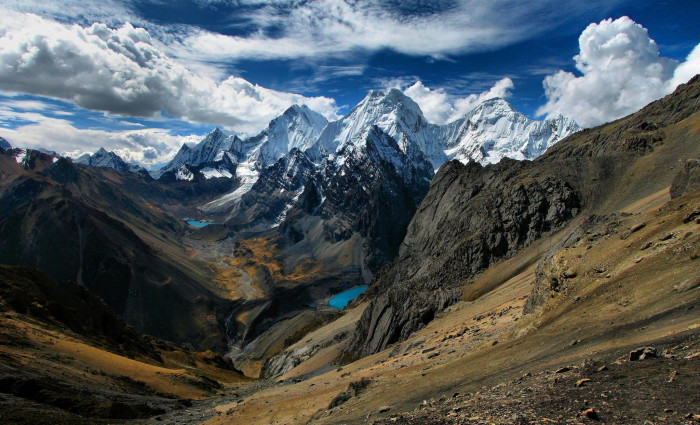
    Los Andes form a natural border between Chile and Argentina and are the longest mountain range in the world, with an average height of around 4,000 metres. The gravel roads that criss-cross over these peaks boast challenging ascents that will test not only your physical endurance, but your mental stamina, too.

    By way of example, the road to Portillo, a popular Chilean ski resorts, is a mountain stage that takes you up into the heart of the Andes. The renowned Portillo road is part of the main highway connecting Santiago (Chile) and Mendoza (Argentina), so not strictly gravel, but an arduous ascent nonetheless. This 85 km climb features the gruelling “Los Caracoles” (the snails) section, with 29 hairpin turns and gradients of up to 14%, considered by many to be one of the world’s toughest cycling climbs.

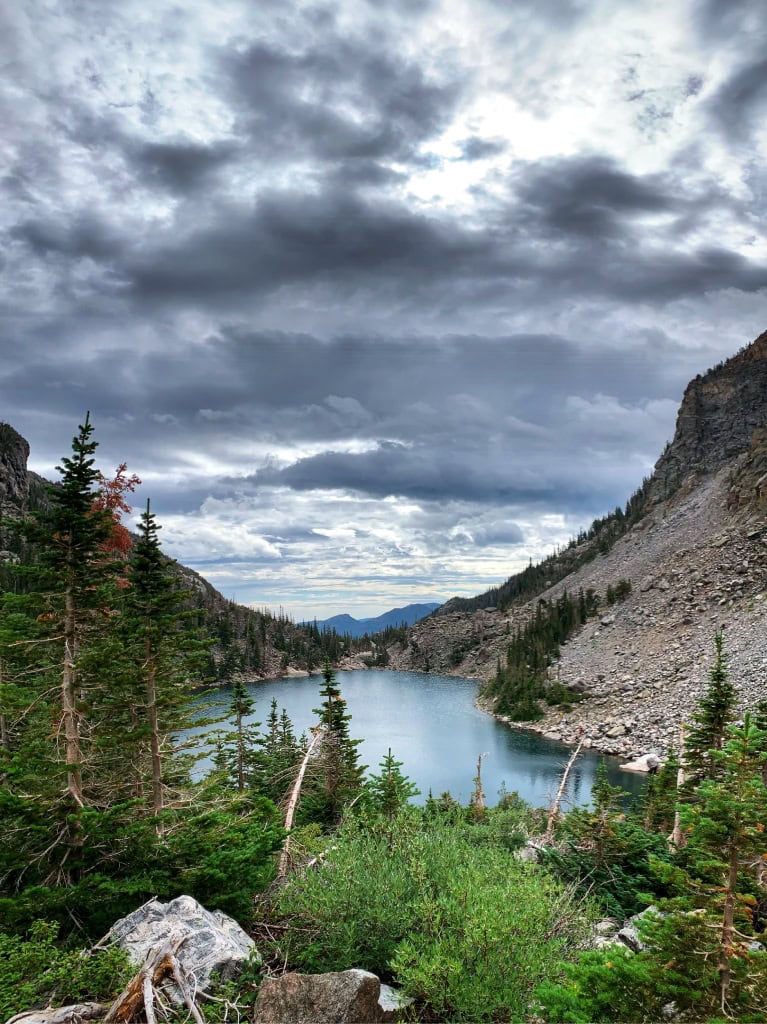
    Torres del Paine National Park
    Rocky Mountains National Park

    Gravel cycling in Patagonia

    Gravel cycling in Patagonia is next level, with endless tracks and trails that guide you through its vast wilderness and untouched landscapes. From windswept plains to the jagged peaks of the Torres del Paine National Park, every pedal stroke reveals more of this region’s raw, natural beauty. Expect a mix of challenging climbs, awe-inspiring views and a humbling sense of nature’s grandeur, with spectacles such as the Perito Moreno Glacier, the Fitz Roy massif, and the stunning landscapes of Tierra del Fuego.

    Road conditions along the Great Divide

    As might be expected in such a wild landscape, road conditions along the Great Divide through Chile, Los Andes and Patagonia vary between paved highways, well-maintained gravel roads and more rugged and remote paths. After all, the beauty of gravel is in being able to tackle pretty much any terrain, and riding on with confidence as the sound of your tyres on smooth tarmac is suddenly transformed into a crunchy symphony of dusty gravel. 

    It’s important to have previous experience riding on all types of roads, paths and surfaces, and come prepared with a sturdy gravel or mountain bike and the appropriate gear to tackle the sometimes-challenging terrain. Handlebar and top-bar storage for snacks, spare inner tubes, tools, extra layers, gloves, and any other essentials you want to bring along will help keep your body free and flexible to manoeuvre over and through these wild landscapes.

    Crossing the Andes Mountains
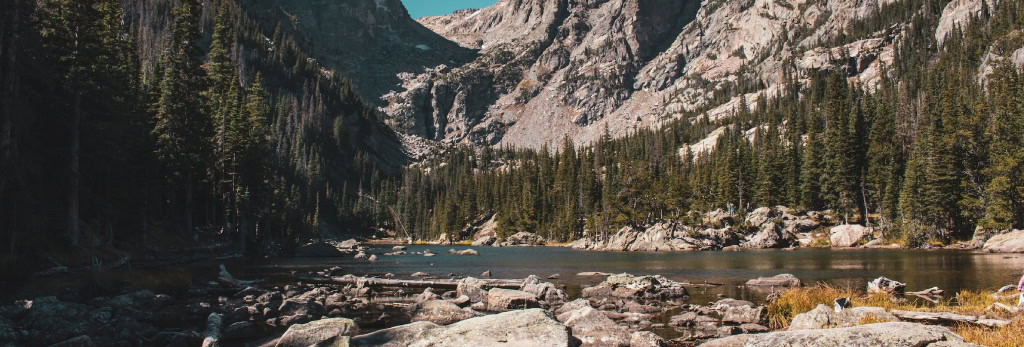
    Rocky Mountains
    Rocky Mountains National Park

    Weather conditions and the best time to ride

    The weather along the Great Divide in Chile, Los Andes and Patagonia can be unpredictable, so it’s important to plan your gravel cycling adventure accordingly. Ideally, the best time to ride is during South America’s summer months, from November to March. The weather is generally milder and the days are longer, which is perfect for big rides and lots of exploration.

    But even during the summer, weather patterns can change within a few hours, and you may be faced with strong winds, rain, or even snow at higher altitudes. It’s crucial to be prepared with the appropriate layers, waterproof gear, and sturdy tyres to navigate the ever-changing conditions.

    Rocky Mountains landscape

    The Eat Sleep Cycle Great Divide Gravel Cycling Tour

    Our new Eat Sleep Cycle gravel cycling tour of the Great Divide will explore this rugged edge of the world and cross the Chile-Argentina border twice, giving riders a chance to experience two of the countries flanking the longest mountain range in the world.

    If you’re inspired to ride the Great Divide, or any of our other tours, contact our travel experts for more information.

  • Bikepacking Slovenia: A Gravel Bike Adventure

    Slovenia is a small country with a huge amount to offer to cyclists. With the Julian Alps to the west, Lake Bled, small wine regions, and a gorgeous capital city, there’s nothing not to love. Ariel set off on a 400 km gravel ride to get to know the country, people & trails. Here is what he found!

    Day 1: Ljubljana to Luçe, 100 km, 1,822 m

    Day 2: Luçe to a hillside near Plansarsko Jezero, 75 km, 1,900 m

    Day 3: Plansarsko Jezero to Bohinj, 110 km, 1,500 m

    Day 4: Bohinj to Bled, train to Ljubljana, 75 km, 1,200 m

    Like what you see and want to find out more? You can chat to Ariel about the trip by Contacting us or take a look at our Slovenia Gravel Tour – available as a fully supported tour or as a self-guided adventure.

  • Classic Girona Cycling Routes

    Girona is an inexhaustible playground for cyclists with myriad quiet roads to explore and challenging climbs to tackle. There’s a lot to be said for going off the beaten track here and exploring the hidden gems of the area. However if you’re here on a European cycling holiday with minimal time then you’re going to want to make the most of your stay, and that means ticking off the some of the classic Girona cycling routes on road & gravel!

    Girona Road Cycling Routes

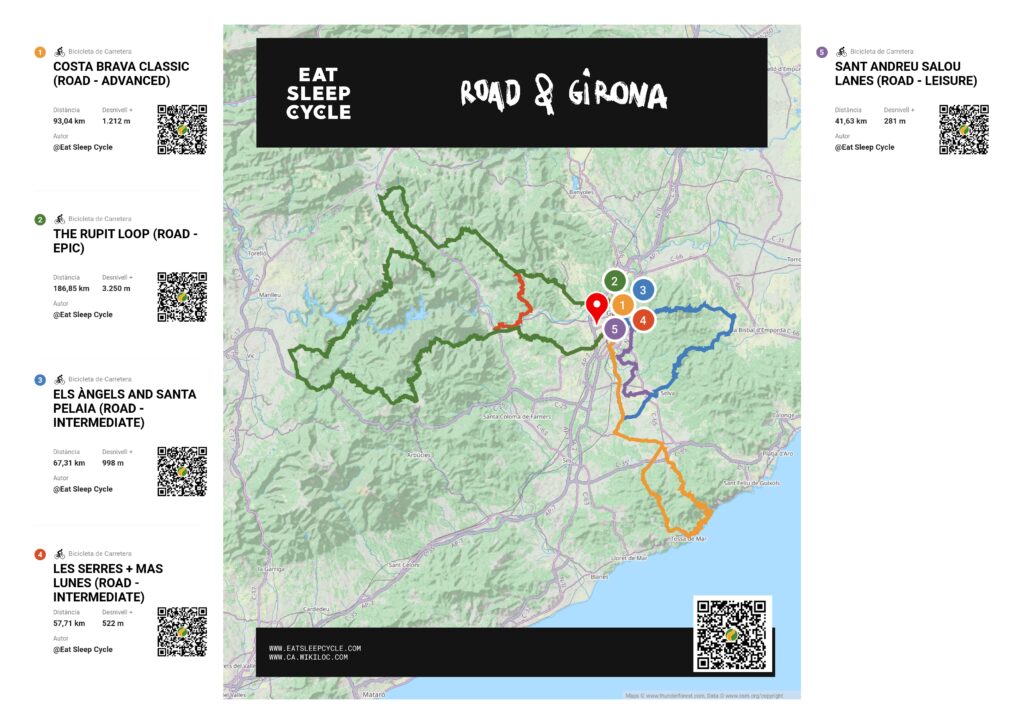
    Leisure Girona Road Cycling Route – Sant Andreu Salou Lanes

    The Sant Andrey Salou Lanes loop is for those who enjoy flat terrain, peaceful countryside and rural Catalan villages. The ride traverses South through Plaça Catalunya and across the river to exit Girona towards Quart and on to the completely quiet roads of Llambilles and Campllong. After around 20km you will reach Cassa de la Selva which is the biggest town on the route and therefore the best chance for a coffee stop! After, head to Sant Andreu Salou before riding along the peaceful road to the picturesque town of Caldes de Malavella. From here, the route loops back up towards Campllong into Fornells de la Selva and back into Girona. This is also a perfect warm-up ride for those starting a week of riding.

    Sant Andreu Salou Lanes – Route Info

    Intermediate Girona Road Cycling Route – Els Angels & Santa Pellaia

    This is a real Girona favourite among pros and leisure cyclists alike, the two climbs are both gentle on the legs and surrounded by beautiful scenery. Ride out of Girona keeping the river on your right and take a left at the roundabout to start the first climb: Els Àngels: a gentle 10km at 3.4% average gradient. Be sure to grab a coffee at the top and take in the stunning views of Girona before descending down the other side into the medieval town of Madremanya and onto the rolling country lanes to Monells. After the village of Sant Sadurní comes the next steady climb: Santa Pellaia, which consists of 6km at an average gradient of 4%. After enjoying the views from the top descend into Cassà and towards Caldes de Malavella via the two charming towns of Sant Andreu Salou and Fornells de la Selva.

    Els Angels & Santa Pellaia – Route Info

    Advanced Girona Road Cycling Route – Costa Brava Classic

    A bona-fide Girona classic, leaving Girona without riding the Coast Loop is like going to Paris without seeing the Eiffel Tower – it’s a must ride! The route heads South out of town before reaching the tranquil roads through Fornells de la Selva and Sant Andreu Salou and onto Caldes de Malavella. Head towards the town of Llagostera from where, shortly after you will reach the 10km climb of Sant Grau which reaches 8-9% in places. After Sant Grau comes one of the highlights of this route: the descent along the coast road with fantastic views of the sea. At the bottom of the descent you will be heading towards Tossa de Mar and cruise along the beach front or stop for ice cream or lunch. However, it’s best not to overfill your stomach as you will be tackling an 8 km climb out of Tossa towards Girona. The remaining 35 km is on the familiar roads from the way there.

    Costa Brava Classic – Route Info

    Girona Road Cycling Route Map

    To see more routes & download the tracks, follow the QR codes below to our route bank on Wikiloc:

    Girona-Road-Cycling-Routes-Eat-Sleep-Cycle

    Ride Girona’s Classic Road Routes with Eat Sleep Cycle

    If you’re looking to take the stress out of planning and navigation then take a look at our Girona Bike Tour packages. Choose one of our classic itineraies or contact us to tell about what your dream trip to Girona would look like – we specialise in custom tours!

    Girona Gravel Cycling Routes

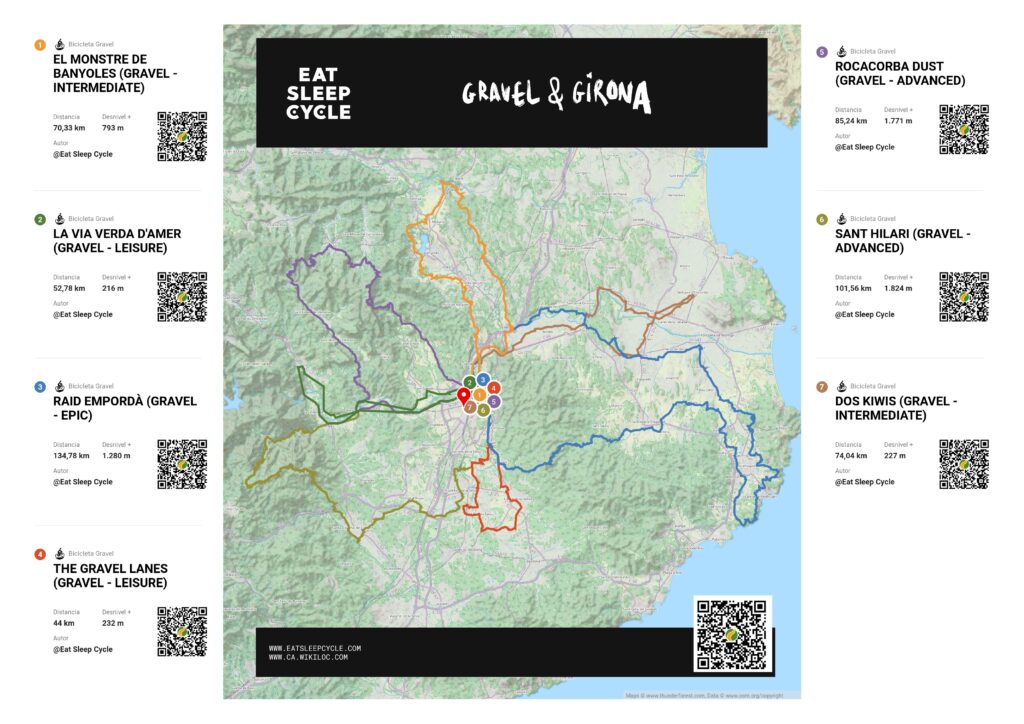
    Leisure Girona Gravel Route – Amer

    This is a route ideal for a hot day – follow bike paths out of town and follow the river upstream. Ride through teh village of Bonmati and continue to Amer – stop for coffee & food in the historic town square, then return back through Àngles and Bescano.

    Amer – Route Info

    • Distance: 52 km
    • Elevation: 216m
    • Fitness Level: Intermediate 2/4
    • Skill Level: Easy 1/4
    • Download: Eat Sleep Cycle Wikiloc

    Intermediate Girona Gravel Route – Rustik & Dos Kiwis Empordà Classic

    A stunning ride that is as flat as they come. Roll out of Girona along the banks of the River Ter. Ride through forests & across farmlands to Rustik – the coffee is great & so are the snacks! Return through picturesque villages and consider a stop at the Dos Kiwi’s brewery at km 50. There are delicious beers & kombuchas as well as a food truck in the garden. Return back through ‘stick farm’.

    Rustik & Dos Kiwis Empordà Classic – Route Info

    • Distance: 74 km
    • Elevation: 227m
    • Fitness Level: Intermediate 2/4
    • Skill Level: Intermediate 2/4
    • Download: Eat Sleep Cycle Wikiloc

    Advanced Girona Gravel Route – Rocacorba Dust

    This is a route for experienced gravel riders looking for a serious challenge. Rocacorba is tough enough on road, but on gravel it’s eye-watering. Ride out of Girona west along the via verde to Bonmati. Climb on the road over Les Serres and drop down into the Vall de Llemena. Continue all the way to the end and the tiny village of Sant Aniol. Climb to the first summit of the day, descend and then take on Rocacorba proper. Descend through Sant Llorenc and emerge in Canet d’Adri for the final descent to Girona.

    After Bonmati (km 15) there is nowhere to stop for food & drink. Carry everything you need for the ride!

    Rocacorba Dust – Route Info

    • Distance: 85 km
    • Elevation: 1,771 m
    • Fitness Level: Intermediate 4/4
    • Skill Level: Intermediate 4/4
    • Download: Eat Sleep Cycle Wikiloc

    Girona Gravel Cycling Route Map

    To see more gravel lroutes & download the tracks, follow the QR codes below to our route bank on Wikiloc:

    Girona-Gravel-Cycling-Routes-Eat-Sleep-Cycle

    Ride Girona’s Gravel Routes with Eat Sleep Cycle

    If you’re looking to take the stress out of planning and navigation then take a look at our Girona Bike Tour packages. Choose one of our classic itineraies or contact us to tell about what your dream gravel trip to Girona would look like – we specialise in custom tours!

  • Gravel cycling on the Canary Islands: A new perspective

    The Canary Islands, located just off the coast of North Africa, have long been renowned for their spectacular landscapes, beautiful beaches and year-round mild climate. So inspiring is this natural wonderland that artists such as César Manrique have created artwork, sculptures and architecture incorporating its characteristic natural formations, which reflect the islands’ wild beauty. 

    Whilst the archipelago has always been a popular destination for beach-goers and hikers, a new trend is emerging across the islands: year-round gravel cycling. With their rugged terrain and vast network of gravel roads, the Canary Islands are the new favourite destination for gravel cyclists seeking a fresh perspective on European riding. Think lunar landscapes, ancient volcanoes, dune-filled deserts and immense climbs. What’s not to love?

    Gravel cycling on Gran Canaria

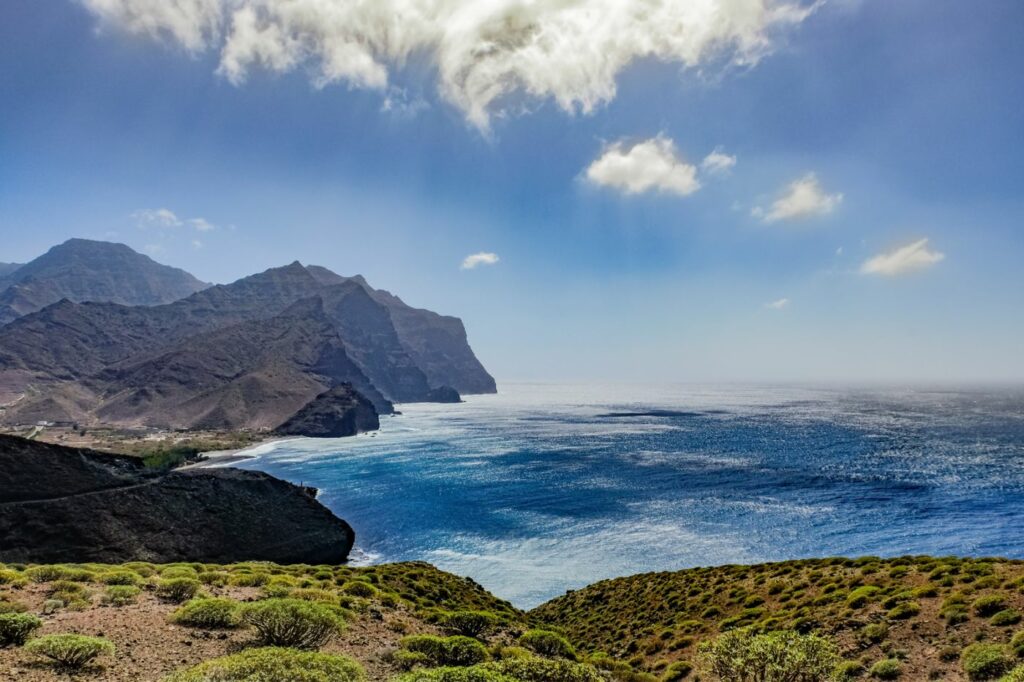
    Gravel cycling on Gran Canaria, the third-largest island in the archipelago, is a never-ending list of opportunities for gravellers looking for picturesque riding mixed with some real tests of strength. The island boasts an impressive variety of landscapes, from the majestic Maspalomas Dunas on the coast to the mighty Pico de las Nieves, the highest peak on the island with panoramic views of the neighbouring islands and the vast Atlantic Ocean.

    The well-maintained gravel roads criss-crossing the island offer the perfect routes to get up close and personal with other natural wonders, such as the Caldera de Bandama, an impressive crater located near Las Palmas; the Barranco de Guayadeque, a deep ravine renowned for its rugged cliffs, lush vegetation and ancient caves; or Roque Nublo, an iconic volcanic rock formation offering views over the surrounding countryside.

    How demanding is gravel cycling on Gran Canaria?

    Despite the more demanding routes on Gran Canaria, such as Pico de las Nieves, reaching almost 2,000 m above sea level, the Valley of the Tears (think steep gradients and challenging terrain) and Roque Nublo (around 1,800 m above sea level), the island offers a plethora of routes suitable for all levels, including the Tirajana Valley, taking you through rolling countryside and pine forests, or the Ayagaures Valley, with its charming villages and yet more beautiful countryside.

    Gran Canaria
    Canary Islands landscape
    Tenerife brown rocky mountain

    Gravel cycling on Tenerife

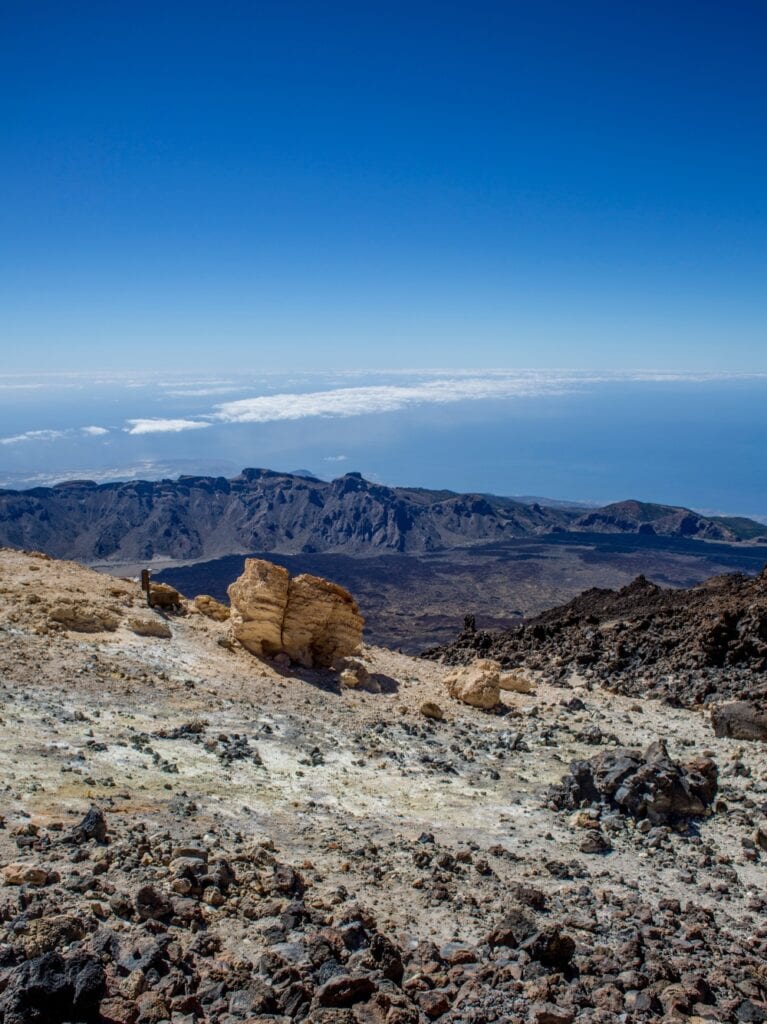
    Tenerife, the largest and most populated island in the Canary archipelago, is another gravel cycling paradise. The island’s volcanic terrain, dramatic landscapes and stunning coastline make it an ideal destination for gravellers looking for adventure, and who might even be tempted by some downtime on the beach. 

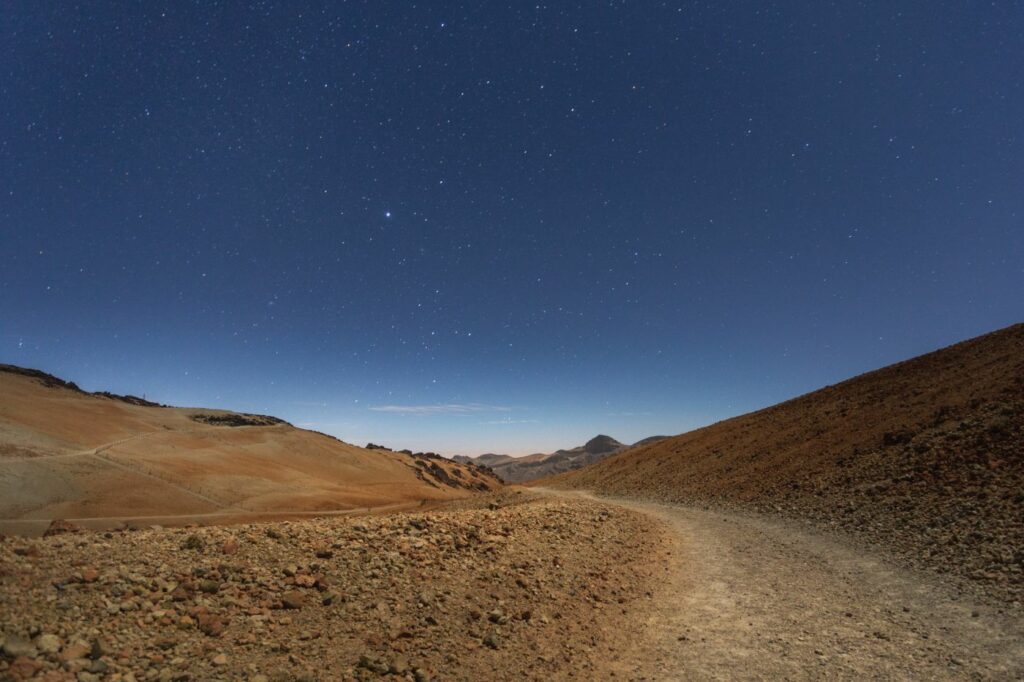
    Generally speaking, most routes will involve at least 1,000 m of elevation given the island’s undulating and mountainous terrain (it is a volcano, after all). The south is predominantly dry and rocky, whereas the north tends to be wilder and greener. The earth beneath your tyres will also range in colour and tones, from rich reds, oranges and browns, to intense grey and even black in some places, given the volcanic rock.

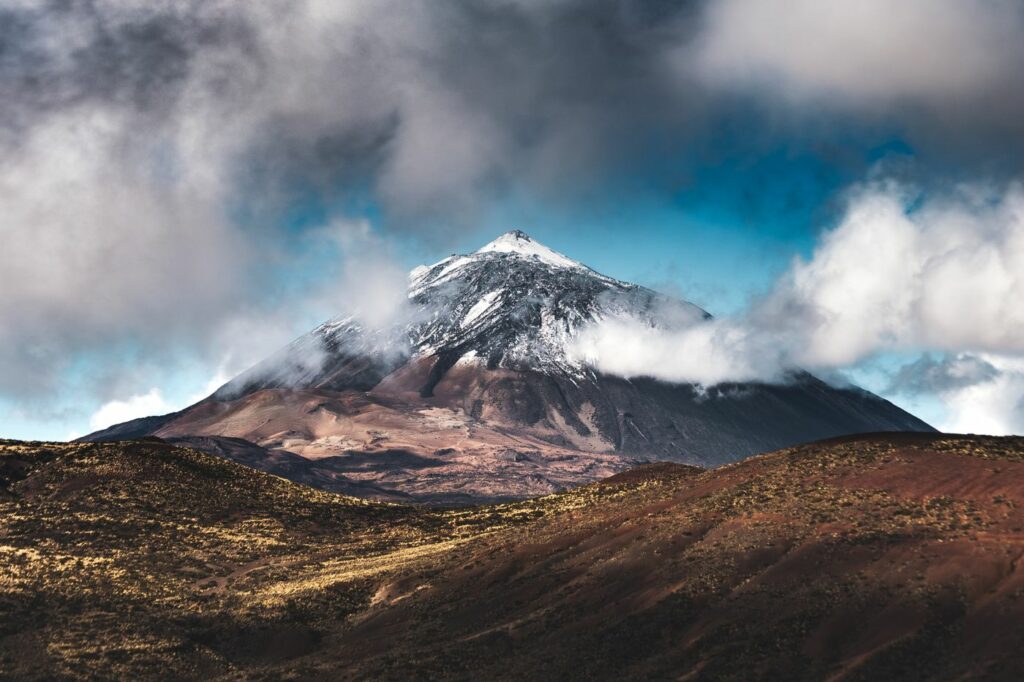
    Mount Teide by gravel bike

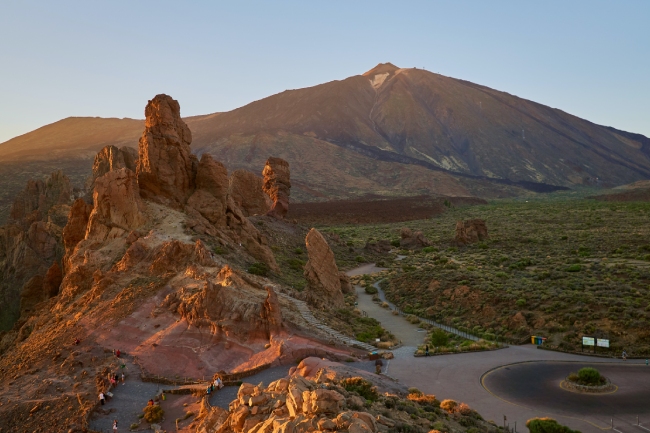
    We can’t talk about Tenerife without talking about Mount Teide, the highest peak in Spain. This iconic volcano, standing at an elevation of 3,718 metres, offers an epic climb for gravel riders seeking an unforgettable challenge. Ride between cacti and vineyards, through vast pine forests and up to the edge of the Teide National Park, a UNESCO World Heritage Site. 

    Mount Teide is not only a physical test of strength but also a mental and emotional challenge, which nonetheless showcases the raw beauty of the Canary Islands that rewards every cyclist to take on this unforgettable climb.

    Mount Teide
    Tenerife dirt road in the mountains
    Tenerife dirt road in the mountains

    GranGuanche: unsupported endurance cycling

    An ode to gravel cycling and bikepacking at its wildest and most challenging, the GranGuanche Audax endurance gravel cycling race is a 700 km, +16,000 m route across five of the Canary Islands, including Gran Canaria and Tenerife. Pushing the limits of their mental and physical strength, cyclists ride through lush rainforests, across dusty deserts and over black lave fields by day, and camp where they can by night, to make the ferry leaving for the next island before the time limit.

    Audax, which means “brave” in Latin, is what you have to be to take on this almighty yet magical challenge. “It doesn’t matter which bike you have, it doesn’t matter if you’re a man or a woman […] you can do it, if you want to do it, because a lot of it is just a mental thing”. Canary Island landscapes inspire awe; the reward that keeps riders coming back year after year and the reason cyclists are venturing to these stunning islands to discover their endless gravel tracks for the first time. 

    The best time of year to visit the Canary Islands

    The best time of year for gravel cycling on the Canary Islands depends on your preferences regarding weather and crowds. Spring and autumn are popular seasons for cycling adventures as the temperatures are pleasant (between 17 ºC and 25 ºC) and there are fewer tourists compared to the peak summer months. 

    However, the mild winter months can also be great for riding, especially for those seeking a break from cooler climates. Look out for the occasional shower and check the forecast before each ride in case there is a storm brewing on the horizon. Whenever you travel, keep in mind that the wind can pick up, so check the forecast before each ride and pack a windbreaker, gloves and sunglasses to protect your eyes on particularly dusty routes.

    Coast of Tenerife, aerial view

    The main take-aways: Gravel Cycling on the Canary Islands

    The Canary Islands have it all, climbs, coastline and climate… Gran Canaria and Tenerife’s unique terrain and warm temperatures make these islands a veritable playground for gravellers, MTB-ers and roadies alike. So, load the track and charge your phone, and we’ll see you in the Canaries!

    Take a look at our Canary Island Gravel tour for more inspiration. And if you’re inspired to ride, contact our travel experts for more information.

  • Guide to Cycling in Slovenia

    If it’s not already on there, Slovenia should be at the top of every cyclist’s list of must-ride locations. Also known as the ‘green heart of Europe’, around 50% of its land is covered by lush forests and vegetation, a theme which also extends to its many cities, including the capital, Ljubljana, which was officially named as “Europe’s Greenest Capital” in 2016.

    This relatively small country borders Austria, Croatia, Hungary and Italy and offers cyclists of all disciplines a wealth of terrains, routes landscapes and townscapes to discover and explore on two wheels. The rolling hills of the vineyard hills and eastern plains near the Croatian border are an excellent playground for road cyclists, with miles of quiet backroads that snake between vineyards, rivers and traditional Slovenian hamlets. Whilst the Julian Alps in the north-west of the country offer some demanding climbs for keen riders looking for a challenge.

    Slovenia: A new Generation of Cycling Pro’s

    Slovenia is well represented in the professional cycling ranks, too, with Slovenian riders such as Primož Roglič, Tadej Pogačar and Matej Mohorič cycling for some of the best teams in the world and competing in the Tour de France.

    Slovenian Vineyards and quiet country roads

    The Alpine foothills and the Vipava Valley are incredibly beautiful areas for road cycling in Slovenia, the latter just a 45-minute drive from Ljubljana. Not far from the Italian border, more undulating routes abound as the terrain gradually starts to steepen and morph into the dramatic mountain landscape of the Julian Alps. In keeping with Slovenia’s green character, the land is blanketed in vineyards, wildflower meadows and yes, even more trees, creating a wonderful aura of calm and respect for flora and fauna alike. It is not uncommon to see cyclists riding these stunning routes, and drivers are happy to share the road.

    The Julian Alps: A Climber’s Paradise

    Slightly further north of the Vipava Valley, sit the impressive Julian Alps, bordering both Italy and Austria, the highest peak of which is Mount Triglav, brushing the clouds at an altitude of 2,864 m. This region of the country is a climber’s paradise, with ascents such as the Vršič Pass and Mangart’s Saddle, the latter presenting a 10-km climb to the top, gaining almost 1,000 m along the way (at an average of around 8.8%). The Vršič Pass is Slovenia’s giant, its highest mountain road pass, stands at an impressive 1,611 m. It is around 10 km in length and has an average gradient of 6.9%, offering riders incredible views of teetering limestone rock formations (reminiscent of the Dolomites), unexpected cobbled sections, tunnels cut through the mountain, deep, dramatic valleys and classic hairpin bends.

    The landscape in the Julian Alps is not unlike its other Alpine neighbours, with dramatic, rocky cliff-faces, expansive meadows covered in lush green vegetation and wildflowers, and of course, stunning lakes such as Lake Bled, nestled within the Triglav National Park. This Lake is probably one of the most photographed scenes in Slovenia, and once you’ve witnessed its beauty, there’s no surprise as to why! In the middle of the Lake there is a tiny island, home to the Pilgrimage Church of the Assumption of Maria surrounded by trees that reflect off the pristine waters below.

    Slovenia’s Cycling Season: The Best Time of Year to Ride

    As a tourist, Slovenia is a fantastic country to visit at any time of year. But as a cyclist, unless you enjoy the cold, it is probably a good idea to look for dates in spring, summer and autumn. These are the ideal seasons for cycling in Slovenia. The flowering meadows are in coming into full bloom in spring, and the climate offers mild to warm temperatures, meaning a dip in the lakes and rivers is already pleasant after a long ride!

    Slovenia heats up in summer, so early morning and evening rides are recommended, thus avoiding the spike in temperatures in the middle of the day. These midday lulls can be spent swimming in the lake, exploring the charming nearby towns and villages or wandering through the shaded woodland of the Triglav National Park.

    Autumn, like spring, offers milder temperatures than in summer and the forests take on a glorious golden hue. The days are still relatively long, meaning evening rides are still a possibility. Pack gilets, windbreakers and a neck-warmer for those early-morning rides and the potential cloudy day in the mountains.

    Inspired to ride in Slovenia?

    The main take-aways: green, calm and varied. Cycling in Slovenia is something of a paradise in terms of road quality, diverse landscapes and breath-taking natural wonders. From the sweeping valleys and undulating roads of the Eastern plains, to the soaring peaks of the Julian Alps, Slovenia offers unbound adventures for riders of every discipline. The government actively encourages cycling as a mode of transport and leisure activity, and is increasingly investing money, time and effort into introducing more cycle lanes and paths in both its towns and endless countryside. There is no better time to book your flights to Slovenia and discover this untapped gem.

    Take a look at our Slovenia Cycling Tours to see our recommended itiernaries on road & gravel. If you’re inspired to ride contact our travel experts for more information.

  • Top Winter Cycling Destinations To Avoid The Cold!

    Winter is coming… but imagine you could avoid donning those woolly overshoes and rain jacket and chase the summer around the world, where would you go? Here are some of the top winter cycling destinations.

    Winter Cycling Destinations

    The following destinations are ready to be explored all throughout the winter months without a leg-warmer in sight! The go-to locations for a mid-winter getaway or epic training camp these are the fail-safe, tried and tested all-winter cycling destinations.

    Andalucia & the South of Spain – Sun & Smooth Tarmac

    The regions of southern Spain are a long-held favourite destinations for leisure cyclists and World-Tour teams alike. It’s no surprise that so many fly south for winter; Andalucía enjoys more than 320 days of sunshine a year and only 40 days of rain on average. Calpe and the surrounding area boasts a similarly temperate climate and is swarming with cyclists engaging in some winter training during the colder months.

    The Costa Tropical region is like most good training locations – the area is very hilly, several climbs over 2,000 m, good road surfaces and sparse traffic. The Calpe/Alicante area is known in summer as a haven for those seeking sun-soaked partying but in winter it attracts a very different kind of clientele who mix with the stalwart maogany ex-pats. Cyclists flock to the region in search of sun and smooth tarmac, which they receive in abundance. As with the rest of Spain, the draw is not only the fantastic riding but also the laid-back lifestyle and delicious food and drink on offer, re-fuelling with some delicious tapas and a cerveza is a must.

    Where to stay: Mojacar, Calpe, Almería, Almuñécar.

    Tour Inspiration: The Costa del Sol

    Calpe road cyclist
    A beautiful network of climbs, descents & changing landscapes

    Málaga – Coast and Mountains

    Málaga seems like a paradise for cyclist with its smooth roads & the buzz of a vibrant beach-side city that never sleeps.

    One of our favorite rides out of Málaga is the Puerto Leon, a 16.1 Km 5.6 % AVG gradient road climb that starts right from the city. In no time you are away from the hustle and bustle and into the mountains, crossing paths only with farmers. But it is when you swing back towards the coast and you’re hit with that lovely sea breeze, that you realise just how special that mix of mountains and coast really is.

    Our Málaga Classic Climbs itinerary offers 6 unique rides that combine the highlight climbs in the area with the coast. There is no better feeling than riding back from the hills to the beach for that well deserved ice coffee, ice cream or chilled beer (or all three). Check here to know Why You Should Consider Cycling in Málaga this Winter

    Where to stay: Màlaga

    Tour Inspiration: New Year in Málaga

    Cycling around Málaga
    Enjoy smooth, quiet roads & a warm climate

    Patagonia – Discvoer Chile & Argentina

    If the summer in the southern hemisphere is calling you, look no further than the grandiose landscapes of Patagonia. This incredible region at the sourthernmost point of South America is a paradise for nature lovers and gravel bike riders. Ride across the Andes, camp out under the stars, enjoy long summer barbeques and the adventure of a lifetime.

    Where to Stay: Pucon, Chile or San Martin de los Andes, Argentina

    Tour Ispiration: Patagonia Gravel: The Great Divide

    Gran Canaria & Tenerife – Cycling Heaven

    More than just a beach holiday destination, a visit to Gran Canaria by bike will leave you wondering if the island was actually designed by cyclists. Year-round temperatures of between 22 and 25 degrees, a mere 148 mm of rainfall on average over 12 months, plenty of climbing and some of the smoothest tarmac you’ll ever ride on make it a cycling haven.

    The landscape of Gran Canaria is uniquely stunning and diverse ranging from sparse and volcanic to lively and green. The climbs here can be steeper than the neighbouring Canary Islands meaning the riding is somewhat more challenging and varied – perfect training terrain. Those who aren’t all about pushing their limits on a cycling getaway can take advantage of recovery time on the many beautiful beaches the island has to offer.

    Canary Islands are one of our top picks for legs-out cycling as the rest of Europe stays wrapped up. Join our our Gran Canaria & Tenerife Experience for a true insight into Island life or check out our top pick of Gran Canaria’s cycle routes to plan your own trip.

    Where to stay: Puerto Mogan, Cruz de Tejeda, Agaete.

    Tour inspiration: Canary Islands Gravel

    Tenerife landscape
    Ride In The Winter Sun

    Girona & the Costa Brava

    Exploring the beautiful roads of Girona over the winter months  The catalan city and its surroundings are a cycling paradise at any time of the year and winter brings bright blue skies and a quiet city. Gravel riding over the winter months is particularly popular with local riders-

    Where to stay: in the old town, Hotel Carlemany, Hotel Nord 1901

    Tour inspiration: Costa Brava Gravel

    Girona clyclists
    The unique region of Girona, a real paradise for cyclists

    Inspiring Winter Cycling Spots

    Inspired? Each of our winter cycling spots above give you the ability to indulge in a cycling tour or training session when it should be too cold to be enjoyable! Take a look at our winter camps to see how you can enjoy some cycling in the sun this winter. For more information or to find out about how we can tailor a winter trip to your needs email us on tours@eatsleepcycle.com or contact us online!

    P.S. Enjoyed this blog? Why not sign up to receive notifications every time we post and get regular updates on our latest tours!

  • Putting the 2022 Ridley Kanzo to the test: gravel riding in and around Girona

    Nafent Magazine, the bilingual cycling magazine in Catalonia, tried Eat Sleep Cycle’s new Ridley gravel bikes for a week and tested them on all terrains and surfaces. Our conclusion: The Kanzo, whether it is electric or not, is your ideal gravel bike for both performance riding and bike packing.

    Looking back on a great week of graveling in Girona and its surroundings, Nafent found its journey to the Puig Segalar (close to Albons) iconic for all their rides. The Ridley Kanzo faced all kinds of terrain on that 90-kilometer route towards the northeast: asphalt, good gravel, single tracks, steep ascents, technical downhills and rocky roads and it resisted all.

    It is our second day on gravel bikes we sail out for the ‘Puig’, a fantastic viewpoint in the south of Alt Empordà, and approximately 35 kilometers away from Girona. That day we barely see any paved roads, practically less than 10% of our whole ride is planned to be on tarmac as soon as we leave the city.

    The route to Puig Segalar is quite hilly. It contains a few steep inclines, which can tickle the muscles. We visit our favorite towns when we depart from Girona by road bike: Gaüses and Pins. Later on, we see a few other old towns like Saus and Ventalló. However, the destination that strikes us the most is the abandoned castle close to the Puig Segalar. On our route builder that seemed to be a great place to go.

    Ridley-Kanzo-Gravel-Electric-Bike-Rental-Girona

    The serious climbing starts when we are getting near to the ‘Puig’ itself. We first cross the tiny town Palauborell (six houses and a church), and then find the abandoned castle on our way. It turns out to be less abandoned than we thought beforehand, it is a private place, but that does not take away its beauty. We wonder from that moment on what the function of such a big castle in the middle of nowhere was in the past.

    From there it is a bit steeper towards the ‘Puig’. The gravel gets a bit rockier here, but the Kanzo’s do not have any issue with stones that take away some of the speed. Climbing to the highest point in this area is definitely worth the effort: from Puig Segalar one can pretty much see all the places in the north-east of Catalonia: from the Pyrenees to Roses and from l’Escala to Rocacorba.

    It is an easy-going downhill towards another small village called Marenyà, before we start to ride back towards Girona on flatter gravel roads. We are developing some speed on our way back, and the Ridley Kanzo seems to enjoy that too. The stiff frame and aerodynamic build, that the Kanzo inherited from the Ridley road bikes used by WorldTour-team Lotto-Soudal, makes one use the biggest gears on the gravel bike on the flats. Via Jaffre and Flaça (unfortunately partly paved) we find ourselves on the classic gravel route back to Girona. Five hours later we are back where we started: at Eat Sleep Cycle’s cafeteria.

    Ridley-Kanzo-Gravel-Electric-Bike-Rental-Girona

    The electric Ridley Kanzo is nearly empty when we order our coffees, however, with a range of around 90 kilometers, including over 1200 meters of elevation, we must say that we are impressed by the battery.

    An extensive report on Nafent’s three-day bike packing tour through the Alt Empordà can be found in the second edition of the magazine. Volume 2 of Nafent Magazine can be found at Eat Sleep Cycle by the end of April.

    Ridley Kanzo Adeventure & Kanzo Electric Gravel Bikes

    Nafent got a Ridley Kanzo and a Ridley Electric Kanzo from Eat Sleep Cycle in Girona for this gravel bike packing tour. Nafent was particularly impressed by how stable the Kanzo is and how reliable the electric support. On steep uphills, the electric variant wants to keep going, also if small rocks reduce your speed. In downhills, both models go very smoothly through the corners.

    The single gear chain ring in the front is not an issue, as the biggest and smallest rings in the back are more than sufficient to overcome 98% of all the climbs and downhills.

    The Electric Kanzo has a range of around 90 kilometers, depending on how much power you need and how hilly your route is. For our distances it was more than sufficient. Bringing the charger allows you to recharge the battery during coffee stops. Recharging, in the beginning, is fast, however, to fully recharge the battery, you need a few hours.

    The Kanzo turned out to be an ideal bike for gravel bike packing. The bags from SKS Germany perfectly fitted onto the bike and after a few minutes, we forgot about our bags. The thick tires, disc brakes and stiffness of the frame result in a very comfortable riding experience.

    Bike Packing Set Up

    Nafent chose German quality for their bike packing tour through the Emporda. All products for the bike packing trip were from SKS Germany. On the normal Kanzo, we mounted the Explorer saddlebag, Explorer bar bag, Explorer Edge, and the Explorer Smart. This was enough for a small bike packing trip like ours, especially while sleeping in comfortable hotels or apartments like Hotel Empordà Golf and Bravissimo.

    For more sophisticated bike packing tours, for example, with sleeping bags and tents, SKS Germany offers plenty of possibilities to make your trip successful. For example, the Explorer Experience Framebag has a maximum load capacity of 5 kilograms, is waterproof and keeps space for your water bottles. An extra feature from the Ridley Kanzo is that there are additional alternative places to mount bottle holders on the frame.

    The only product we did not use from SKS Germany was the Mudrocker. It did not rain and the roads were not wet, so Nafent decided to leave the mudguards at home.

    Girona Gravel Route to Puig Segalar

    Nafent planned the route on Kommot – check it out & download it below:

    Experience gravel cycling in Girona

    If you’d like to experience this ride you can rent a gravel bike or book a gravel cycling tour. Give us a call now on +34 972 754 301 or contact us online for more info!

    P.S. Enjoyed this blog? Why not sign up to receive notifications every time we post and get regular updates on our latest tours