Category: Spain

  • CYCLIST’S GUIDE TO MÁLAGA

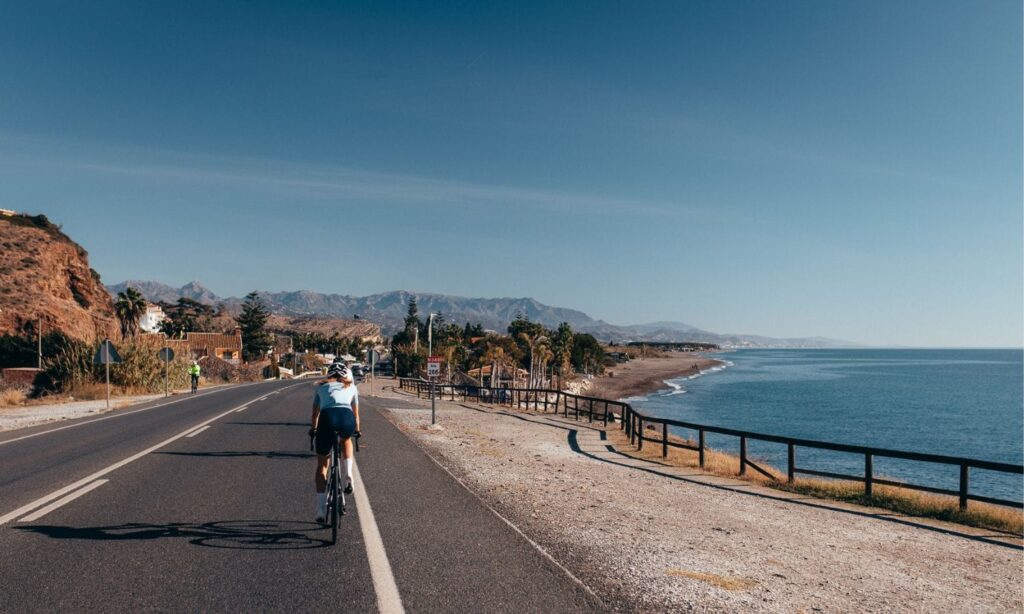
    Just coming into land at the airport is enough to see why Málaga is so popular. With its diverse terrain of hills, mountains and flat coastal roads, and a mild climate that graces the region for over 300 sun-drenched days a year, Málaga is the ideal destination for Cycling Tours in every season.

    This article will cover a few of the key considerations for any cyclist’s trip to Malaga;

    We hope you enjoy the guide, and we look forward to welcoming you to Málaga soon!

    Where to cycle

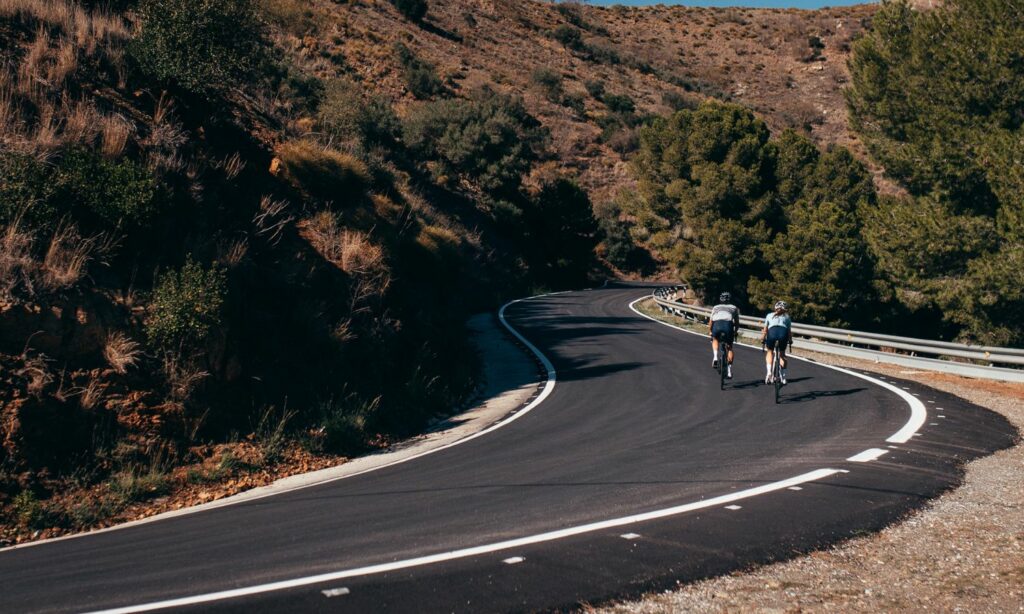
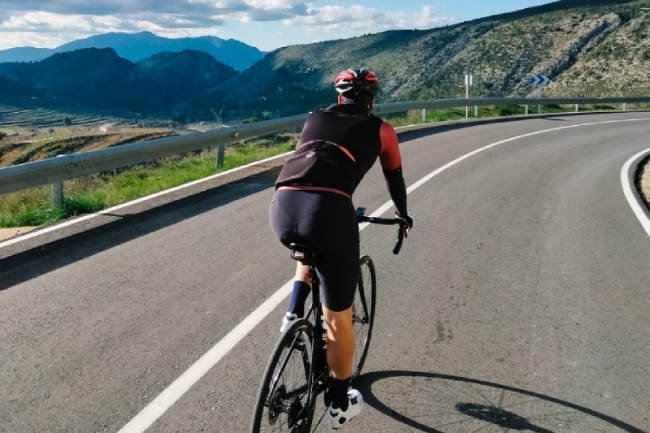
    Málaga’s smooth roads surrounding the city and beyond offer endless opportunities for road cyclists. One of the most iconic local climbs, el Puerto del León (also featured on our Classic Climbs of Málaga cycling tour) serves as the perfect warm-up ride before heading out into the heart of the region or along the coast. This climb offers stunning views of the surrounding countryside and impressive mountains behind the city.


    If you fancy a flatter ride, simply take old national road (N-340) that runs through the centre of Málaga out east, and follow it all the way to Nerja (and beyond if you’re up for it!). There and back counts for an approximately 100 km ride that sticks to the curves of the coast like glue. Once in Nerja, enjoy a snack, ice cream or a spot of lunch at the Balcón de Europa overlooking the Mediterranean Sea, before heading back home to Málaga.


    Other routes explore the Montes de Málaga, Sierra de Ronda, the Axarquía region, Antequera, Granada and the Costa del Sol. One spectacular ride that heads inland, northbound and away from the coast, is the El Torcal Loop. Topping out at around 100 km and 1,800 m in elevation, this demanding but incredibly rewarding ride will take you up to the millennia-year-old rock formations of the El Torcal Natural Park before sweeping back down towards Málaga.


    For gravel and mountain biking, the first place you should be looking to explore are the Montes de Málaga. Montes translates as “hill” or “small mountains”, and as the name suggests, this semi-mountainous terrain sitting just north of the city offers a snakes-and-ladders network of crisscrossing trails, climbs and descents. Part woodland, part rugged wilderness, it is important to stay on designated trails as even those who know this area sometimes get lost as GPS can fail. As with any roads and trails that run through parkland, the Leave No Trace principles apply: avoid disturbing wildlife and pick up all litter.

    Where to eat

    Whether its traditional Andalusian, international or fusion cuisine, Málaga’s offer of food and drink is ever-expanding. Here are our favourite spots when you fancy a pick-me-up, lunch, dinner or sweet treat.

    Coffee

    Kima Coffee – Calle Carretería, 51
    Not far from our Eat Sleep Cycle Hub on Calle Carretería, Kima Coffee is a hole-in-the-wall spot offering superb speciality coffee, beans and some sweet snacks. Calle Carretería itself has recently been refurbished and is now mainly pedestrianised, making it super easy to coast right to the door and lean your bike up outside.


    Mia Coffee – Calle Vendeja, 9
    In their new location in the Soho district, Mia Coffee offers delicious speciality coffee, beans, baked goods and good vibes. There is no outdoor seating, but there are benches in the squares nearby, so if you have your bike, a take-away (para llevar) might be the best option.


    Santa Coffee – various locations
    Santa Coffee is a reliable “chain” coffee house offering great coffee, beans, backed treats and light lunch options. Most locations have outdoor seating making it easy to ride up and order a quick café con leche before the ride.

    Cookie – Calle Carretería, 68
    A few doors down from the Eat Sleep Cycle Málaga Hub it’s possible to purchase the world’s best homemade cookies at Cookie York. They’ve recently added delicious pastries and good coffee to their offer too. The cookies are huge and come in all sorts of delicious flavours.


    Eat Sleep Cycle Málaga – Calle Carretería, 100,
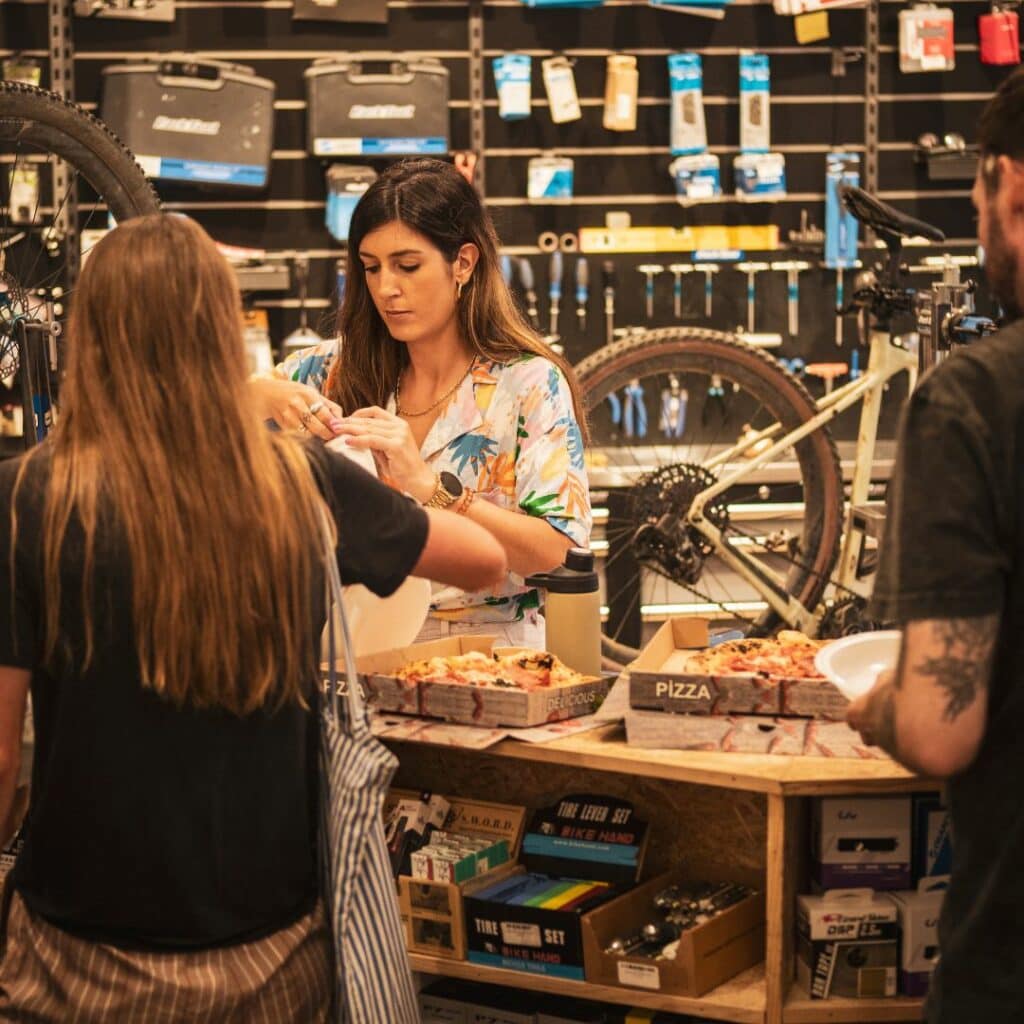
    We might specialise in bikes, kit and services, but where would we be without our mini Marzocco coffee machine. Drop in for a coffee for €1! Made with love and specialty beans from a local Málaga roastery.
    Lunch & dinner

    Recyclo Café & Shop – Plaza Enrique García-Herrera, 16
    Recyclo serves delicious, locally sourced food with great vegan options, with good coffee, good beer, non-pretentious tasty and healthy food. Grab a table outside if it’s sunny and head inside in the evenings where they often have a live DJ or musician performing.


    El Pimpi – Calle Granada, 62
    El Pimpi is one of the most iconic and historic eateries in the city with traditional dishes and local specialties including tapas, fish and meat dishes, as well as vegetarian options. Best for an evening meal. If you want to sit inside, you’ll probably need to book, but the first-come-first-served system for outdoor tables generally moved quite fast.


    Varo – Calle Andrés Pérez, 20
    Varo has a buzzing, playful interior, good beer, great wine and a large selection of tapas and small dishes, great for sharing. Try and to get there early to make sure you get a table.


    Anchoita El Pana – Plaza del Teatro, 3
    Simple and delicious Venezuelan street food dishes with vegetarian options: arepas, cachapas, tequeños, tapas, juices, smoothies and more. Indoor and outdoor seating, friendly service and great music to accompany the laid-back vibes.

    No Piqui – Calle Carreteria, 66
    With all all-day kitchen No Piqui is perfect when you need something healthy, casual & simple for breakfast, lunch or dinner. It’s very low key, super friendly and has a wide range of choice on the menu with good value prices.


    Málaga’s chiringuitos
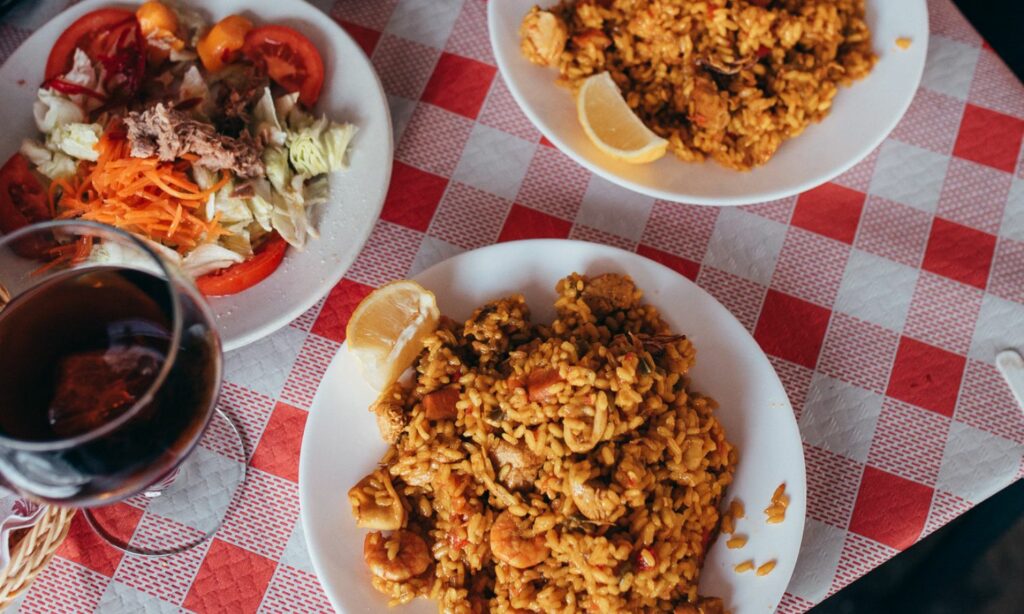
    It would be a sin to visit Málaga and not try out the beachfront chiringuitos. These are restaurants and bars dotted along the promenade (beside the N-340) that offer all kinds of fresh fish and seafood (grilled and barbequed), of which the local speciality is espeto (sardines and other fish cooked on an open fire). Delicious and generally pretty cheap to be enjoyed with a cold beer in the sun.

    Ice cream 

    Casa Mira – Calle Císter, 8
    Casa Mira offers delicious ice cream, hochata, iced coffee granizados, outdoor seating in a charming square and right by the cathedral. Queuing works using a ticket system (grab one by the side door in the square).


    Lucciano’s – Calle Córdoba, 1
    Lucciano’s sells delicious ice cream on a stick, in a tub or on a cone in a stunning shop. Indoor and outdoor seating available, or alternatively, take a stroll towards and port and find a bench to enjoy the view.


    Kalúa Helados – Plaza Uncibay, 8
    Kalúa offers artisan ice cream, smoothies, shakes and cakes. All take-away, no outdoor seating here, but there are chairs and benches in Plaza Uncibay.

    Where to sleep

    NH Málaga – Calle San Jacinto, 2
    Located in the centre of Málaga, NH Málaga is a sanctuary of peace & quiet just 800 m from Málaga Cathedral and the Picasso Museum. Rooms at NH Málaga are soundproofed, air conditioned & have parquet floors. Kick back & relax by the rooftop pool and enjoy an aperitif at the hotel bar. The staff are happy to take of bikes in their luggage storage.

    Coeo – Various locations in Málaga Centre
    Coeo have a great concept of shared experience and offer different types of accommodation depending on what you’re looking for. If you’re looking to meet people and discover a unique side to Málaga, look no futher. Coeo host a full schedule of activities all week to get stuck in to the local culture and expereience the city. Choose from vibrant hostels to peaceful aparthotels. Be aware that Coeo don’t yet offer bike storage – best to rent from Eat Sleep Cycle & keep your bike in the shop overnight.

    More than cycling

    For those calmer rest days, there is an inexhaustible list of things to do and in and around Málaga.

    In the city 

    Museums and galleries

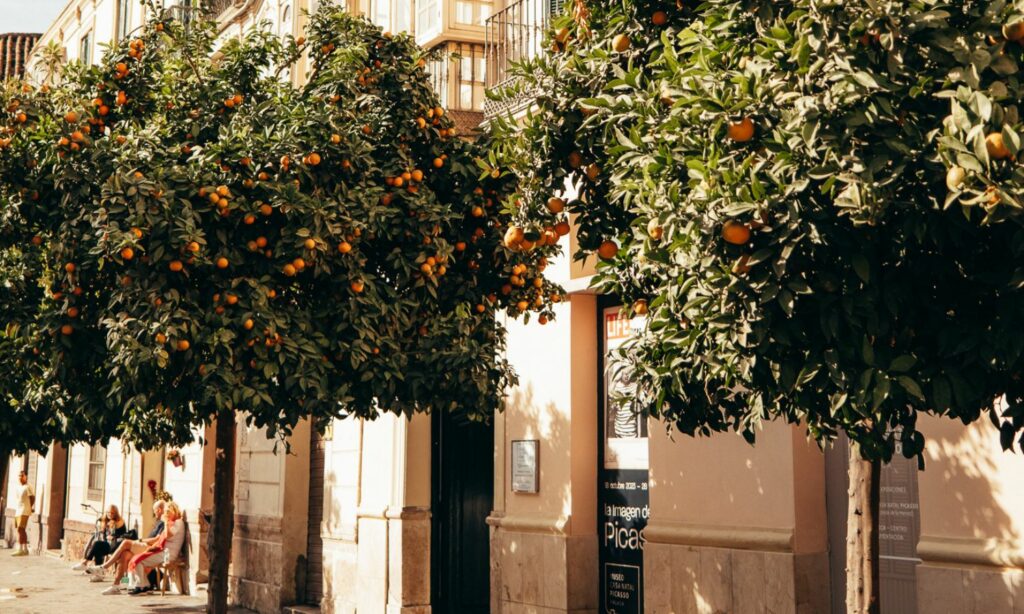
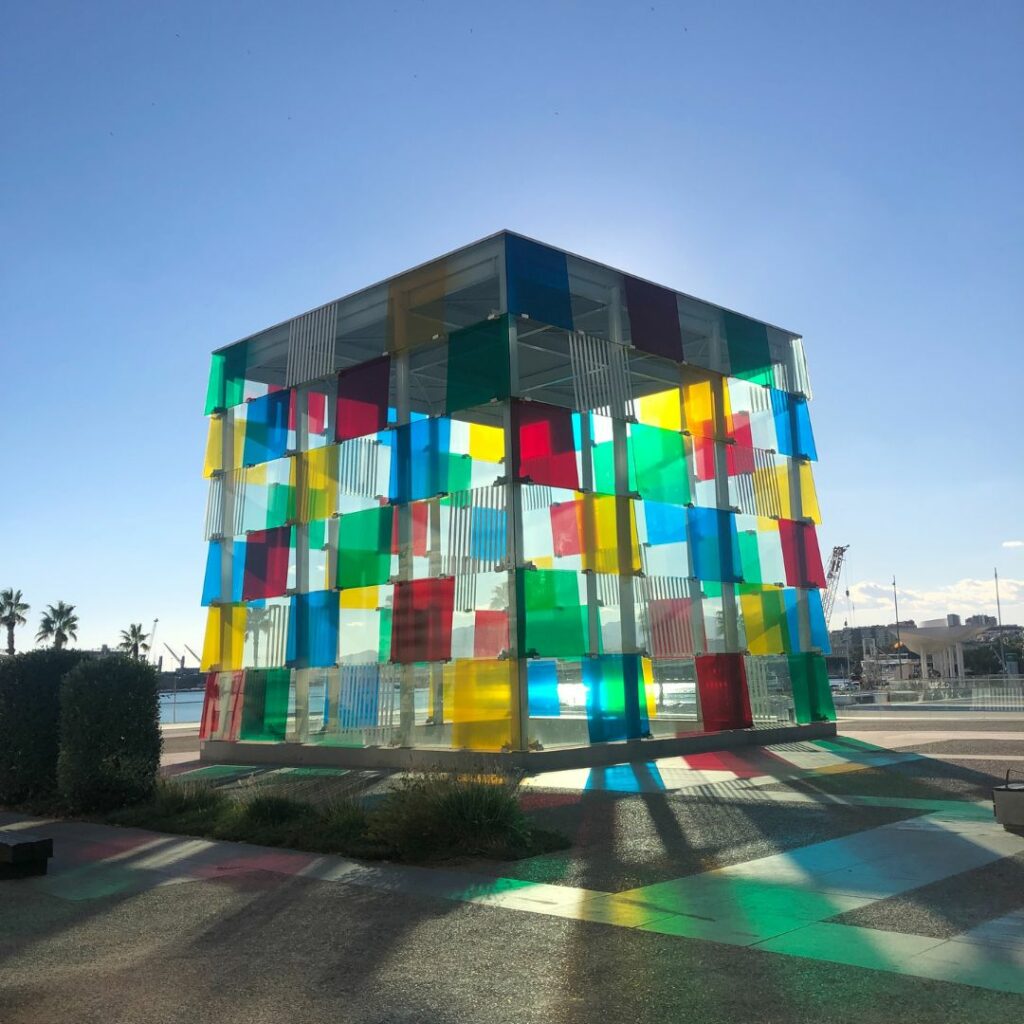
    The city has several museums and galleries that are well worth a visit if you’re in the mood for an afternoon of art and culture: The Museo Carmen Tyssen Málaga (permanent and temporary exhibitions from the Carmen Tyssen collection), the Pompidou Centre (in the multi-coloured building known as ‘The Cube’, right on Muelle 1 by the port), the Russian Museum (temporary exhibitions of art and more by Russian artists), the Automobile and Fashion Museum, the Málaga Museum (the history of the city told through maps, photographs, paintings sculptures and artifacts), the Picasso Museum (works by Pablo Picasso), among others.


    The Alcazaba

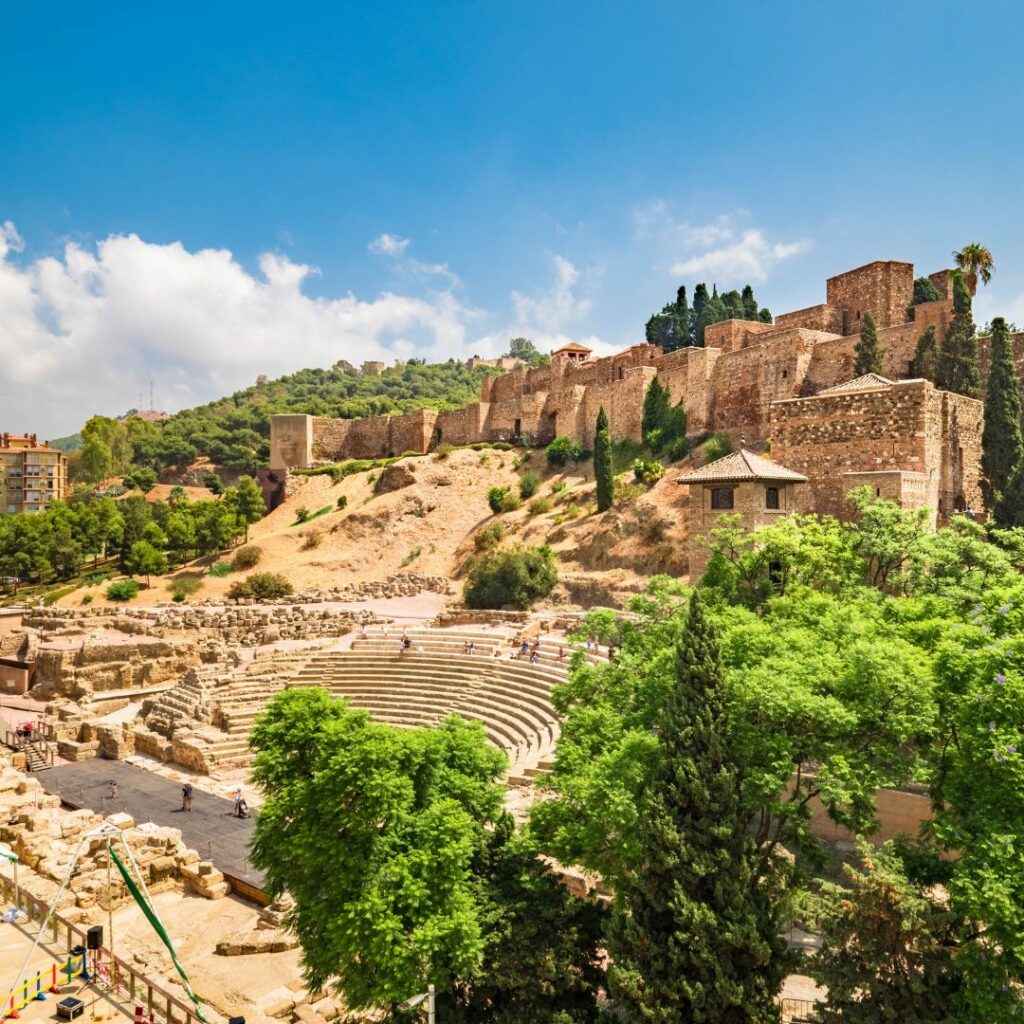
    The Alcazaba of Málaga is a historic symbol of Moorish conquest and a significant architectural and historical landmark. Towering over the city centre and port, it comprises a fortress and palace dating back to the eleventh century and exquisite gardens. There’s normally no need to book tickets, so head up and enjoy panoramic views of the city, the port and the Mediterranean Sea.


    Muelle Uno

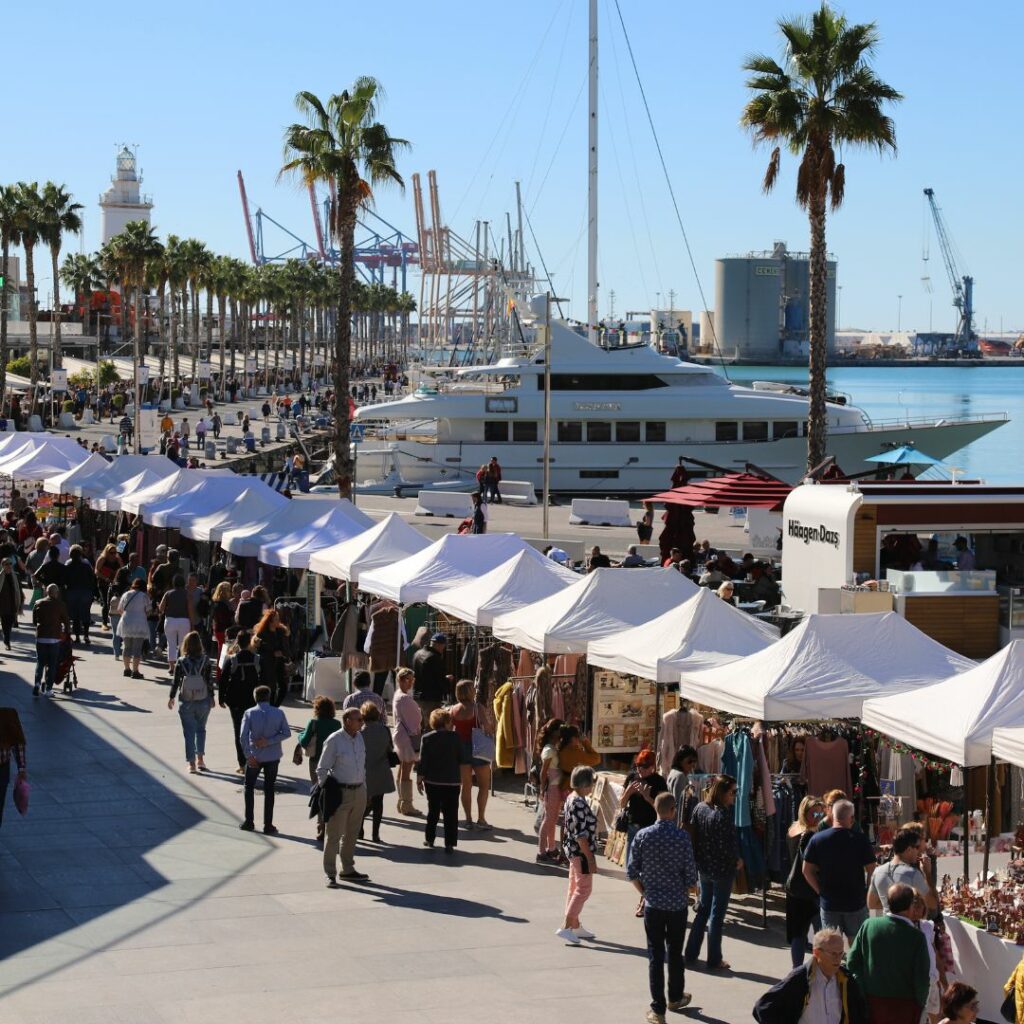
    Perfect for an evening stroll, the remodelled dock known as Muelle Uno is a clean and buzzing promenade lined with shops, restaurants and often market stands selling local artisan products. Enjoy views of the port at sunset and walk right to the end of the pier for stunning vistas back across the La Malagueta beach and the nearby hills of Málaga.
    Ronda, Córdoba, Granada 

    We highly recommend taking a day or weekend trip to one of the nearby towns or cities if you have the time. Ronda, Cordoba and Granada are no more than an hour and a half away by car or coach, and are three of the most beautiful locations in Andalucia.

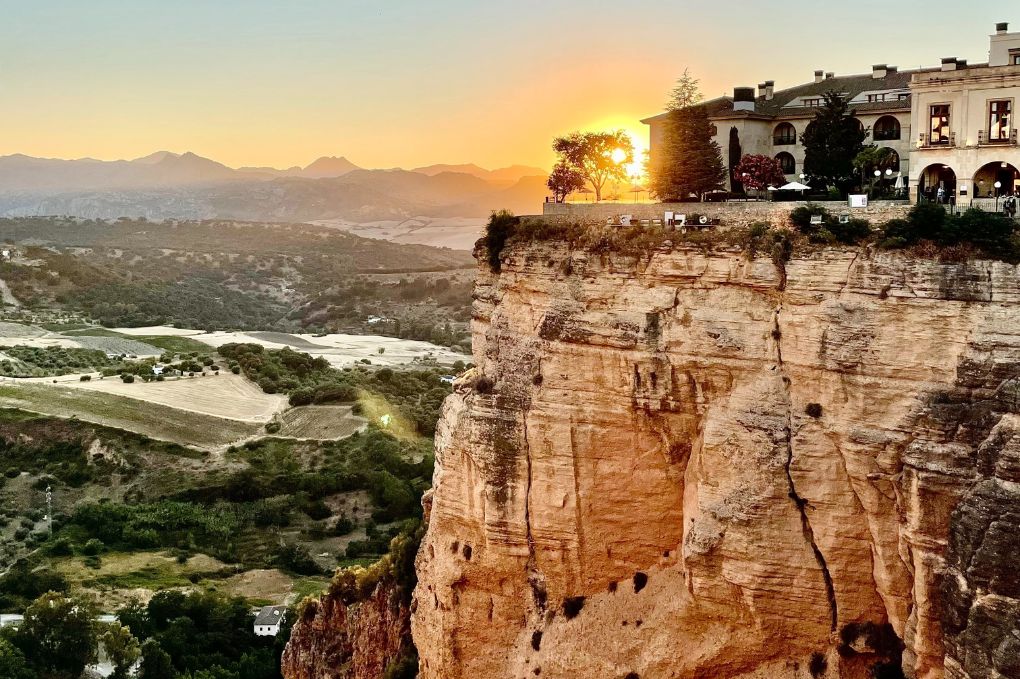
    • Ronda is a small town and is a great place for a day visit. Its dramatic gorge, the impressive Puente Nuevo (New Bridge) and historic bullring are definitive must-sees.
    • Córdoba is a magical city full of colour, flowers and steeped in history, with its iconic Mezquita (mosque) and Jewish quarter, a testament to the numerous cultures to inhabit its winding streets, past and present. You’ll need at least two days here to really soak everything in.
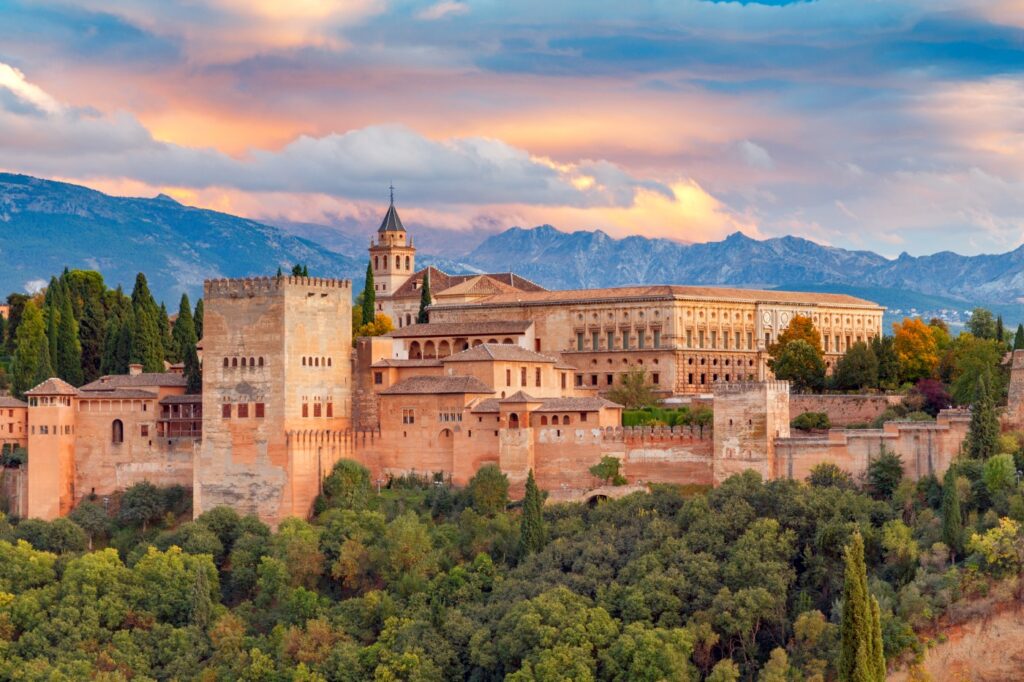
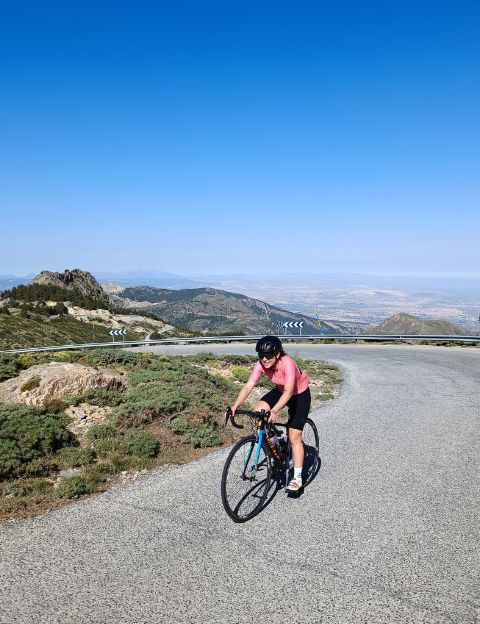
    • Finally, Granada’s Alhambra Palace and the white-washed Albaicín neighbourhood are its biggest attractions. Often milling with tourists (it’s not hard to see why!), we recommend visiting for at least two days in the off-season if possible. If you have the means to take your bike with you, Granada offers even more incredible routes and climbs, including the colossal Pico del Veleta, Spain’s fourth highest peak and part of the Sierra Nevada mountain range.

    El Caminito del Rey

    El Caminito del Rey is a narrow wooden walkway that clings to the sheer cliffs and rock faces of the El Chorro Gorge, a breath-taking natural ravine carved out by the turquoise waters of the Guadalhorce River. It is around 60 kilometres northwest of Málaga, some 7.7 kilometres (4.8 miles) in length and takes between three and four hours to complete. Please bear in mind you need to book tickets online before arrival, especially if you’re visiting in peak holiday seasons.

    Getting to Málaga

    By plane
    Málaga-Costa del Sol Airport serves as a major gateway and has superb connections with most major cities in both Spain and Europe, with dozens of international flights each day. Oftentimes, off-season tickets into Málaga are very reasonable. A taxi to the city centre takes around 20 minutes and will cost in the region of €30.


    By train
    Alternatively, Spain’s high-speed railway network connects Málaga to other major cities like Madrid and Barcelona, and Málaga’s María Zambrano train station is also conveniently located in the city centre.


    By car
    Driving is also a good option for visitors already based in Spain and European. If travelling by car, you can access Málaga via the A-7 coastal motorway or the A-45 motorway from other Spanish cities – make sure to watch out for the tolls!

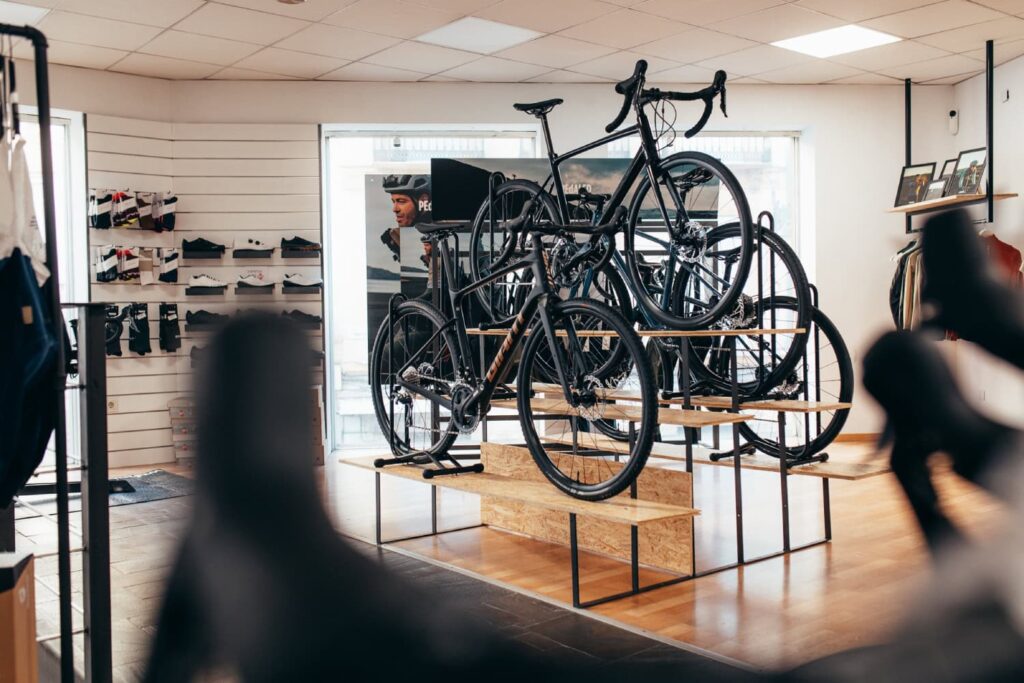
    The Eat Sleep Cycle Cycling Hub, Málaga

    Málaga is also the home of our Malaga Cycling Hub. This city is a gateway to Andalucia, Portugal and beyond and our benchmark for culture, food, good vibes and amazing riding. For us, Málaga is the place to be, it’s a buzzing city that’s full of life and we’re proud to be part of Málaga’s journey as an up-and-coming cycling destination.

    Come and see us, grab a coffee and let’s talk cycling!
    Book your place on a Málaga cycling tour

    If this has got you inspired to travel to Málaga, then why not view our cycling tours in Málaga and check out the trips and packages we have available. If you’re planning to travel here and don’t want to worry about bringing a bike, get in touch with our Málaga Hub and talk to us about our Málaga Bike Hire service to rent top-quality, fully-serviced road, gravel and mountain bikes.

    If you’ve any questions about your possible cycling tour in Málaga give us a call now on +34 951 01 48 08 or contact us online for more info!

    P.S. Enjoyed this blog? Why not sign up to receive our newsletter for content all about bikes and the adventures they take us on!
  • Why You Should Consider Cycling in Málaga

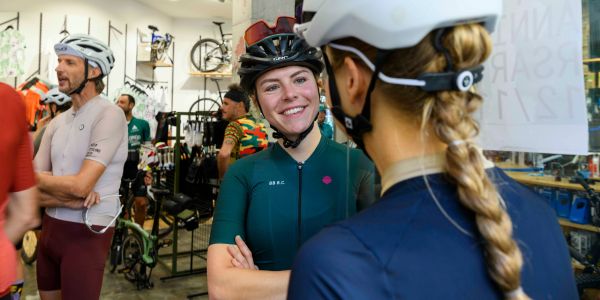
    The Eat Sleep Cycle Cycling Hub, Málaga

    Málaga is also the home of our Malaga Cycling Hub. This city is a gateway to popular Eat Sleep Cycle tour locations like Andalucia and Portugal. It is also our home for culture, food, good vibes and amazing riding.

    For us, Málaga is the place to be, it’s a buzzing city that’s full of life and we’re proud to be part of Málaga road cycling’s journey as an up-and-coming cycling destination.

    Come and see us, join one of our Social Rides and let’s talk cycling!

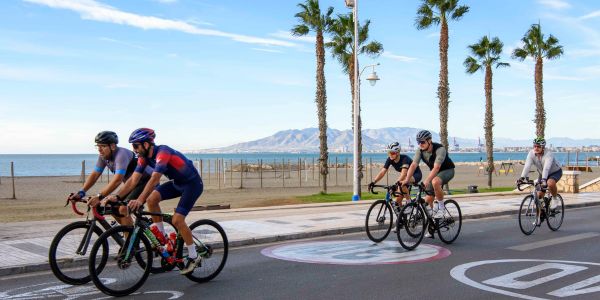
    Cycling in Málaga: Coast and Mountains

    One of our favorite rides out of Málaga is the Puerto Leon, a 16.1 Km 5.6 % AVG gradient road climb that starts right from the city. In no time you are away from the hustle and bustle and into the mountains, crossing paths only with farmers. But it is when you swing back towards the coast and you’re hit with that lovely sea breeze, that you realise just how special that mix of mountains and coast really is.

    Our Málaga Classic Climbs itinerary offers 6 unique rides that combine the highlight climbs in the area with the coast. There is no better feeling than riding back from the hills to the beach for that well deserved ice coffee, ice cream or chilled beer (or all three).

    Málaga: An Amazing City with a relaxed Spanish vibe

    Málaga is Spain’s 6th largest populated city, so there is plenty going on when you are off the bike, but it still has that relaxed feeling where people are not in a rush.

    Cycling in Málaga City: Traffic

    We had a huge question mark around traffic entering & leaving the city. The relaxed atmosphere means that even the busier roads feel safe. There are dedicated lanes on the road that give priority to cyclists & local drivers are more than happy to sit back, relax & let us cyclist’s do our thing. There are also plently of bike lanes separating bikes from traffic completely. The coastal road is more transited but a joy to ride and again, drivers show cyclists plenty of respect out on the road.

    Anyone with a couple of years of experience cycling on roads should feel more than comfortable riding in & out of the city every day.

    Food, Coffee & Cyclist Hot Spots in Málaga

    The specialty coffee scene has a way to go in Málaga, but there are some great coffee places starting to pop up. We enjoyed a delicious pre-ride coffee at Santa Coffee in the soho district, the breakfast looked fantastic too – plus we saw the chef cycling home from work one day so a huge tick from us!

    Mid-ride cyclists in Andalucia enjoy a tostada con jamon. It’s served at pretty much any bar you can find, fills the hunger gap & is completely delicious.

    Post-ride it’s hard to beat stopping at a chiringuito on the beach for a cold beer or a coke before retiring for a siesta & a freshen up before heading out into town.

    The evenings in Málaga are fantastic. If you’re a cyclist who loves the buzz of a vibrant city then Màlaga should be high on your list of places to ride. Head to the port for an aperitivo & listen to the buskers. Then stroll back into the old town to sample one of Màlaga’s many restuarants. After dinner, head to a traditional bar for a vino dulce to finsih off the night. The brave (or those on a rest day) could happyily bar-hop until the early hours.

    Outstanding transport links

    Málaga Airport received around 20 million passengers in 2019. It is a modern fully equiped, busy yet relaxed airport. What we love most is eliminating a long transfer in a vehicle after your flight. You can almost land and get right out on your bike, maximising your cycling time. With the high speed train just 2 hrs and 24 minutes from Madrid, Málaga also boasts excellent rail connections to the rest of Spain and Europe.

    What a city

    Málaga city, as well as being situated right on the beach, boasts an upmarket town center, modern port and many cultural attractions . For years the mayor has been pumping money into restoring various areas of the city and does it show. Trust us, you will be impressed by just how clean and well restored Málaga is.

    Did we mention the climate

    With minimum winter night temperatures of 10 degrees and daytime temperatures in the late teens and early twenties, Málaga is one of the best winter cycling destinations in Europe.
    The combination of coast and mountains means rides can be made to make the most of the temperature conditions, which are predictable and stable. Who doesn’t want to ride with arms and legs out in January?!

    You can find out more about our Málaga Classic Climbs tour right here or contact us for a custom tour proposal in South Spain.

  • 10 Essential Tips for Cycling in Gran Canaria in Winter

    Gran Canaria is establishing itself as one of the go-to destinations for cyclists seeking sun in the cold winter months. The island is located off the west coast of Africa and is subject to warm weather, sunshine and very little rain all year around. We asked Eat Sleep Cycle founders Lee & Louise to compile a list of tips for cyclists after they visited the island last week.

    1. Winter Cycling Paradise in Gran Canaria

    Gran Canaria is one of the best destinations in the world to enjoy in January & February. Don’t bother packing leg warmers – our friend Normando, who is from the north of the island, doesn’t own a pair and rides every day. Make sure you cover your legs in sun-cream instead as UV is very high. Factor 50 is best, and you’ll still get tan lines!

    2. Pace Yourself

    Pace yourself & prepare yourself for some tough climbing, the island does not contain a single flat road. There are two particularly challenging climbs on the island – the legendary Valley of the Tears & the climb up to Pico de Nieves via the village of La Pasadilla. Do not start out too fast on Day 1 when your legs are fresh – the roads to not let up and you’ll be off the bike by Day 3 if you hit the climbs too fast.

    3. Tranquilo Traffic

    Traffic is generally very respectful of cyclists and it’s quiet on the mountain roads. The coast road should be avoided at busy times of the day but it does have beautiful sections which are well worth riding, particularly in the north and west of the island.

    4. Go Local

    Locals ride in the north, visitors ride in the south – both are amazing and it’s well worth exploring the north of the island if you can. The north of the island offers greener landscapes with plenty of Eucalyptus trees and a friendly cycling culture (there are so many cyclists in the south it’s more difficult to keep up the enthusiastic greetings!) 

    5. Be Prepared & Know Your Roads

    Do your homework – roads on Gran Canaria are in a constant state of flux with frequent closures & resurfacing. There are two key sections of the coast road which are falling away. One section has been closed for 3 years and the other has just been blocked off in the name of safety – ask around when you arrive on the island for the latest updates. Whilst roads generally have a great surface they deteriorate quickly so prepare yourself for some bumpy rides on roads which are due for resurfacing – some roads are fairly dangerous to descend but enjoyable to climb.

    6. Perfect Planning

    Plan to your ride up to Pico de Nieves on the clearest day of your trip so you can enjoy the otherworldly view of Mont Teide on Tenerife. Sometimes the wind blows a fine layer of dust over from Africa, blocking the view and making all the effort not so worthwhile – the dust is not likely to last more than a couple of days so it’s worth planning your ascent carefully 

    7. Ride Nutrition for Epic Days

    Food in supermarkets is relatively expensive but there are some great value bars & restaurants. In local bars off the tourist bus route coffee hovers around the €1 mark. If you’re bonked and in need of some serious sustenance order a ‘leche leche’ and you’ll fly up the next climb. A ‘leche leche’ is a cafe bonbon on steroids. A cafe bonbon is an espresso served with deliciously sweet condensed milk. Both drinks are €1 in the best places – make sure you carry cash, cards tend not to be welcome in these areas.

    It’s also well worth carrying a stash of food in your pockets and stopping at every opportunity for water. It’s easy to run out of both if you’re on a big day & some rides take you to some fairly remote places.

    8. Look Up! It’s Beautiful.

    If you’re expecting to ride on a brown volcanic island, think again. Gran Canaria is full of green, lots of cacti, Eucalyptus, banana plants and there are some incredible rock formations in varying colours. Make sure you look up from the the wheel in front of you and take time to appreciate the incredible landscape.

    9. Enjoy the Friendly, Welcoming Vibe

    The local language is Spanish but it’s very easy to get by with English as the island’s economy is centered around tourism. It’s hard to find a menu in a cafe which has not been translated into several languages.

    10. Think Pantani

    Legendary Italian climber Pantani trained in Gran Canaria & every ride contains 2,000 m of climbing unless you choose not to venture off the coast road. Just something to be aware of when planning your rides!

    Planning to Cycle in Gran Canaria?

    If you’re planning to cycle on Gran Canaria check out our blog outlining some of the best Gran Canaria Cycle Routes & the best places to stay. Or why not sign up to our ultimate Gran Canaria & Tenerife and save yourself the hassle!

  • Top Winter Cycling Destinations To Avoid The Cold!

    Winter is coming… but imagine you could avoid donning those woolly overshoes and rain jacket and chase the summer around the world, where would you go? Here are some of the top winter cycling destinations.

    Winter Cycling Destinations

    The following destinations are ready to be explored all throughout the winter months without a leg-warmer in sight! The go-to locations for a mid-winter getaway or epic training camp these are the fail-safe, tried and tested all-winter cycling destinations.

    Andalucia & the South of Spain – Sun & Smooth Tarmac

    The regions of southern Spain are a long-held favourite destinations for leisure cyclists and World-Tour teams alike. It’s no surprise that so many fly south for winter; Andalucía enjoys more than 320 days of sunshine a year and only 40 days of rain on average. Calpe and the surrounding area boasts a similarly temperate climate and is swarming with cyclists engaging in some winter training during the colder months.

    The Costa Tropical region is like most good training locations – the area is very hilly, several climbs over 2,000 m, good road surfaces and sparse traffic. The Calpe/Alicante area is known in summer as a haven for those seeking sun-soaked partying but in winter it attracts a very different kind of clientele who mix with the stalwart maogany ex-pats. Cyclists flock to the region in search of sun and smooth tarmac, which they receive in abundance. As with the rest of Spain, the draw is not only the fantastic riding but also the laid-back lifestyle and delicious food and drink on offer, re-fuelling with some delicious tapas and a cerveza is a must.

    Where to stay: Mojacar, Calpe, Almería, Almuñécar.

    Tour Inspiration: The Costa del Sol

    Calpe road cyclist
    A beautiful network of climbs, descents & changing landscapes

    Málaga – Coast and Mountains

    Málaga seems like a paradise for cyclist with its smooth roads & the buzz of a vibrant beach-side city that never sleeps.

    One of our favorite rides out of Málaga is the Puerto Leon, a 16.1 Km 5.6 % AVG gradient road climb that starts right from the city. In no time you are away from the hustle and bustle and into the mountains, crossing paths only with farmers. But it is when you swing back towards the coast and you’re hit with that lovely sea breeze, that you realise just how special that mix of mountains and coast really is.

    Our Málaga Classic Climbs itinerary offers 6 unique rides that combine the highlight climbs in the area with the coast. There is no better feeling than riding back from the hills to the beach for that well deserved ice coffee, ice cream or chilled beer (or all three). Check here to know Why You Should Consider Cycling in Málaga this Winter

    Where to stay: Màlaga

    Tour Inspiration: New Year in Málaga

    Cycling around Málaga
    Enjoy smooth, quiet roads & a warm climate

    Patagonia – Discvoer Chile & Argentina

    If the summer in the southern hemisphere is calling you, look no further than the grandiose landscapes of Patagonia. This incredible region at the sourthernmost point of South America is a paradise for nature lovers and gravel bike riders. Ride across the Andes, camp out under the stars, enjoy long summer barbeques and the adventure of a lifetime.

    Where to Stay: Pucon, Chile or San Martin de los Andes, Argentina

    Tour Ispiration: Patagonia Gravel: The Great Divide

    Gran Canaria & Tenerife – Cycling Heaven

    More than just a beach holiday destination, a visit to Gran Canaria by bike will leave you wondering if the island was actually designed by cyclists. Year-round temperatures of between 22 and 25 degrees, a mere 148 mm of rainfall on average over 12 months, plenty of climbing and some of the smoothest tarmac you’ll ever ride on make it a cycling haven.

    The landscape of Gran Canaria is uniquely stunning and diverse ranging from sparse and volcanic to lively and green. The climbs here can be steeper than the neighbouring Canary Islands meaning the riding is somewhat more challenging and varied – perfect training terrain. Those who aren’t all about pushing their limits on a cycling getaway can take advantage of recovery time on the many beautiful beaches the island has to offer.

    Canary Islands are one of our top picks for legs-out cycling as the rest of Europe stays wrapped up. Join our our Gran Canaria & Tenerife Experience for a true insight into Island life or check out our top pick of Gran Canaria’s cycle routes to plan your own trip.

    Where to stay: Puerto Mogan, Cruz de Tejeda, Agaete.

    Tour inspiration: Canary Islands Gravel

    Tenerife landscape
    Ride In The Winter Sun

    Girona & the Costa Brava

    Exploring the beautiful roads of Girona over the winter months  The catalan city and its surroundings are a cycling paradise at any time of the year and winter brings bright blue skies and a quiet city. Gravel riding over the winter months is particularly popular with local riders-

    Where to stay: in the old town, Hotel Carlemany, Hotel Nord 1901

    Tour inspiration: Costa Brava Gravel

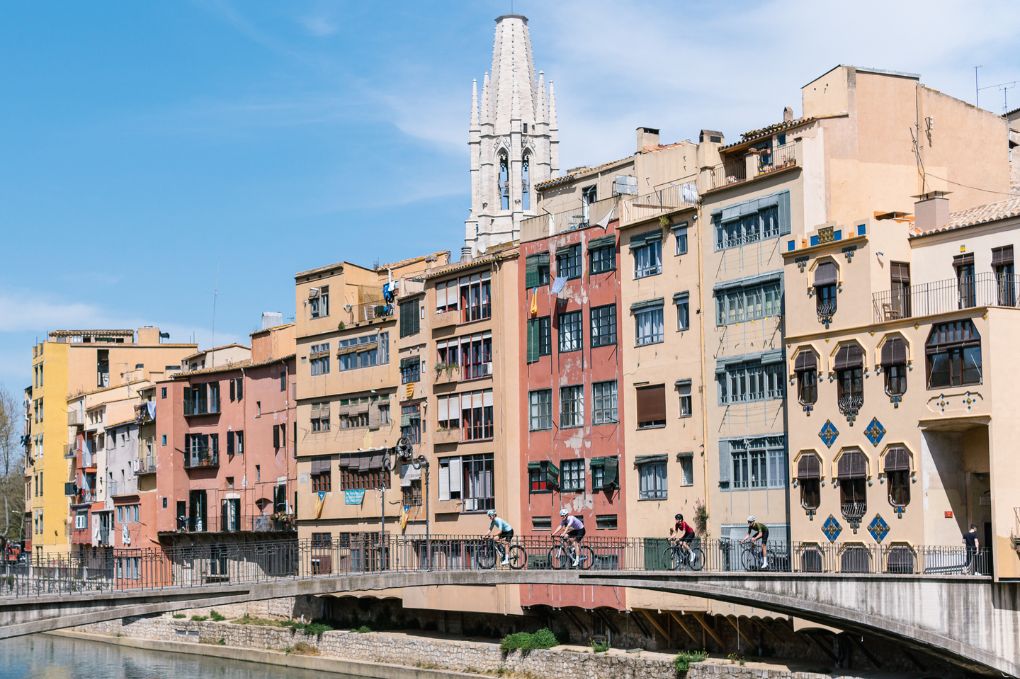
    Girona clyclists
    The unique region of Girona, a real paradise for cyclists

    Inspiring Winter Cycling Spots

    Inspired? Each of our winter cycling spots above give you the ability to indulge in a cycling tour or training session when it should be too cold to be enjoyable! Take a look at our winter camps to see how you can enjoy some cycling in the sun this winter. For more information or to find out about how we can tailor a winter trip to your needs email us on tours@eatsleepcycle.com or contact us online!

    P.S. Enjoyed this blog? Why not sign up to receive notifications every time we post and get regular updates on our latest tours!

  • Andalucia Gravel Bikepacking Tour: Sherry, Seafood & Flamenco

    Bikepacking is taking the cycling world by storm. Eat Sleep Cycle founders Lee & Louise headed to the south of Spain to enjoy some quality time on the bike & explore the region. Lee tells us all about the journey.

    Here are the boundaries we had for our bikepacking tour of Andalucía:

    • Just 5 days of riding – this was a holiday & we wanted to come home feeling fresh, so the routes couldn’t be too epic.
    • In January so probably avoiding the highest peaks of the Sierra Nevada’s
    • A loop (getting the train or dropping off the car in one place and collecting it afterwards)
    • Carrying everything we need, no support, however staying in nice hotels and not camping.
    • Gravel bikes meaning we could get off the main roads which we would do as much as possible.

    There were some places we really wanted to visit, like Seville (I had a bike race finish there a few years ago) and Sanlúcar (Louise went to Flamenco dance classes there as a teenager).  We also really wanted to see Granada but the first planning observation was the vast size of the Andalucía province compared to others in Spain. With just 5 days and taking into account the chillier mountain weather in January, we crossed out Granada for a future visit. We would focus on the main cities of Seville and Cordoba instead.

    Bike Gear for Bikepacking: The Bikes

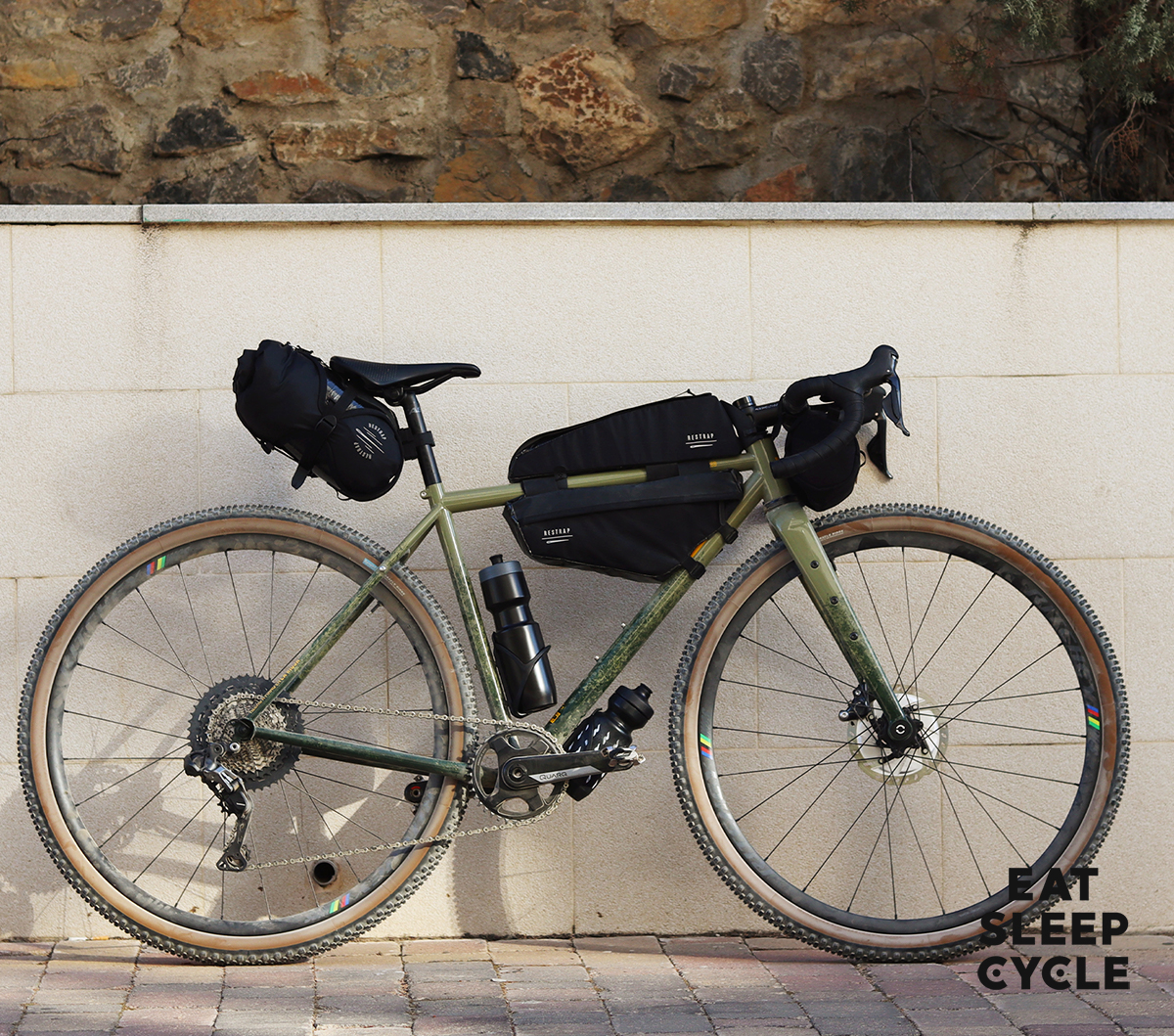
    Louise would ride her custom RS Cycles Columbus tubing steel gravel bike. Its so small it only takes 650 wheels and those were given a tyre upgrade to the faster rolling gravel kings. Her bags were the lightweight Restrap collection  since those fit nicely on her tiny bike.

    The Eat Sleep Cycle workshop built me a Ritchey  Outback especially for the trip. I used the Ortlieb bags from our rental equipment. Both Louise’s and my bike were powered by the SRAM Force AXS groupset for extra smooth shifting, though Louise had the Mullet upgrade.

    RS-Cycles-Ritchey-Bikepacking-Set-Up-Eat-Sleep-CycleThe Bikepacking Adventure Begins: Arrival in Cordoba

    We decided to start in Cordoba, the closest driving distance from Girona. Why not take the train I hear you ask? Of course we would prefer this, however getting the bike on the high speed AVE train that crosses Spain is not guaranteed. It needs to be in a case, or bag, so you can try with a large bin bag, but we just couldn’t take that risk on this occasion.

    Arriving in Cordoba was a joy. What a peaceful city with easy access from Orange tree-lined roads. We even managed to park the car for free for a week (practically for free – we paid a gentleman €1.50 a day to watch it which seemed to be part of a great local government program).

    Cordoba to Osuna, 92 Km, 537 m elevation, 60% gravel

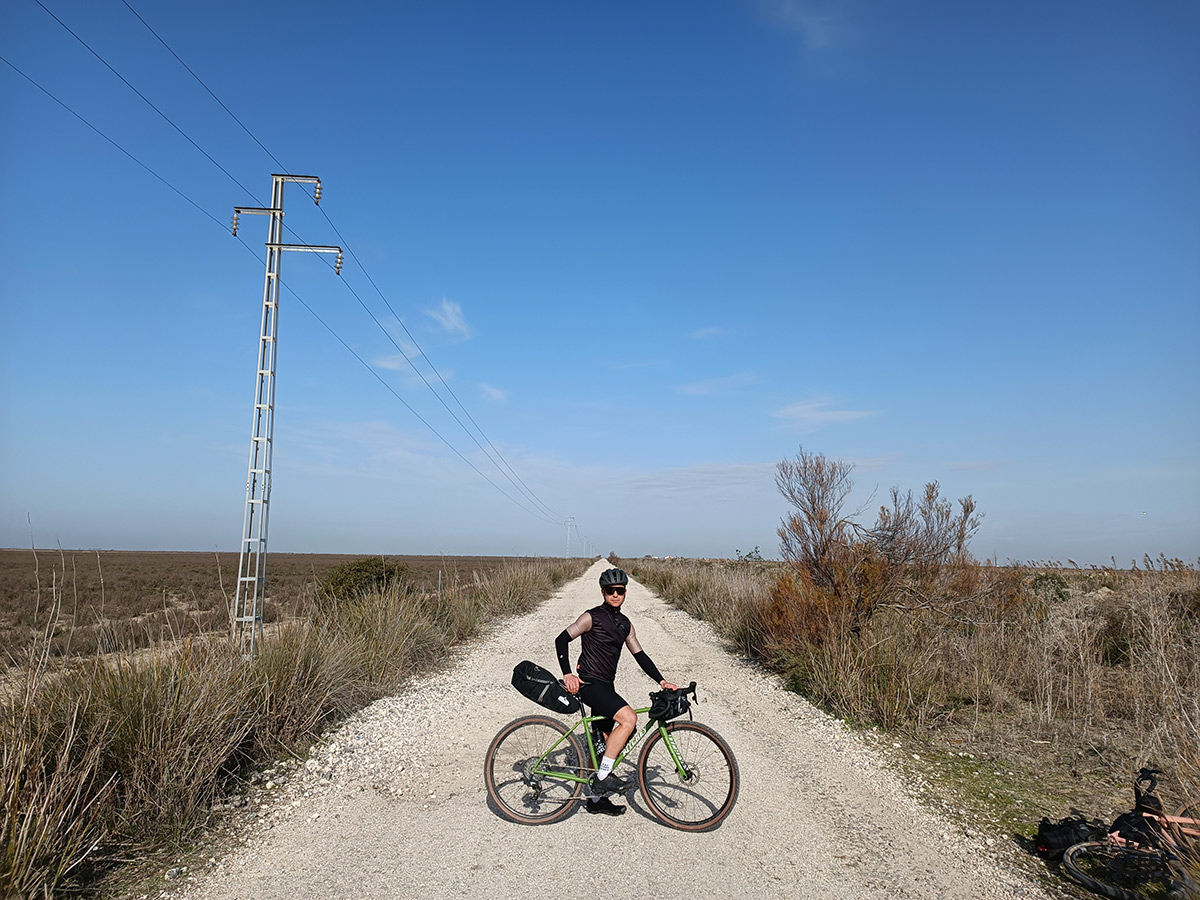
    The gravel bikes came into their own right away, leaving the city under the main roads and immediately out onto the olive tree lined via verde, with Cordoba gradually shrinking in the distance.

    Immediately we got a sense of the size of Andalucía, vast bare fields, only green where farmers irrigate extensively. Thousands of olive trees as far as the eye could see. This is where touring by bike is really a treat – on a map it looks like nothing special and in real life the views are spectacular!

    We stopped for lunch in a small restaurant in Écija and tried the local salmorejo (garlicy tomato cold soup) and jamón croquettes.

    It was after this we first experienced the fierce wind which would feature during the rest of the trip. Were we unlucky just going the wrong way, or is it always so damn windy in Andalucía?!

    Arriving at Osuna, after a quick wash we headed out to enjoy the sunset from the Colegiata which overlooks the city majestically.

    Andalucia-Bikepacking-Eat-Sleep-Cycle-Gravel-Via-VerdeOsuna to Ronda, 79 Km, 1,850 m elevation, 70% gravel

    We rode out of Osuna directly into a wind farm park, which gives an idea of just how windy it was. I loved getting right up close to the turbines and feeling the force!

    The gravel was perfect which helped tackle the short steep bergs through the park. It made for a tough day on the legs with the loaded bikes.

    The path got Hiller and hillier the closer we got to Ronda. The hill top cities in Andalucía make you work for them and the arrival into Ronda was no different with 5 Km into a headwind on an uphill drag.

    Ronda to Arcos de la Frontera, 87 Km 1,654 m elevation, 40% gravel

    Before leaving Ronda we took a small detour to view the Puente Nuevo (new bridge) which adjoins the new and old city. Famously, Ronda was one of the last standholds of the Moors and only by cutting off the water supply at the bottom of this bridge were they conquered.

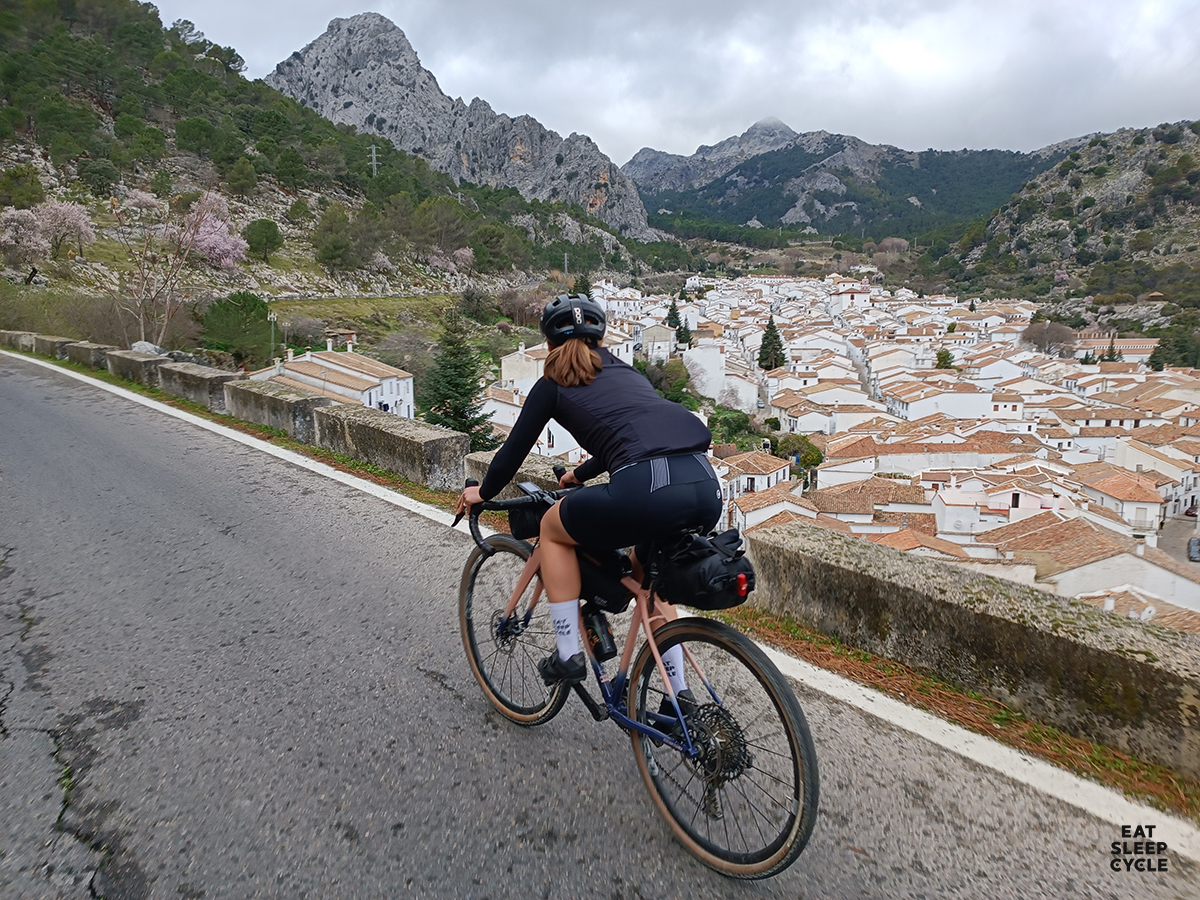
    If there is one place on the trip I will come back to ride my bike more that is Ronda. The epic climb up to Grazalema (through the Sierra Grazalema) left us speechless. Full blossom trees lined the roads and outstanding views in all directions.

    If we thought we were done at the village we were not, the road kept on going. With a loaded bike weighing around 20 Kg these long steep climbs take their toll!

    We descended the chilly back side and stopped in a roadside Parilla for some snacks before joining the main road to Arcos de la Frontera. The gravel bikes meant that at any opportunity we could leave the main road and escape any traffic, which we did at every opportunity.

    Of all the places we saw on our trip, Arcos de la Frontera, perched on a cliff edge and dominating the horizon, was the most remarkable. The climb up through the cobbled streets really tested my Wahoo navigation. The hotel advised not driving up, we didn’t know it would also be a challenge on a bike! This place was not designed for cars or even bikes!

    We stayed in the only decent hotel up there, a Parador, a converted Magistrates house. The views were outstanding and the room had a bath, which 3 days in (and with little preparation for back to back days) helped ease some of the aches and pains starting to emerge.

    Sierra-Grazalema-Eat-Sleep-Cycle-BikepackingArcos de la Frontera to Sanlúcar

    For the first time on our trip we felt a tail wind. It took us just over an hour to get to Jerez (direct translation Sherry and the birth of it).

    We took a long route to Sanlúcar via Puerto Santa María, because we wanted to see the coast after several days inland. Just another special feature of Andalucía, being the Province which benefits from both the South (Mediterranean) and some West (Atlantic) coast.

    Most of the ride from Jerez to Sanlúcar was functional, through the poor suburban outers of these places. This is one of my favourite things about touring by bike – seeing how people really live and not just the rich and polished inner old towns set up for tourists.

    The last 20 km into Sanlúcar had us hugging the Guadalquivir river on yet another excellent via verde, we saw first hand every man and his dog growing manzanilla on their lawns (it is only grown here due to the unique climatic conditions).

    Closer to the city a purpose built boulevard saw half of the city out for their pre dinner sunset excercise, the place immediately grew on me. Louise had joined a small Flamenco school several years back during her dancing days so being back brought back some fond memories.

    We enjoyed freshly caught prawns and local white wine at the busiest restaurant in the central plaza. Although we live in Girona, Andalucía is one step further on the Alfresco living scale, probably due to the milder climate.

    Sanlucar to Seville, 96 Km, 48 m elevation, 90% gravel

    We left Sanlúcar through a stunning pine tree natural park into what can only be described as a bird paradise. We were stopped in our tracks by flocks of flamingos enjoying the ideal conditions. We were on the route along the Guadalquivir river to Seville. 90 Km of gravel cycle path, on paper a dream and in reality extremely tough against the blinding headwind that day. To get through it we took turns facing the winds force and taking regular breaks to enjoy our quickly diminishing snacks (we didn’t see so much as another person the entire ride).

    Endless-Road-To-Sevilla-Eat-Sleep-Cycle-Bikepacking4 hours in we reached the end of the river path and to our delight a bar, or a farm, a farm bar let’s call it. They had Coke and coffee and that’s all that counts. I am fluent Spanish but the strong accent here tests me to my limit so we also ended up with 2 random tapas which apparently I ordered!

    The final race into Seville proved just how good the cycle paths are in the city. Completely divided and perfectly identified, with separate cycling signals at crossings, it is a joy to cycle through this city.

    We stayed right in the center of the old town with easy access to all of Seville’s main attractions. What a wonderful romantic city to finish our cycling tour.

    We took the train back to Cordoba to finish the loop. All in all, 5 days of riding.

    Until the next time…

    To improve the trip I would add an extra day riding in Ronda and in warmer times and with more days to play with of course add in Granada and the Sierra Nevada. I hope to be back to Andalucía again soon to discover more of this wonderful Spanish province.

    Want to find out more about Bikepacking?

    Read Daan’s blog about bikepacking the Badlands ultra-race or check out our Pirinexus tour if you’re looking for a great route to try out bikepacking.

  • Badlands: My First Bikepacking Adventure

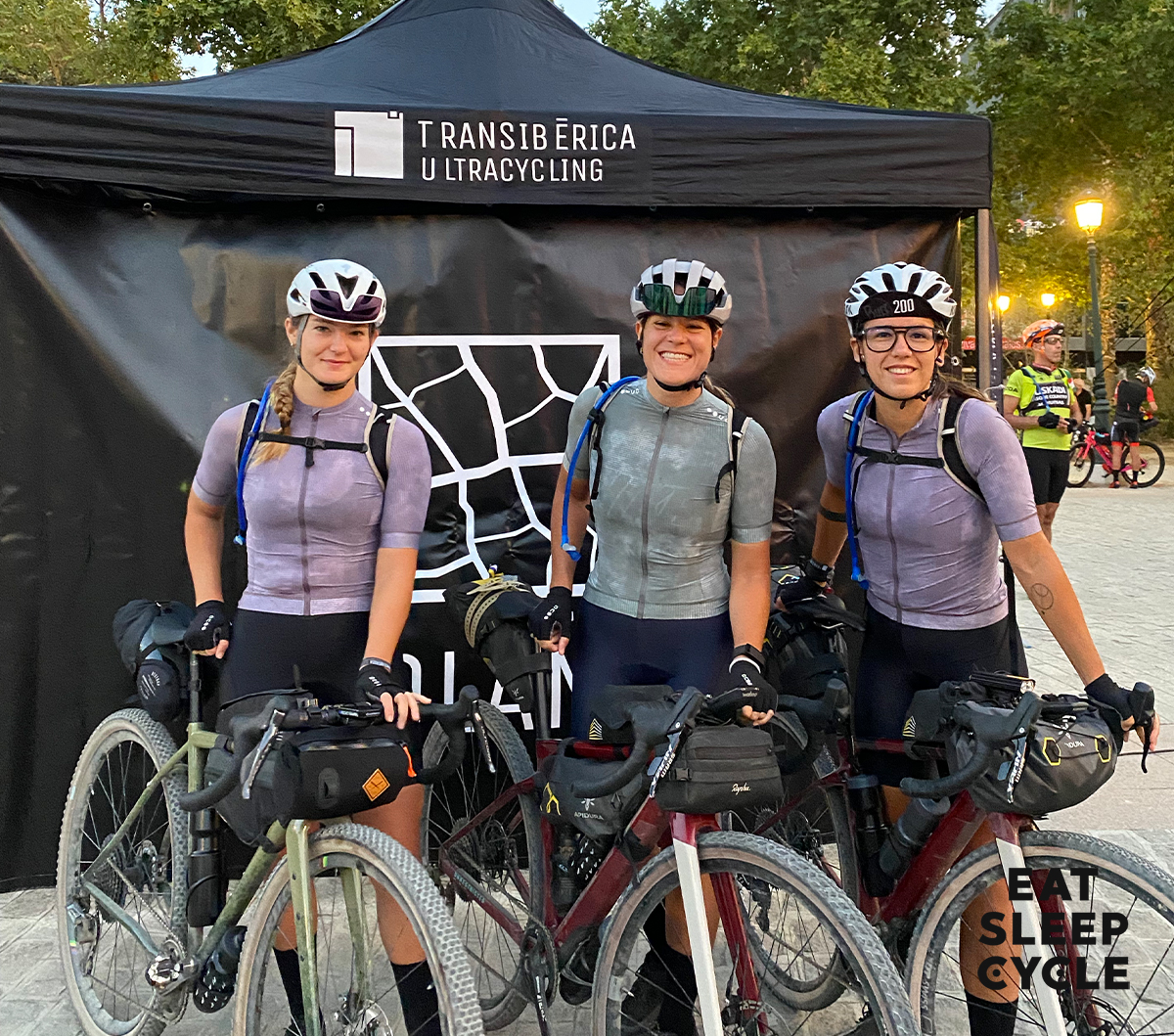
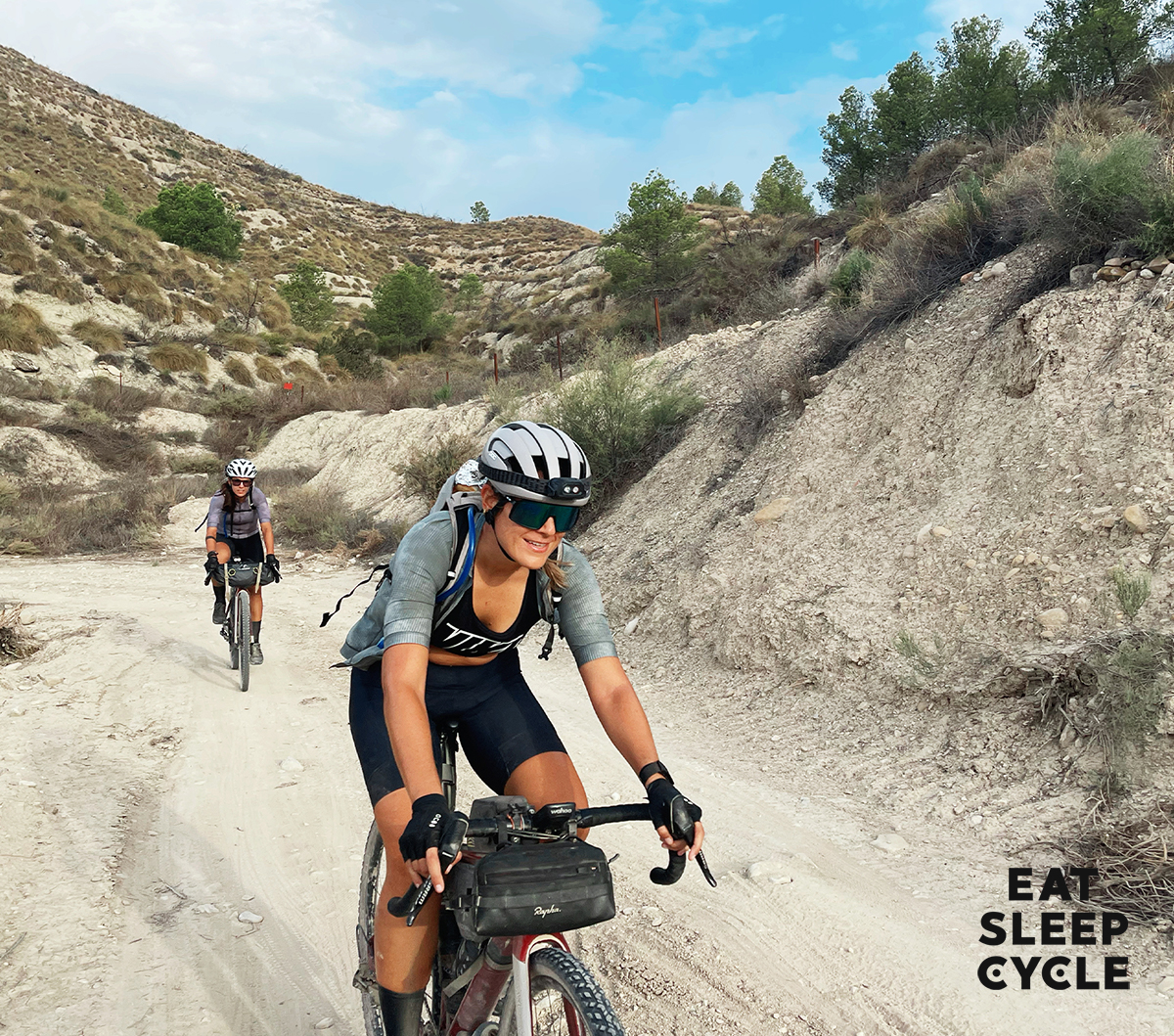
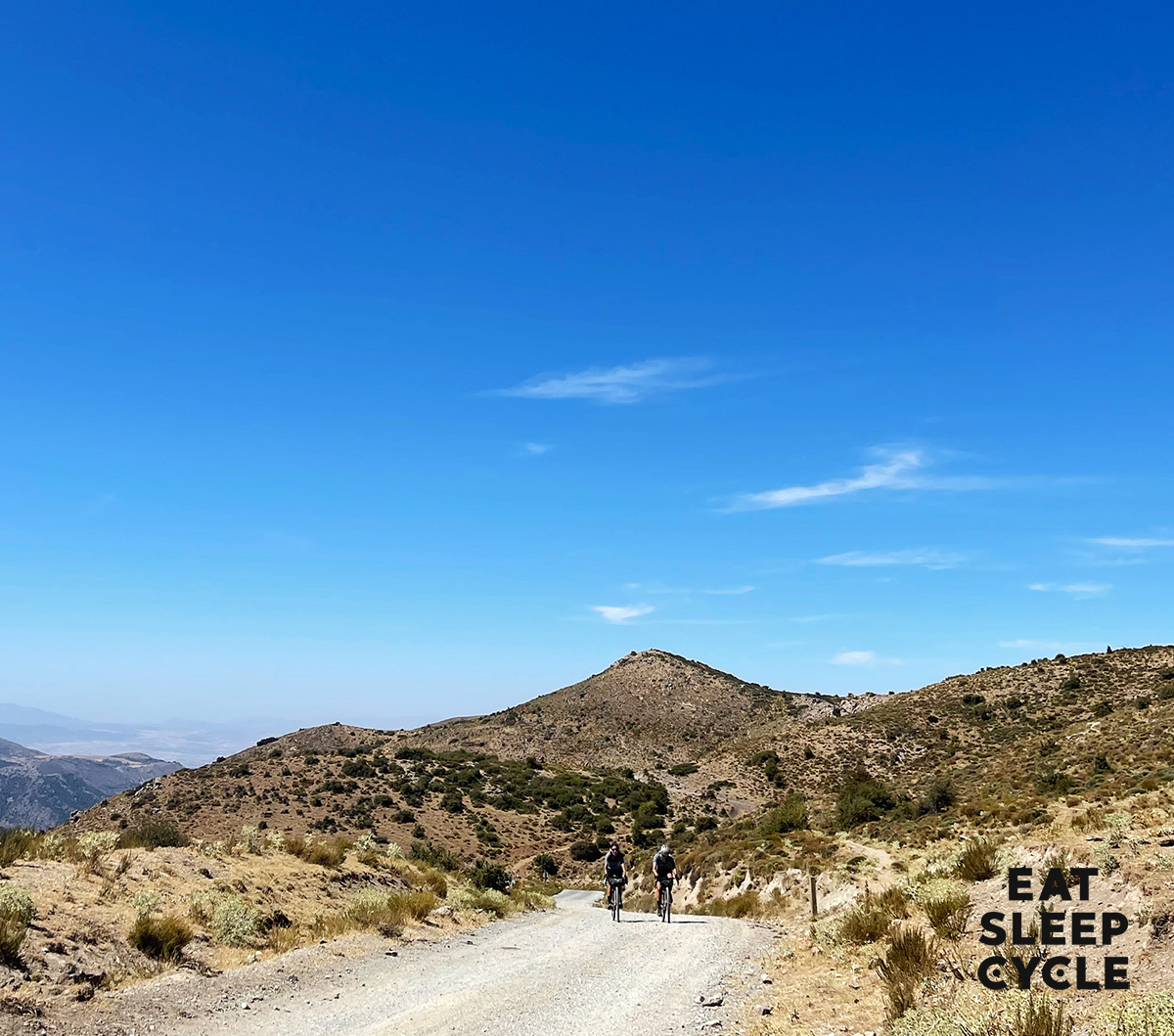
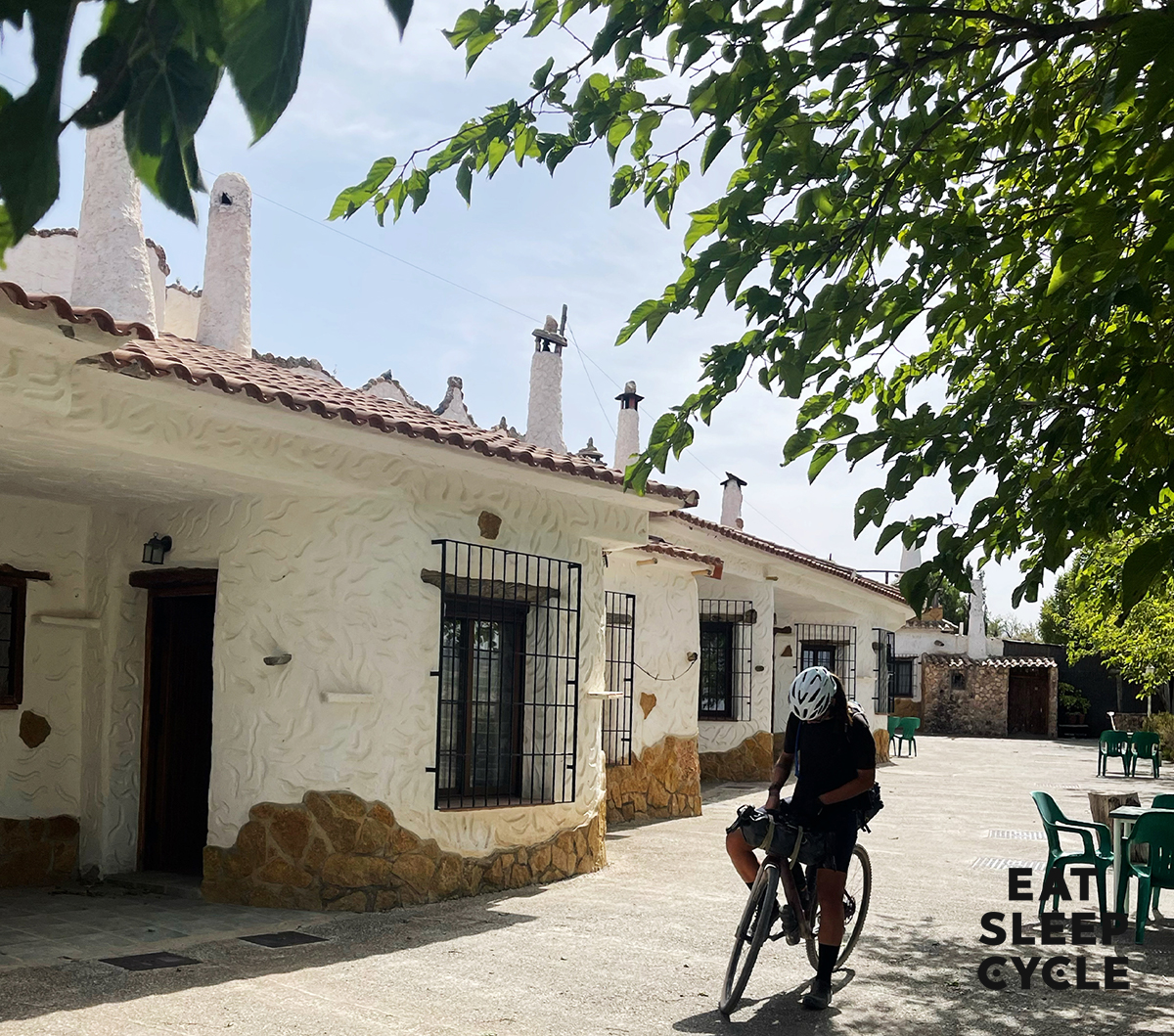
    This year local Girona trio Rocket, Cristina, and Laura from Over & Out took on Badlands, by Transiberica. A 750km gravel race, crossing two deserts in Andalusia, with 16,000m of climbing. This was the first ultra-cycling race for all three, and for Rocket, her first ever bikepacking adventure…What a way to start. Read on to find out about how they prepared for this event, and how it went.

    Where It Began

    Laura and Cristina (Cris) had been preparing for Badlands for a year, whereas I had heard about it through them and decided it would be cool to challenge myself in a new way. Coming from road racing, I’ve been keen to get myself on a gravel, and what a way to kick things off with gravel racing, 750km in Andalusia? Yes please.

    I’ll be honest, Badlands was not intended to be my first ever bikepacking adventure, but a series of unfortunate events, and a busy work schedule, meant that it happened that way. 10/10 would not recommend turning up never having backpacked before, but go big or go home, right?

    As Laura and Cris were already riding as a pair, I entered solo with all of us repping our Over & Out squad.

    Badlands Preparation

    Laura applied her knowledge as a cycling coach and director sportif to look at the route and split it into days. Listing out the climbs, technical sections, villages where we could find water, and hotels along the way. Naively, we split the route into four days, thinking five would be the maximum number of days it would take. I say naively because there’s a huge difference between what’s on paper, and the reality of the route which we quickly discovered during the event…

    Training wise I had an event earlier in the Summer, a multi-day stage race in Andorra on the road, and so this was my first focus. I had a large base block prior to this event, some rest after the event, and then began to work back up. Unfortunately, due to work my training began to take a dip a few weeks prior to the event which wasn’t optimal, it meant I began tapering early. With guidance from Laura and Ciaran O’Grady, they helped make sure I was in the best position I could be in the circumstances.

    With our route split completed, and training underway, we then needed to think about what we’re packing, which bike bags, and the equipment we’ll need along the way. As both Laura and Cris had some experience with this, they were able to help me with items I would need, and those I wouldn’t. I also reached out to other adventure seeking fanatics who had experience with ultra-riding or multi-day bikepacking adventures for advice.

    Kit Choice

    I decided to use Restrap bike bags, I’d used them before and was really impressed, they’d also been recommended to me multiple times as the best to use for this type of event. Having reached out to them, Restrap sponsored my bike bags for the event. I settled on the race collection saddle bag, frame bag, top tube bag, and then a canister bag. This was the perfect set up, I was able to fit everything I wanted to pack including having some extra room for food along the way. I also took a camelbak to ensure I could carry even more water, this was vital.

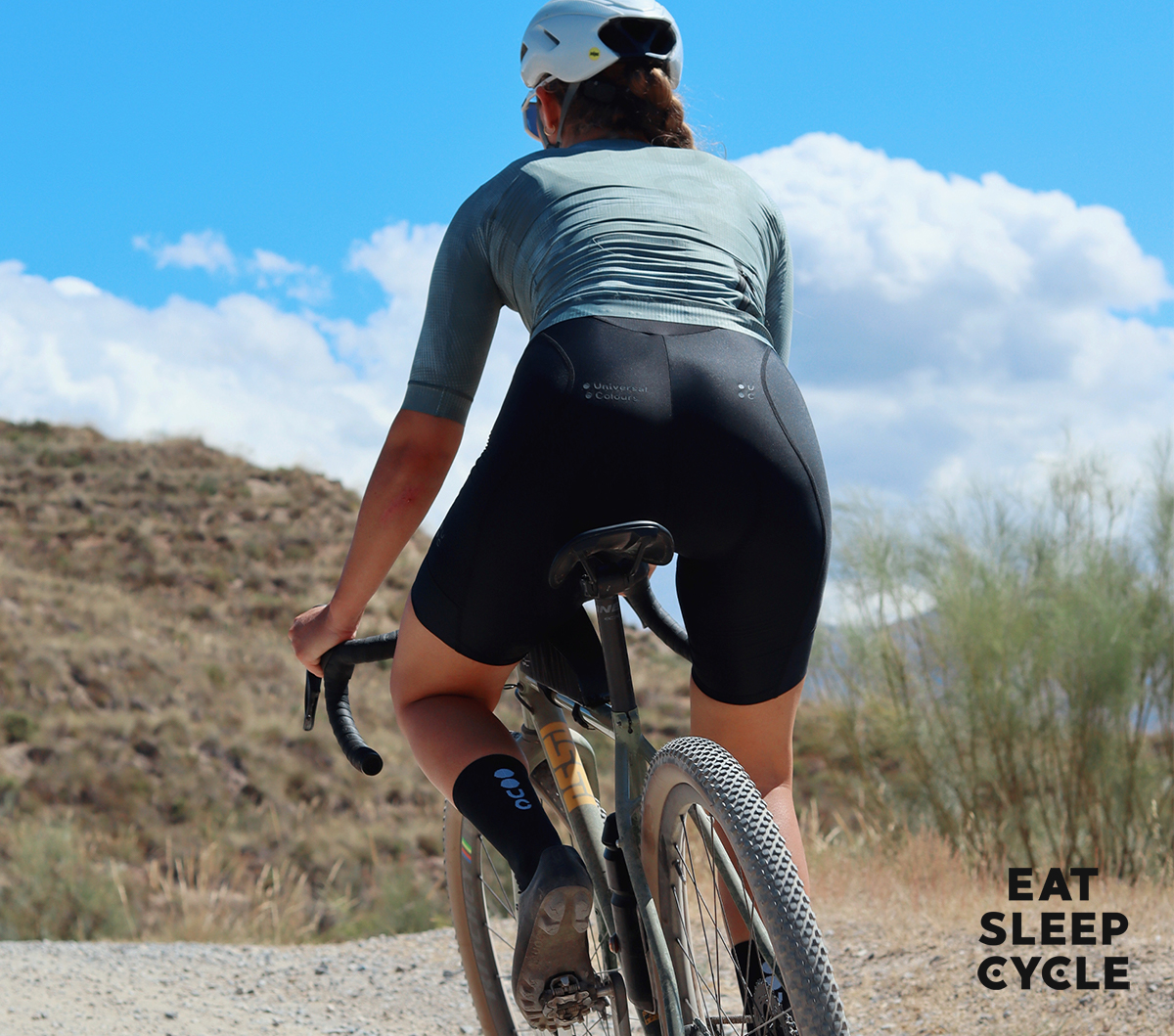
    Kit wise, Universal Colours, a British sustainable and ethical focused clothing brand sponsored Over & Out. The kit was perfect, particularly the Chroma cycling jersey which was lightweight and comfortable. I wore the Mono bibshorts in a size up which were perfect for the heat.

    For my shoes I opted to wear the Quoc Gran Tourer (which were gifted) over my S-Works MTB shoes, as they are much more supple and wider which meant when my feet were swelling in the heat, I still had room and felt no pressure points.

    I refined my kit list with the help Laura, Cris, and Sami Sauri, and have to say I was happy with everything I brought.

    Eat-Sleep-Cycle-Badlands-Gravel-Cycling-Universal-Colours-Restrap-Quoc

    Bike Set Up

    With the help of Willem from Eat Sleep Cycle, and input from Daan who did Badlands last year, we built up my brand-new RS Cycles Brusca gravel frame with Shimano GRX from my old cross bike.

    We went with a 38t front chainring, and 46t cassette. While this worked well, there were times I wished for the 50t…

    My tyres were Rene Herse Oracle Ridge 700C x 48 tubeless. I suffered with not one puncture, at all, and felt secure on the entire route. Never having ridden Rene Herse before I wasn’t sure what to expect, but I am beyond impressed with these tyres!

    Race Countdown

    We flew to Granada a few days prior to the event, giving us time to sort out last minute situations, as well as having time to recce the first few km of the start of the race, particularly the first climb and technical descent.

    The Race

    At the start line the nerves were real. I still had no idea what to expect, but we hung at the back knowing we wanted to take things slow.

    Day one was epic. It is possibly one of my favourite days I’ve ever had on the bike, it was long, hard, with more climbing in one ride than I’ve ever done. There were some long climbs, one in particular which was all on the road and I was able to keep a strong cadence and spin up to the top. The first 40km were brutal, as we were told to expect, with some technical gravel and sharp gravel climbs. We made our way through, yoyoing with a few other riders with whom we got to know a little along the way.

    Eat-Sleep-Cycle-Badlands-Gravel-Cycling-Startline-Universal-Colours

    We stopped once for an early supper, and then carried on, our eyes set on Gorafe being the town just outside the first desert. Our initial plan was to ride through the desert at night, but arriving late to Gorafe and struggling to find some food without meat, we decided to hit the sack for a few hours.

    This was the first time I’d ever slept out with no tent, in a random location, not including those as a child sleeping under the trampoline in my backgarden. We found a number of other rides sleeping outside in front of the only BnB in the town (which was fully booked) and decided the safest thing to do was to crash there also. I use the term sleep loosely, it was mostly drift in an out of consciousness over the course of a few hours. We slept on roll mats, in only bivvy bags, wearing leggings and a puffer jacket for warmth.

    At 4:15am we started to pack up and find water getting ready to start the day in the desert. By 5am we were on the “road” hitting the first climb out of Gorafe. We rode for a few hours in the dark, and as the sun began to rise we hit the first village, finding a few of our friends at a café drinking coffee. We sat down to join them and caught up on the previous day. They’d ridden the 30km late last night and had crashed in the village square, having dealt with puncture after puncture for hours on end into the early hours of the day.

    After a few cups of coffee, we carried on, enjoying a beautifully paved road to the next town, and last water stop (little did we know). As the day went on we took on some more technical sections of sand, long climbs, rocky sections, steep climbs, and as the day got hotter and hotter, the lack of water, food, and sleep started to become an issue.

    Eat-Sleep-Cycle-Badlands-Gravel-Cycling-Gorafe-Desert

    Laura’s ongoing tooth infection was becoming more and more unbearable, taking its toll on her body. We’d booked our hotel earlier in the day, knowing we’d need a bed for the night and this became out motivation to keep moving. With 30km to go before leaving the desert, we decided I would ride on, get to the hotel, and find food for us. During this 30km I had some of my darkest moments, I received word that Cris had crashed and hit her head and was struggling with dizziness. I’d nearly fainted in 49 degrees climbing up the final climb, forcing myself to get off and sit under the shade for a moment. With only 500ml of water left, and still the distance from the edge of the desert to Gor to go, not knowing where the water was, alone, a little scared, unable to keep food in my stomach having been sick, I wondered what the hell I was doing here. Seeing some other riders towards the top of climb lifted my spirits and I kept going.

    Those final few kms to the hotel were the hardest of my life, alone, with no water, dehydrated, suffering with head stoke, it took everything to keep the pedals turning. I remember feeling so defeated, shaking feeling cold but hot, and delirious, having exited the desert there was still a way to go to Gor to our hotel and it felt insurmountable.

    Eat-Sleep-Cycle-Badlands-Gravel-Cycling-Gorafe

    That first glass of water at the hotel I will remember for the rest life. Badlands is like this; it pushes you beyond the limits of what you thought you were capable of. Having showered, taken a brief rest, and chugged my weight in water, I changed into the only non-cycling clothes I had and made my way back to the village to find a supermarket to find some food to cook for when Laura and Cris made it back. Another 6km I thought would be impossible, and yet I rode on.

    When they arrived later that night, we were broken, hurting, exhausted, dehydrated, suffering with heat stroke but happy to have somewhere to sleep. With Laura in pain, Cris in no state to get on a bike, and with my struggling to get food in my stomach we went to bed planning to have a team meeting the following morning to check in before we decided on the day. The next section of the race was going to be a brutal section over 100km with no food stops, an 18km climb to start (which a friend of ours took 5hrs to get up as it was mostly hike-a-bike), and little water security.

    Eat-Sleep-Cycle-Badlands-Gravel-Cycling-Gor

    That following morning, after a long chat, we made the decision to pull the plug on this adventure. I was heartbroken for Laura and Cris who had been prepping and planning for this adventure for so long, but in our current states, we didn’t want to take the potential risks.

    Badlands Reflection

    Badlands was one of the best and worst rides of my life. Riding on the gravel with two of my best friends for so long, on a completely new adventure, was epic. Seeing them both accomplish things they’d never done before and seeing how strong they had come into this race was beyond awesome. Challenging myself and pushing myself out of my comfort zone to my growth zone was equally as awesome.

    However, the lack of water, and water security, the heat, and the issues along the way made this one of the worst experiences I’d ever had on the bike. I suppose that’s the type 2 fun, it was horrible, but I look back and think how epic it was to make it through that.

    Badlands challenges every essence of your being, and for those finishers, all of you, whether you completed it in two days or six, my hat is off to you! What a feat! For those who started and pulled the plug whether it was km 60 or 650, kudos to you, starting Badlands is not for fainthearted, and those who take to start do so with courage. You’re epic. And Badlands, perhaps I’ll be back for a re-match…

    A huge thank you to Eat Sleep Cycle, Restrap, Universal Colours, and Quoc for your support.

    Eat-Sleep-Cycle-Badlands-Gravel-Cycling-Rocket-Rawrrs

    P.S. Enjoyed this blog? Why not sign up to receive notifications every time we post and get regular updates on our latest tours!

  • Top 10 Must Ride Cycling Destinations in Spain

    Spain: A Country of Bucket List Cycling

    There’s much more to cycling in Spain than sunshine and smooth roads. From the highest paved road in Europe (Pico de Veleta in the Sierra Nevadas) to the green countryside of the País Vasco, Spain’s vast and diverse landscape will have you begging for new adventures. Be sure to tick off these cycling destinations from your bucket list.

    1. Girona & Catalunya

    There is no doubt that Girona is the cycling capital of Europe. Home to hundreds of professional cyclists, the old town has a charm that is hard to not fall in love with. Riding is the perfect mix of flat, rolling countryside and some challenging climbs in the foothills of the Pyrenees. If you want character, culture and good food alongside high-quality cycling, look no further than Girona.

    Choose to stay in the centre of the city or branch out to explore the amazing Costa Brava coastline or the Catalan Pyrenees. There are incredible options for road, gravel, mtb & leisure riding, it’s a destination that you’ll simply have to come back to again and again.

    • Best climbs: Rocacorba, Els Àngels, Mare de Deu del Mont
    • Best time to ride: All year around is great, but Girona is at its very best from March – June & September – December
    • Bestselling Tour: Beyond Girona
    • Find out more: Read our Cyclist’s Guide to Girona
    • Must visit: The Girona Cycling Hub!

    2. Andalucia

    South Spaniards are very laid back (and who can blame them in the roasting temperatures of the Summer). But visit Andalucia from September through to June and you’ll have a spring in your pedal stroke. Andalucia is home to the fabulous cities of Granada, Cordoba & Seville, the high mountains of the Sierra Nevada & the fabulous Costa del Sol coastline. Its landscape is brimming with Moorish architecture & the sounds of flamenco music.

    The Sierra Nevada mountains are home to the mighty Pico de Veleta & a whole number of fabulous climbs. Often used for altitude training by professional cyclists, you’ll need your climbing legs on because it’s up or down with not much flat! There are plenty of authentically Spanish places to choose to stay in the region, from the cultural hub of Granada to tiny villages in the mountains.

    Visit Andalucia for your taste of authentic Spain.

    • Best climbs: Pico de Veleta, Caminito del Rey, Puerto de Leon, Puerto del Sol, Carretera del Cabra
    • Best time to ride: All year around, but avoid the summer months of July & August when temperatures are high
    • Bestselling Tour: Tour of Andalucia
    • Find out more: Read our Cycling in Andalucia blog
    • Must visit: The Málaga Cycling Hub!

    3. ‎Asturias, Cantabria & the Picos de Europa

    Oviedo is a bustling city with all the culture of Asturias and its wonderful food, friendly people and interesting architecture. Ride for just 5 km south and you meet what can only be described as a theme park for cyclists. Scores of short steep climbs scattered over several valleys, the Big One being the Angliru. Often stated as the hardest climb in cycling its something every cyclist should do, but just once.

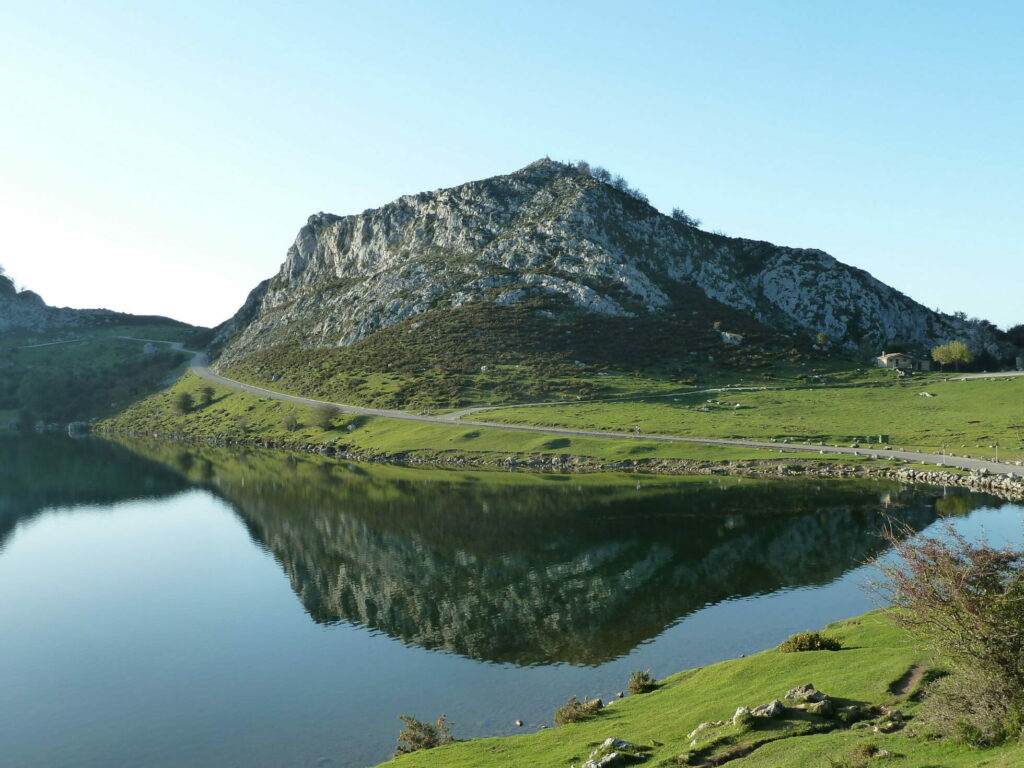
    To the east of Asturias lie the hugely underrated Picos de Europa or “Peaks of Europe” named by Columbus for being the first mountains he saw on his return from America. They are beautiful rock formations comparable to the Dolomites. Don’t miss Lagos de Covadonga, a stunning series of lakes over 1,000 m up in the sky. Puerto de San Glorio is a hidden gem of a climb that will leave you wanting to find more “off the radar” climbs and there are plenty of those in the area.

    Further east Los Machucos was the climb which sparked rider protests in the 2017 Vuelta España. It’s brutal kicks are rewarded by stunning rural views all the way up. Cantabria is home to many other feature climbs of the Vuelta such as the Peña de Carbaga and Puertos Alisas & Ason. There’s no wonder that when the Vuelta reaches Cantabria things get exciting.  Close proximity to Santander & Bilbao is helpful for logistics but avid cyclists are better off avoiding the big cities and staying out in the lovely countryside.

    4. ‎The Basque Country

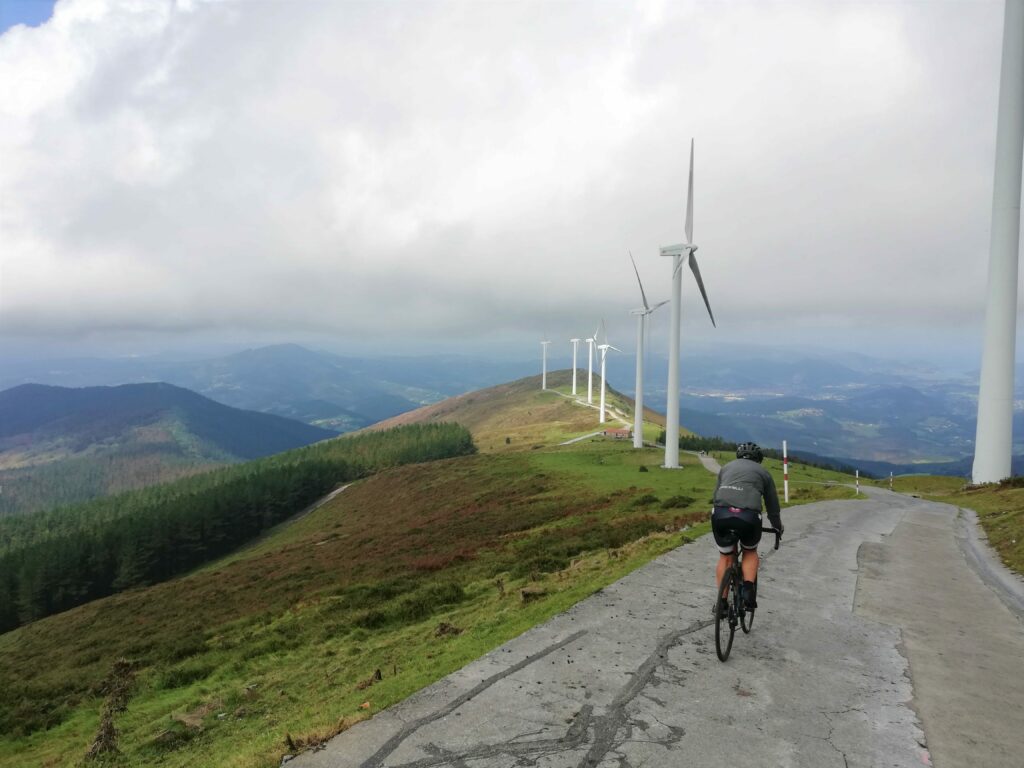
    With its own language and Spanish-Basque and French-Basque regions, the Basque country is a mixing pot of cultures which creates the best food in the world. Rolling green hills line the distance with characteristic white and red chalets. It’s a treat on the eyes and lushness that of course warrants some occasional rainfall, typical of the north Spain area. Whilst the climbs are not long, some are steep so you can easily rack up plenty of climbing metres over a days ride.

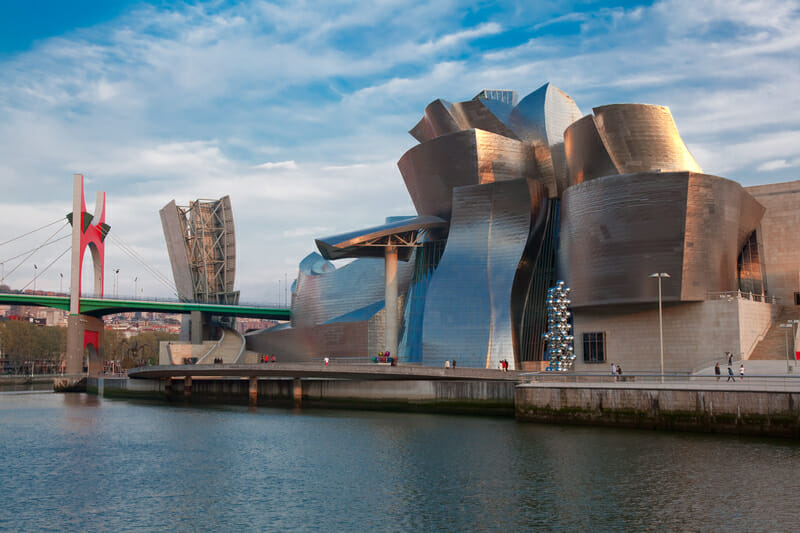
    The Basque Country is also hailed as one of the gastronomic capitals of the world. Be sure to combine and visit to the region with a stay in Bilbao, an industrial city in the west (& home to the iconic Guggenheim museum) & San Sebastian, set on the stunning La Concha beach. Bilbao is a little tricky to ride in & out of, so perhaps save your riding for your stay in San Sebastian.

    • Best climbs: Col du Inharpu, Monte Oiz, Jaizkibel
    • Best time to ride: With chilly, wet winters, April through October are the best months to enjoy this stunning region of north Spain.
    • Bestselling Tour: Tour of the Basque Country

    5. ‎La Rioja

    A stunning rolling landscape filled with vineyards as far as the eye can see. A perfect spot for a more relaxed approach to cycling, combined with delicious food & world-class wines. Combine your daily ride with visits to local bodegas for a spot of wine tasting. Trundle down the River Ebro from Haro to Logroño. Stay in luxury hotels, of which there are many, or authentic guesthouses.

    • Best climbs: El Balcón de Rioja
    • Best time to ride: Spring & Autumn offer climatic perfection
    • Bestselling Tour: Custom & Private tours

    6. ‎Andorra

    Of course, it’s not actually a part of Spain but the tax haven of Andorra is packed with slopes to delight the most hardened of cyclists. Every year Andorra hosts La Purito, the toughest sportive in Europe, and thousands flock to attempt 5,200 meters of elevation in one painful ride. Andorra is best enjoyed over 2 or 3 days (or 1 if you’re feeling sadistic and want to give La Purito a crack). Andorra is a country for cyclists who love to climb, or cyclists who are not too proud to ride an e-bike!

    • Best climbs: La Gallina, Collada de Beixalis, Col D’Ordino, La Rabassa and Els Cortals D’Encamp.
    • Best time to ride: Avoid winter when Andorra turns into ski paradise!
    • Bestselling Tour: Custom Tours

    7. ‎Mallorca

    An island off the Spanish mainland, Mallorca has long been known as a paradise for cyclists, and with good reason. Mallorca enjoys a year-round, excellent climate & has a wide variety of fantastic roads. From the Tramuntana mountain range, the rolling wine-making region to the flat, coastal plains, there is always a route to suit the occasion. Mallorca remains a popular destination for professional cyclists to prepare for the their race season and offers a huge choice of boutique guesthouses, mountain retreats or all-inclusive hotels on the beach.

    • Best climbs: Sa Calobra, Soller
    • Best time to ride: All year around! Although it can get too hot in the summer months of July & August
    • Bestselling Tour: Tour of Mallorca
    • Find out more: read our Guide to Cycling in Mallorca

    8. The Canary Islands

    Far away from Spain, the Spanish speaking island of Gran Canaria lies off the coast of Africa. The climate offers perfect cycling conditions all year around and it’s a popular destination for cyclists when the rest of the world cools. All roads in Gran Canaria lead the highest point in the island, Pico de las Nieves. Popular bases for cyclists include Playa Ingles, which offers good access to the roads, but consider staying in the north of the island for more variety & a more authentic experience. If you can split your time between north & south, perfect!

    9. Spanish & Catalan Pyrenees

    The Spanish & Catalan Pyrenees offer a quiet alternative to the often busy peaks of the French Pyrenees. The mountains are packed with epic landscape and incredible climbs on the road & on gravel. Stay in Vielha in the Vall d’Aran, the tiny village of Pobla de Lillet or the ski town of Camprdon and explore! For something different base yourself in teh town of Ainsa – the mountain biking is superb.

    • Best climbs: Vallter 2000, Col de la Crueta, Col de Portillon, Puerto Bonaigua
    • Best time to ride: Late Spring, Summer & early Autumn
    • Bestselling Tour: Trans Pyrenees

    10. ‎Calpe

    Calpe is a region in the south of Spain which, as well hosting the nightclubs of Benidorm, is also home to a network of spectacular roads & climbs.  It’s a hugely popular destination for professional & amateur cycling teams alike and enjoys a great climate all year around. The area is a regular haunt of the annual Vuelta España and is home to the fantastic short steep climb of the Cumbre del Sol, the site of Tom Dumoulin’s stage victory in 2015.

    • Best climbs: Col de Rates, Port de Tudons, Cumbre del Sol
    • Best time to ride: Avoid the height of summer in July & August when coastal roads are busy and temperatures uncomfortably high. Ride with the Pro’s in November & December.
    • Bestselling Tour: Classic Climbs of Calpe
    • Find out more: Read our guide to winter cycling in Calpe.

    Interested in Cycling in Spain?

    To find out more about our European Cycling Tours give us a call now on +34 972 754 301 or contact us online! We can talk you through the regions and help you to work out where you’ll be happiest on a bike!

    P.S. Enjoyed this blog? Why not sign up to receive notifications every time we post and get regular updates on our latest tours!

  • Mallorca Cycling Ride Camp: 4 Reasons Why You Should Go!

    A while ago we covered 5 reasons why you should go on a cycling holiday in Calpe, but Calpe isn’t the only European winter cycling destination that offers great riding in the late autumn/early spring season. Mallorca is a long-standing favourite and arguably one of cycling’s most popular winter cycling destinations for getaways and is synonymous with pre-season training camps as teams escape to catch some early-season sun and take advantage of the smooth, well-maintained roads.

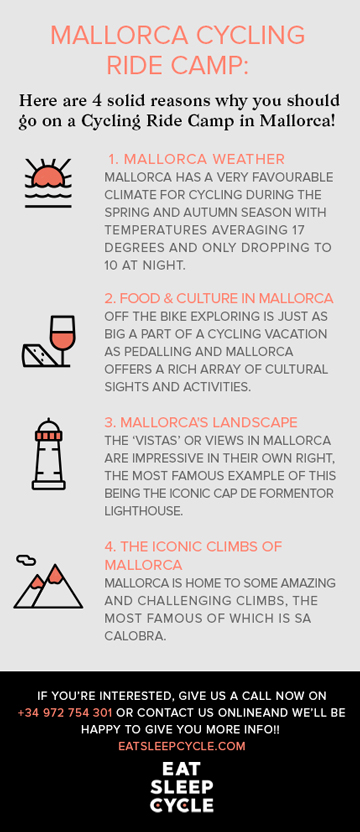
    In this post we’ll give you 4 rock solid reasons why you should go on a Cycling Ride Camp in Mallorca!

    1. Mallorca Weather

    Reasons to go on a Mallorca Cycling Ride CampOf course, one of the main factors when choosing an off season ride camp destination is the climate. Mallorca has a very favourable climate for cycling during the spring and autumn season with temperatures averaging 17 degrees and only dropping to 10 at night. Rainfall in Mallorca is minimal, with only around 5-6 days of rainfall per month in March/April, which is the best time to visit the island.

    2. Food & Culture in Mallorca

    Off the bike exploring is just as big a part of a cycling vacation as pedalling and Mallorca offers a rich array of cultural sights and activities, a visit to the capital of Palma is definitely worthy as is a visit to the picturesque village of Deià. In addition to cultural sightseeing, Mallorcan cuisine has to be tasted to be believed. There are a number of Michelin Star restaurants dotted around the island which are definitely worth tasting if you can.

    3. Mallorca’s Landscape

    The ‘vistas’ or views that can be seen in Mallorca may not rival the high mountain ranges of the Alps or the Pyrenees but they are no less impressive in their own right, the most famous example of this being the iconic Cap de Formentor lighthouse.

    4. The Iconic Climbs of Mallorca

    Mallorca is home to some amazing and challenging climbs, the most famous of which is Sa Calobra, but there are many more for you to take on during a cycling ride camp in Mallorca, check them out below!

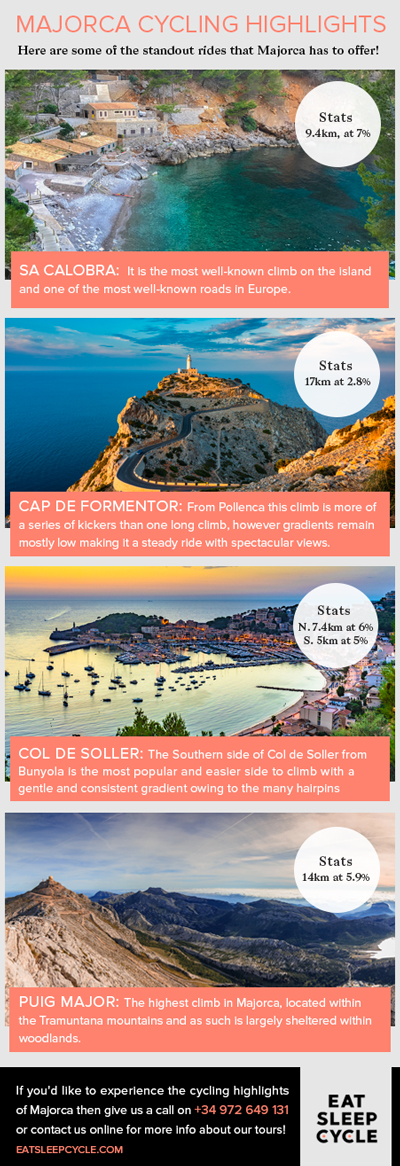
    Sa Calobra

    • Climb Stats: 9.4km at 7%
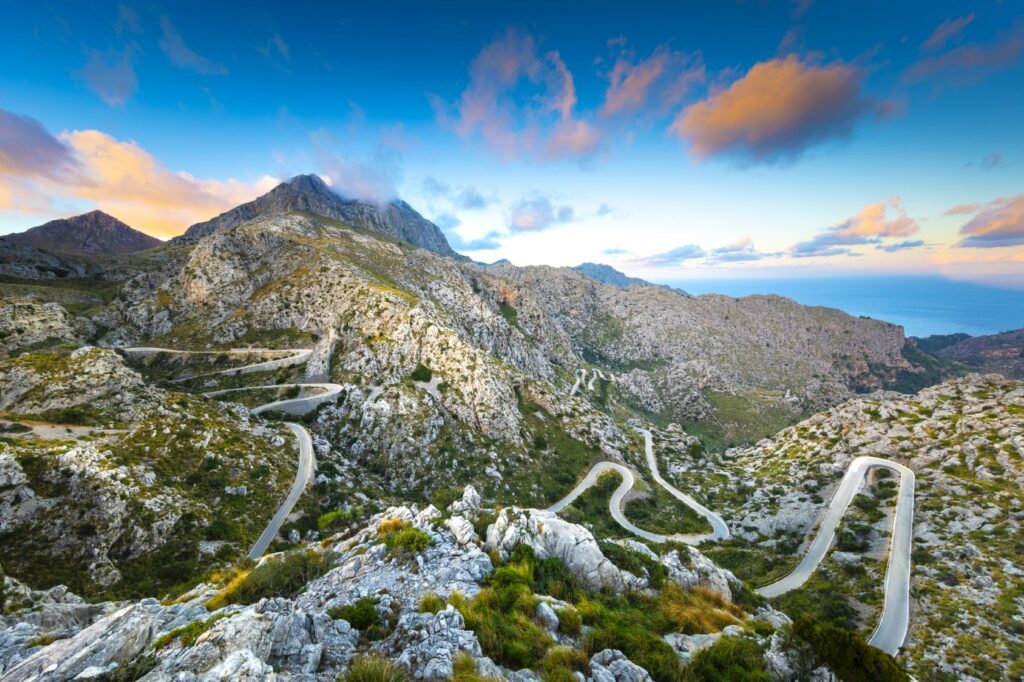
    • Sa Calobra is the most well-known climb on the island and one of the most well-known roads in Europe, famous for its spaghetti-like switchbacks the road was designed by Italian engineer Antonio Parietti and built manually in 1932.

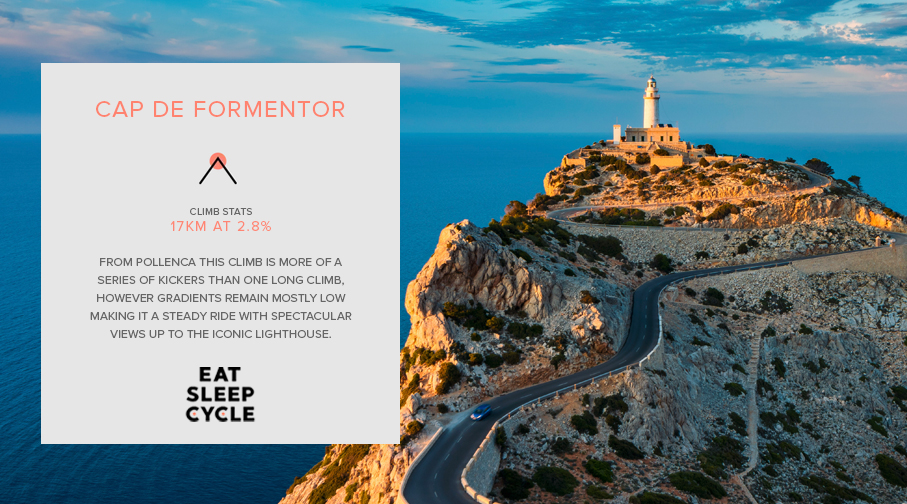
    Cap de Formentor

    • Climb Stats: 17km at 2.8%
    • From Pollenca this climb is more of a series of kickers than one long climb, however gradients remain mostly low making it a steady ride with spectacular views up to the iconic lighthouse. It is the Northernmost point of the island and is known as ‘the meeting point of the winds’ and the wind can indeed get quite strong at the top.

    Mallorca Cycling Ride Camp - Cap de Formentor Climb - Eat Sleep Cycle

    Col de Soller

    • Climb Stats: North 7.4km at 6%, South 5km at 5%
    • The Southern side of Col de Soller from Bunyola is the most popular and easier side to climb with a gentle and consistent gradient owing to the many hairpins, no longer the main road to Soller since a tunnel was built in the 1990s the road is usually empty of cars barring a few. The Northern side of the climb is slightly harder although still not hugely challenging once again thanks to numerous hairpins of which there are more than Alpe d’Huez!

    Puig Major

    • Climb Stats: 14km at 5.9%
    • The only thing which could make this climb challenging is its length. Highest climb in Mallorca, located within the Tramuntana mountains and as such is largely sheltered within woodlands.

    Valldemossa

    • Climb Stats: 5km at 7%
    • If you want to take the road less pedalled whilst still experiencing what’s best about Mallorca then Valldemossa is the place to go. Steeper than the majority of other climbs but also much quieter so in our opinion it’s worth it!

    Tramuntana Coastal Road

    • Through the Tramuntana mountains along the Southern coastline from the town of Esporles to Andratx is the rolling route of the Tramuntana coastal road. As you ride along this road the Mediterranean sea is visible on your right and the Galatzo peak is on your let making for stunning views. The road surface is high-quality and there is very little traffic making this one of the most enjoyable routes on the island.

    Els Vergers/Sobremunt

    • Climb Stats: 7km at 10%
    • Crowned by GCN as the ‘hardest climb on the island’ this rough stretch of road ramps up to a maximum gradient of 25% and averages 10% – with downhill sections included.

    When to go on a Mallorca Cycling Holiday & How to Get There

    The island’s capital of Palma hosts the main airport. You can also get a ferry from mainland Spain (although beware that this could take up to 8 hours). Getting to Mallorca is relatively easy but what may be more difficult is choosing which bike you’d like to use from our updated rental bike fleet for 2020! You can of course bring your own bike to Mallorca but as with our cycling tours we can offer you unrivaled bike rental as well as an unforgettable tour.

    Winter Cycling Ride Camp in Mallorca - Cycling Tour Spain - Eat Sleep Cycle

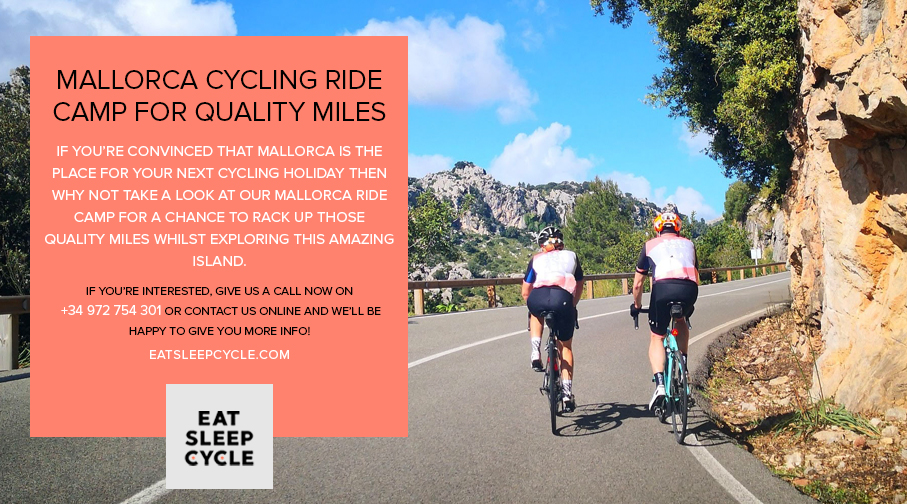
    Mallorca Cycling Ride Camp for Quality Miles

    If you’re convinced that Mallorca is the place for your next cycling holiday then why not take a look at our Mallorca Ride Camp for a chance to rack up those quality miles whilst exploring this amazing island. If you’re interested, give us a call now on +34 972 649 131 or contact us online and we’ll be happy to give you more info!

    P.S. Enjoyed this blog? Why not sign up to receive notifications every time we post and get regular updates on our latest tours!

  • Guide to Cycling in Majorca

    Majorca (or Mallorca as they say in Spanish) is arguably one of cycling’s most popular winter cycling destinations for getaways and is synonymous with pre-season training camps as teams escape to catch some early-season sun and take advantage of the smooth, well-maintained roads. The best times to visit the island are spring and autumn when the weather is not too hot but is warm enough to get those cyclist tan-lines going.

    The Mallorca 312

    The island even hosts its very own sportive the hugely popular Mallorca 312 – the course of which originally traversed the entire 312km lap of the island but now maintains the same distance but varies in terms of parcours year-on-year.

    Majorca Cycling Highlights

    Because so many cyclists have been coming to the island for such a long time the locals are accustomed to them frequenting the roads and as such give them due respect, which makes enjoying some of the fantastic cycling in Mallorca even more enjoyable. Here are some of the standout rides that Mallorca has to offer!

    Majorca Cycling Tour Highlights - Eat Sleep Cycle

    Sa Calobra
    Stats: 9.4km at 7%
    Sa Calobra is the most well-known climb on the island and one of the most well-known roads in Europe, famous for its spaghetti-like switchbacks the road was designed by Italian engineer Antonio Parietti and built manually in 1932.

    Cap de Formentor
    Stats: 17km at 2.8%
    From Pollenca this climb is more of a series of kickers than one long climb, however gradients remain mostly low making it a steady ride with spectacular views up to the iconic lighthouse. It is the Northernmost point of the island and is known as ‘the meeting point of the winds’ and the wind can indeed get quite strong at the top.

    Col de Soller
    Stats: North 7.4km at 6%, South 5km at 5%
    The Southern side of Col de Soller from Bunyola is the most popular and easier side to climb with a gentle and consistent gradient owing to the many hairpins, no longer the main road to Soller since a tunnel was built in the 1990s the road is usually empty of cars barring a few.

    The Northern side of the climb is slightly harder although still not hugely challenging once again thanks to numerous hairpins of which there are more than Alpe d’Huez!

    Puig Major
    Stats: 14km at 5.9%
    The only thing which could make this climb challenging is its length. Highest climb in Mallorca, located within the Tramuntana mountains and as such is largely sheltered within woodlands.

    Off The Beaten Track Riding in Mallorca

    The next set of spots for cycling in Mallorca are a bit more off the beaten track than the previous ones but are still worth the ride.

    Valldemossa
    Stats: 5km at 7%
    If you want to take the road less pedalled whilst still experiencing what’s best about Mallorca then Valldemossa is the place to go. Steeper than the majority of other climbs but also much quieter so in our opinion it’s worth it!

    Tramuntana Coastal Road
    Through the Tramuntana mountains along the Southern coastline from the town of Esporles to Andratx is the rolling route of the Tramuntana coastal road. As you ride along this road the Mediterranean sea is visible on your right and the Galatzo peak is on your let making for stunning views. The road surface is high-quality and there is very little traffic making this one of the most enjoyable routes on the island.

    Els Vergers/Sobremunt
    Stats: 7km at 10%
    Crowned by the GCN show as the ‘hardest climb on the island’ this rough stretch of road ramps up to a maximum gradient of 25% and averages 10% – with downhill sections included. At the top is a restaurant which gives the climb it’s name and is well off the regular cyclist trail.

    Mallorcan Culture

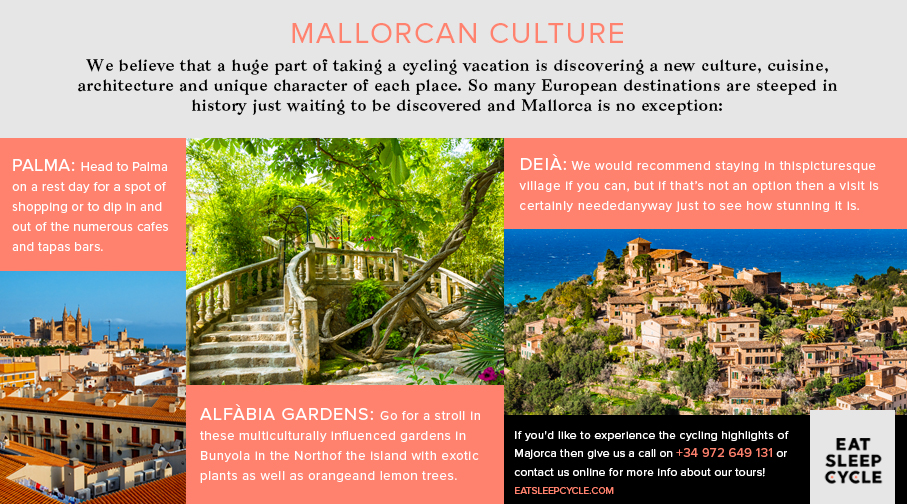
    We believe that a huge part of taking a cycling vacation is discovering a new culture, cuisine, architecture and unique character of each place. So many European destinations are steeped in history just waiting to be discovered and Mallorca is no exception and there are lots of spots worth visiting whilst there.

    • Palma
      Head to Palma on a rest day for a spot of shopping or to dip in and out of the numerous cafes and tapas bars. La Seu cathedral is a must-see the Gothic building is the focal piece of architecture in the city and is truly stunning to see.
    • Alfàbia Gardens
      Go for a stroll in these multiculturally influenced gardens in Bunyola in the North of the island and therefore within a close distance of the most popular places for cyclists to stay. The gardens contain exotic plants as well as orange and lemon trees.
    • Deià
      We would recommend staying in this picturesque village if you can, but if that’s not an option then a visit is certainly needed anyway just to see how stunning it is. Whilst there, visit the house of Robert Graves – the British poet and author of I,Claudius who lived in the village, which is now a museum.

    Mallorcan Culture - Majorca Cylce Tour - Eat Sleep Cycle

    Mallorcan Food

    To go with the Mallorcan culture there is also the Mallocan cuisine which has to be tasted to be believed. There are a number of Michelin Star restaurants dotted around the island, a sign of the refined palettes that frequent the island and worth visiting if you can.

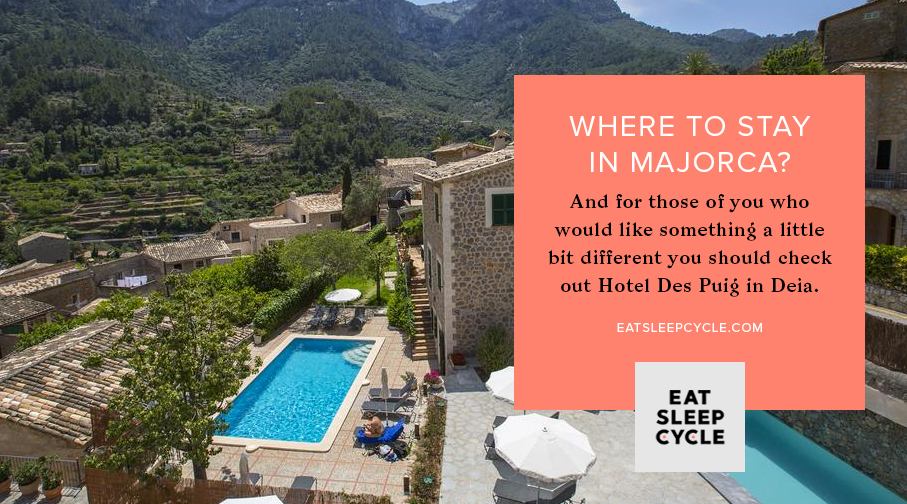
    Where To Stay in Mallorca

    Most cyclist visitors to Mallorca stay in the North of the island, far removed from cities like Magaluf to the South which are renowned more for partying than pedalling. In the North Port de Pollença and Alcudia are most popular as these areas are on the coast and close to the UNESCO World Heritage site Tramuntana Mountains – the highest point of which is the tip of Puig Major. The versatility of flat riding along the coast and the challenge of the  mountains are what makes the area attractive.

    Hotels:
    The number of cyclists that visit the island each year (in the hundreds of thousands) means that most hotels are bike friendly with many offering places to store bikes.

    In the Cycling Hub:
    If you want to be around more cyclists than just regular tourists then the cycling hub of Hotel Hoposa Bahía in Pollenca should be considered.

    For Something Different:
    And for those of you who would like something a little bit different you should check out Hotel Des Puig in Deia.

    Where To Stay In Majorca - Cycling Tour - Eat Sleep Cycle

    When (and how) to Travel to Mallorca

    The best times to visit the island are spring and autumn when the weather is not too hot but is warm enough to get those cyclist tan-lines going! You can fly into Palma airport – the island’ capital of Palma hosts the island’s main airport. You can also get a ferry from mainland Spain (although beware that this could take up to 8 hours).

    Cycling in Majorca

    If the above has piqued your interest for a trip to one of the de facto cycling Meccas of Europe then we’ve got the perfect tour for you. Check out our Majorca Experience to really discover the island or take a look at our Mallorca Ride Camp to rack up those quality miles. If interested give us a call now on +34 972 649 131 or contact us online and we’ll be happy to give you more info about it!

    P.S. Enjoyed this blog? Why not sign up to receive notifications every time we post and get regular updates on our latest tours!

  • Cycling in Andalucia – Experiencing Is Believing

    Andalucia is a region which captures the very essence of Spain. With a rich, long & often bloody history the architecture & landscapes are punctuated with Moorish & Christian sites. The Alhambra palace in Granada, the Alcazar Castle in Seville & Còrdoba’s Mezquita Mosque-Cathedral are three iconic landmarks which alone make a visit to the region worthwhile. Add in flamenco culture, wine, sherry & olive oil making and Andalucia offers an intoxicating experience – and that’s without the incredible Andalucian cycling experience.

    Here we attempt to capture the essence of Andalucia: the views, the climbs, the warmth, the relaxed way of life and the wonderfully welcoming locals but to fully appreciate it has to be experienced!

    Location, Location, Location: Where is Andalucia?

    Located in the south of Spain Andalucia is made up of 8 provinces – Cadiz, Almeria, Malaga & Granada bordering the south coast & Huelva, Seville, Còrdoba & Jaen inland. Within these provinces are numerous protected reserves, including the Sierra Nevada, Cabo de Gata & the Montes de Málaga. In other words, numerous playgrounds for cyclists. If the snow-capped peaks of the Sierra Nevada (which includes the highest paved road in Europe, the Pico de Veleta) aren’t enough to tempt you, now factor in the Costa del Sol, Costa Tropical, Costa de la Luz & Costa Almeria. 50% of Andalucia borders with the Mediterranean sea – cue delicious seafood, long white beaches and winter sun-seekers (Andalucia boasts more than 325 days of sun a year and is an ideal spot for a European winter cycling holiday!).

    Cycling-in-Andalucia-Cycling-Highlights-Bike-Tour

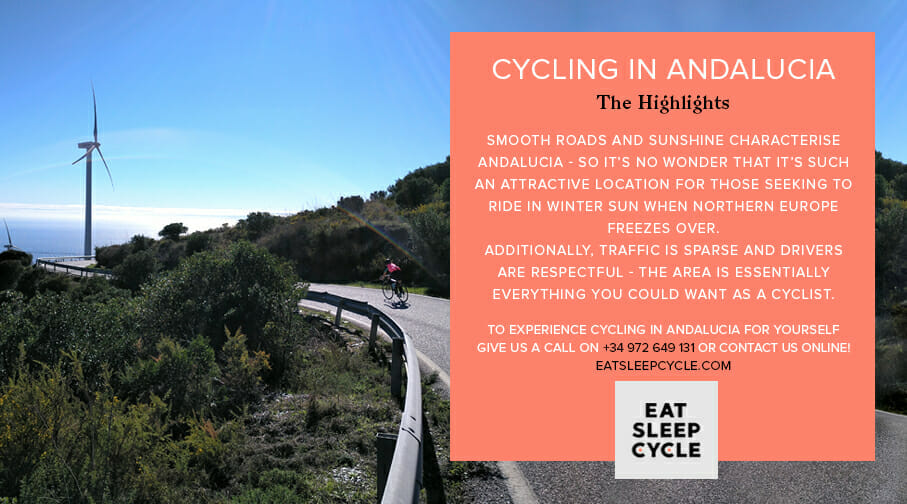
    Cycling in Andalucia: The Highlights

    Smooth roads and sunshine characterise Andalucia – so it’s no wonder that it’s such an attractive location for those seeking to ride in winter sun when Northern Europe freezes over. Additionally, traffic is sparse and drivers are respectful – the area is essentially everything you could want as a cyclist.

    Carretera del Cabra: The Goat’s Path is a must-see climb for any cyclist visiting the area. Just to the west of the Sierra Nevada mountains the road was built to connect Granada to the fishing boats on the coast in the village of Almuñuecar. The pass is 17 km long and maxes out at a gradient of 11% and boasts captivating views of the mediterranean.

    Puerto del León: Rising from the city of Malaga over 16 kms to 940 m altitude the Puerto del León features steady gradients which average 5.5% and, you guessed it, picturesque views in all directions. A regular feature of local club runs out of Malaga the climb also featured in the Vuelta España in 2015 when Peter Sagan won the stage.

    Caminito del Rey: The 2015 Vuelta was the first road race to visit the ‘Pathway of the King’. Short and sweet is the best way to describe this 4 km climb. With ramps of up to 15% legs are likely to sting as the road winds its way up to a restaurant and a dead end.

    Puerto de La Ragua: A pass in the Sierra Nevada mountains this is a challenging ascent when climbed from the south. At 25 km long the pass takes the rider to over 2,000 m altitude and boasts a comforting maximum gradient of 8%.

    Torcal de Antequera: 10.5 kms takes the cyclist to 1,200 m elevation at a decent average gradient of 7.6 % with great views pretty much all the way up. At the top take in the beautiful rock formations which give the climb its name.

    Pico de Veleta: No post on cycling in Andalucia would be complete without featuring the mighty Pico de Veleta. Veleta means ‘weather vane’ and the weather is main difficulty for the cyclist to overcome to make it to the top. Up to 2,500 m (29 km into the climb) the road is in excellent condition. From the notorious ‘barrier’ the cyclists rides beyond civilisation along a poorly surfaced road. The last 200 m (if you’re lucky enough to make it that far) are not passable on a road bike and must be walked. Often scorching hot in the valley and freezing cold at the top it’s worth waiting for perfect conditions before attempting the 40 km climb.

    Andalucian Food For Cyclists - Eat Sleep Cycle Tours

    Fuel the Ride: Andalucian Food

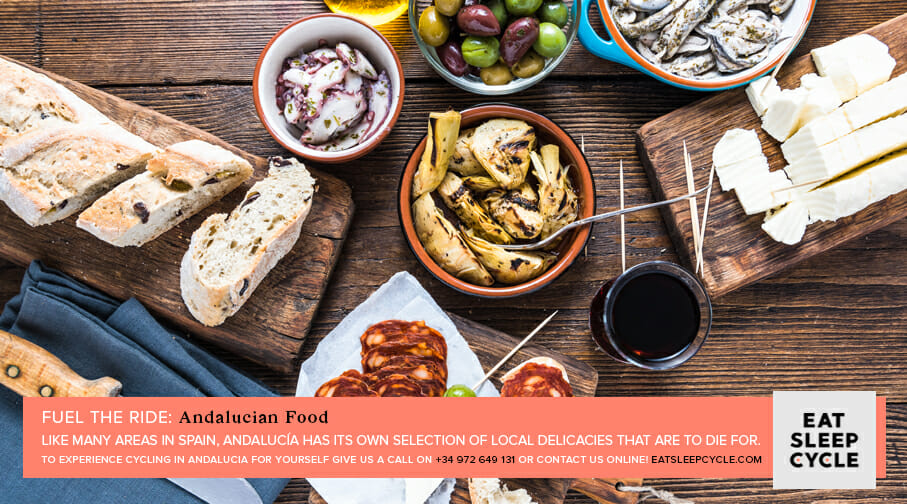
    Like many areas in Spain, Andalucía has its own selection of local delicacies that are to die for. Being situated in the south and catching almost year-round sun means that the area is known for growing plenty of fruit and vegetables, in particular olives, avocados, oranges and raisins (which we used to fuel our rides on our most recent visit)!

    Of course, the classic Spanish dish of Paella is a must, and being so close to the sea means delicious fresh fish! Other fishy offerings include pescaito frito (literally, fried fish), a local speciality. Jamon will likewise need to be sampled, air-cured in the mountains these wafer thin slices of ham will melt in your mouth!

    Where to eat:

    Cycling in Andalucia Review - Eat Sleep Cycle

    From the Rider’s Mouth: Steve’s Review

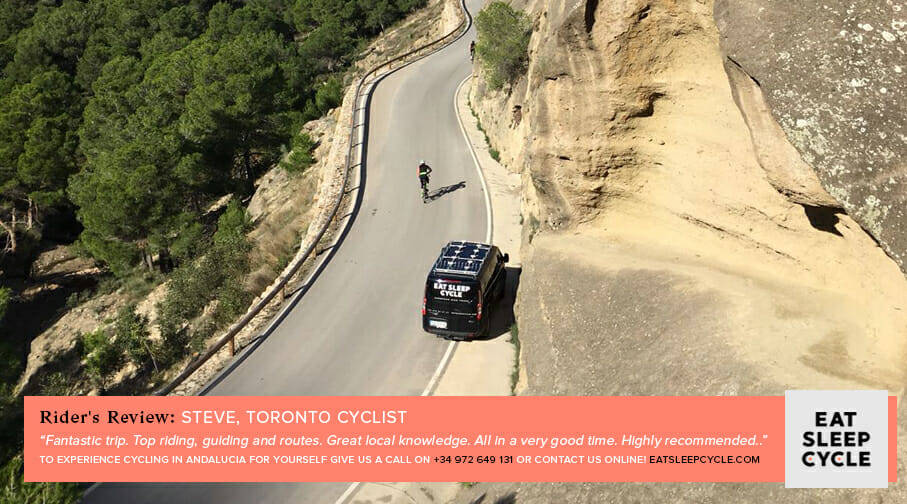
    Steve from Toronto, Canada joined us in the Costa del Sol & Sierra Nevada mountains in November 2018, here’s what he had to say about his Costa del Sol & Sierra Nevada Tour

    “Fantastic trip. Top riding, guiding and routes. Great local knowledge. All in a very good time. Highly recommended.”

    El Andaluz: The Eat Sleep Cycle Guide

    We spoke to Luis, olive oil & winemaker & our local guide for our Andalucia tours. Luis is the expert on Andalucia culture, food and roads and we asked him what makes him tick:

    What is your name?
    Luis Duritz

    Where are you from?
    From Cordoba, Andalucía! I was raised in Sevilla studied at the University in Granada, I lived in Málaga for 8 years and now I’m back home in Córdoba and sharing a house with friends in Granada.

    Where do you live?
    Part of the year in Granada, and the most of the time in Guadalmoral, my mother`s farm, near Córdoba.

    How long have you lived there?
    The last five years.

    What drew you to cycling and why?
    Watching the final kilometres of stage 16 of the 1990 Tour de France when Miguel Indurain and Greg LeMond battled up the Luz Ardiden! I was inspired also because on the same stage Andaluz rider Miguel Ángel Martínez Torres came third at 59” back to such giants of the sport!
    What is your favourite thing about guiding?
    Everything that happens from when I wake up till I go to sleep. To deal with unexpected situations.

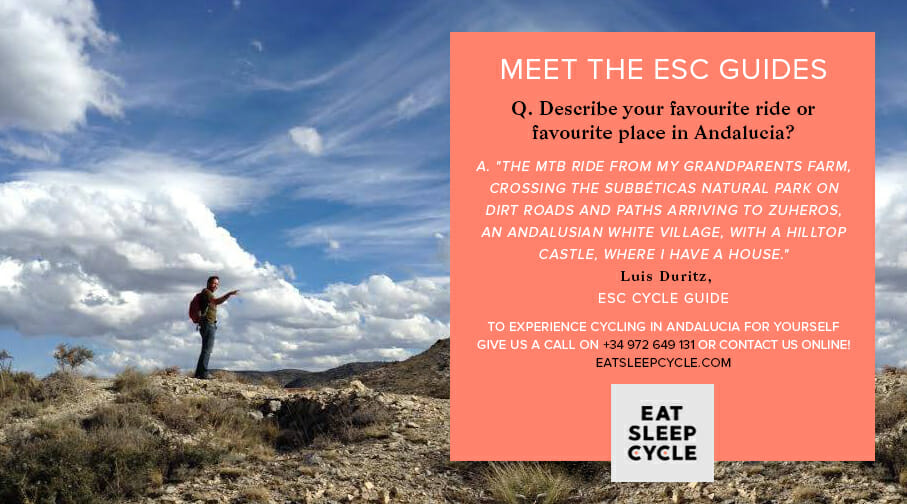
    Meet The Eat Sleep Cycle Guide in Andalucia - Luis Duritz

    Describe your favourite ride or favourite place in Andalucia…
    The MTB ride from my grandparents farm, crossing the Subbéticas Natural Park on dirt roads and paths arriving to Zuheros, an Andalusian white village, with a hilltop castle, where I have a house.

    What do you like to do when you’re not on a tour?
    Off season, everyday is different, but my perfect day is: to wake up in the farm, have a good coffee, take a walk along the vineyard, the olive orchard and the creek, do some physical work and finish the day in the city, having a glass of natural wine in @quierojugovivo, in Córdoba.

    What’s the best meal you’ve enjoyed in in Andalucia?
    Only one!? Impossible… but to mention two that I had working with ESC: the grilled sardines in a picnic in Lújar (Granada), seeing the Mediterranean sea from the hills, and a veggie menu in @restaurantelaboca with a spinach and pea stew to die for.

    Take Me There! How to get to Andalucia

    Malaga airport is the fourth biggest in Spain and is easily accessible from most of Europe, (flights from other parts of the world are likely to require transfers at Madrid or another major connecting airport). Transport to and from the airport is easily accessible and within a 90 min transfer of most of the most popular cycling locations. Almeria Airport is also an option for those looking to explore the eastern Sierra Nevada.

    It is also possible to arrive by train from other parts of Spain and even Europe. Other parts of the Southern region of Spain are easily accessible by car or transport so you could take advantage of your location and explore other areas whilst there. (like the Calpe ride camp).

    Join the Ride – Cycle in Andalucia

    If you like what you’ve read and want to experience cycling in Andalucia for yourself check out our 3 Andaluz itineraires:

    1. Andalucia Experience – take in the riding and sites of Granada (includes a Pico de Veleta attempt), Antequera & Ronda.
    2. Trans Andalucia – ride the whole thing, from Almeria, across the Sierra Nevada to Granada, on to Antequera, Ronda, Arcos de La Frontera and to the finish in Seville.
    3. Costa del Sol Ride Camp – discover Màlaga, the Puerto del Leon, the Carrertera del Cabra & finish in the low Sierra Nevada.

    Cycle in Andalucia - Cycling Tours of Spain - Eat Sleep Cycle

    All of our cycle tours in Andalucia will allow you to sample and enjoy the delights that Southern Spain has to offer. We can also tailor the tour to your needs with our custom cycle tour options so if you’re interested give us a call on +34 972 649 131 or contact us online to find out more!

    P.S. Enjoyed this blog? Why not sign up to receive notifications every time we post and get regular updates on our latest tours!